
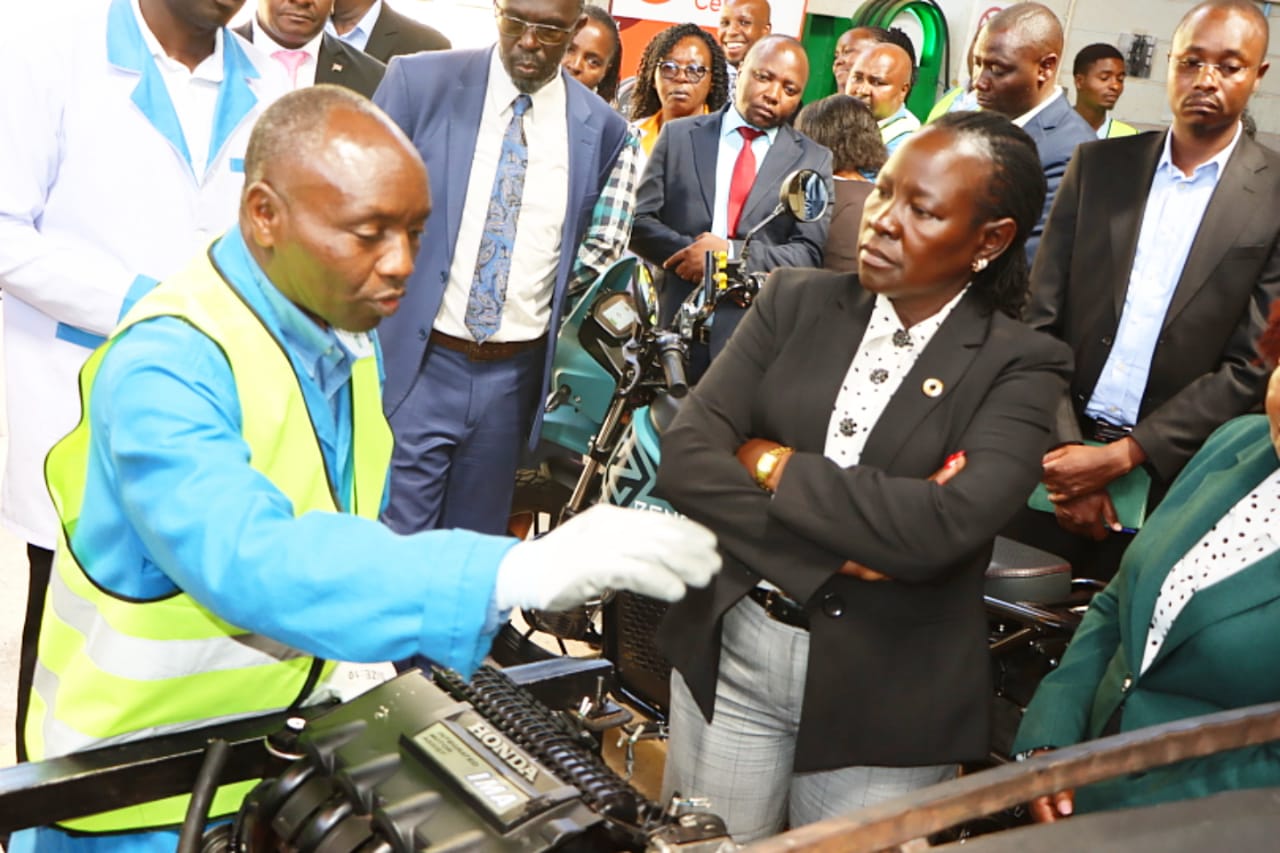
TVET training programs updated to match job market demands
JOAN OGOLLA-PCO
The Principal Secretary of the State Department for Technical and Vocational Education and Training (TVET), Dr. Esther Thaara Muoria, has emphasized the need for stronger industry alignment and practical integration in training programs, based on contemporary labor market demands.
Speaking during the opening session of a curriculum review workshop at Nyeri National Polytechnic, Dr. Muoria stressed that the success of Competency-Based Education and Training depends on its ability to produce graduates who are not only knowledgeable but also practically competent and adaptable to evolving industry needs.
Participants engaged in deliberations aimed at refining the integration within our training programmes and ensure that subject experts play a central role in shaping curricula that remain relevant and responsive to the labour market,” she stated.
The Principal Secretary further highlighted that the modular approach under CBET offers flexibility and specialization, enabling trainees to acquire targeted competencies in specific areas.
However, she observed that continuous refinement is necessary to ensure the modules adequately reflect emerging trends and sector-specific needs.
Dr. Muoria pointed-out that collaboration between modular CBET structure, with a strong focus on deepening industry participation.
The National Workshop on Restructuring and Alignment of the Modular Competency Based Education and Training (CBET) Curriculum, brings together key TVET stakeholders to review the first year of CBET implementation and chart a more responsive, demand driven training framework that directly addresses labour market needs.
Dr. Muoria noted that the restructuring and alignment process is a critical step towards enhancing the quality and credibility of Kenya’s TVET system.
She added that the government is committed to ensuring that training institutions deliver skills that match both local and global workforce expectations.
“We must build stronger partnerships with industry to ensure that our training programmes are aligned with real workplace requirements.
"This will not only enhance employability, but also drive innovation and productivity within the economy,” she added.
The discussions also explored strategies for ensuring that training programmes are consistently updated to reflect specialization areas required by various sectors of the economy.
Stakeholders examined ways to integrate feedback from employers, industry experts and professional bodies into curriculum design and review processes.
Dr. Muoria reiterated that the outcomes of the workshop will inform the next phase of strengthening CBET implementation across the country.
She expressed confidence that the engagement would yield practical recommendations to improve curriculum delivery and assessment.