
State to strengthen food safety standards to protect consumers, boost exports
By Ian Chepkuto (KNA)
The Government has unveiled an ambitious five-year strategy to strengthen food safety standards, protect consumers and enhance the competitiveness of Kenyan products in international markets.
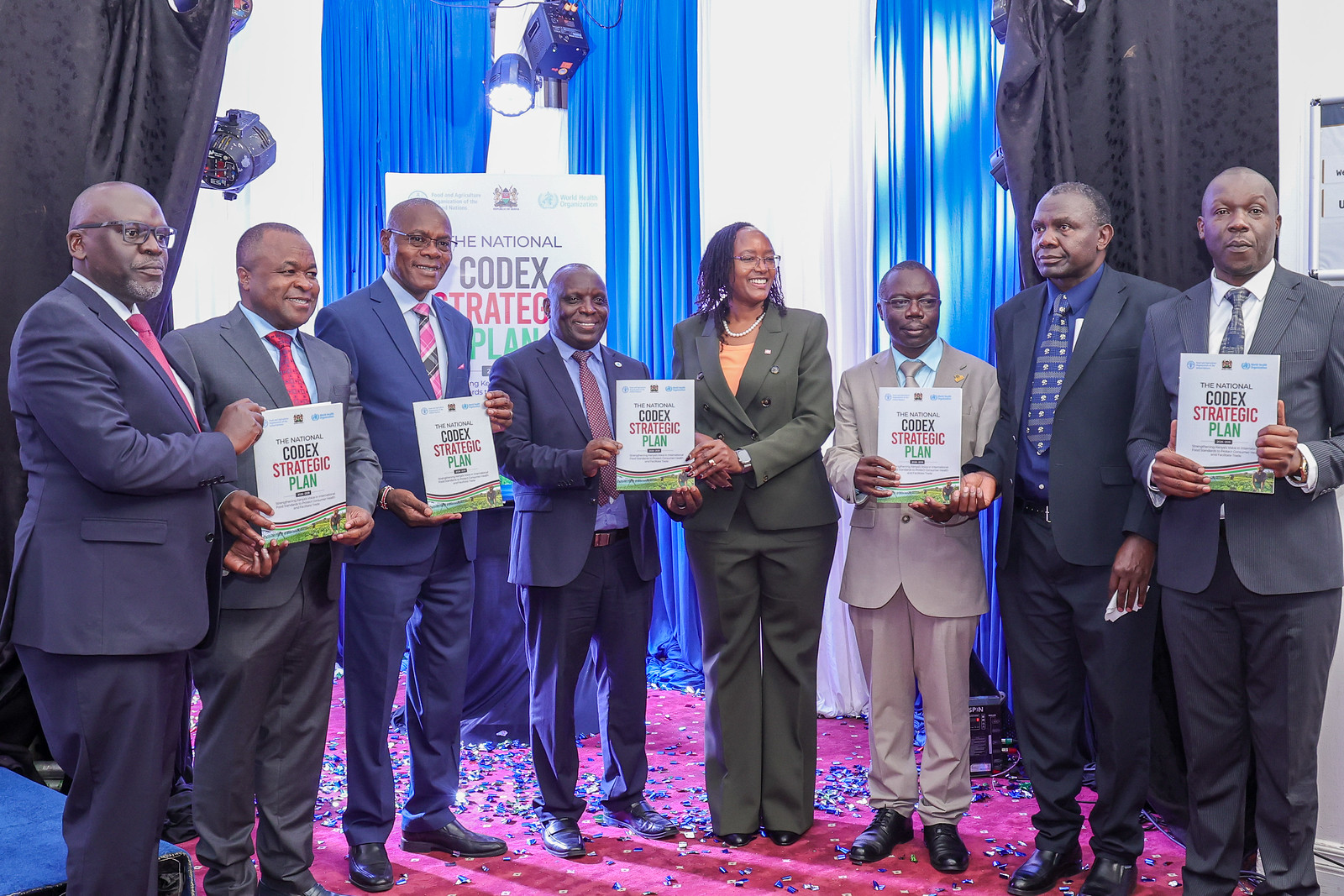
The National Codex Strategic Plan 2026-2031, launched in Nairobi during the National Codex Committee (NCC), seeks to improve food safety systems, expand scientific and technical capacity, and increase Kenya's influence in the development of international food standards.
Speaking through a speech delivered by Industrialisation Secretary Prof. Erastus Gatebe, Investments, Trade and Industry Cabinet Secretary Lee Kinyanjui said food safety and quality standards are critical to Kenya's trade, manufacturing and export ambitions.
"As we launch this plan, I appeal to policymakers and institutional leaders to integrate it into their work plans and budgets. We must invest in technical expertise, support participation in Codex processes and strengthen the generation and sharing of scientific data," said Kinyanjui.
He noted that Kenya's ability to compete in global markets increasingly depends on meeting strict food safety and quality requirements.
"The competitiveness of Kenyan products in international markets is closely linked to our capacity to comply with internationally recognised food safety standards," he said.
Developed by the Kenya Bureau of Standards (KEBS), the strategic plan focuses on strengthening institutional coordination, enhancing scientific and risk assessment capacity, improving participation in international standards-setting processes and mobilising resources for implementation.
The Cabinet Secretary stressed that efforts to expand exports must be matched by increased compliance with quality and safety standards.
"Quality is not optional. It is essential for protecting consumers and securing access to international markets," he said.
Kinyanjui highlighted progress in voluntary food fortification, revealing that the number of participating cereal millers has risen from about 35 to more than 60 over the past three years. He said the trend demonstrates growing industry recognition of the business and public health benefits of quality food production.
He also called for greater investment in scientific research and evidence generation to support policy decisions and standards development.
The plan has set a resource mobilisation target of approximately Sh760 million over the five-year implementation period, with funding expected from government agencies, the private sector and development partners.
Kenya has been a member of the Codex Alimentarius Commission since 1969. The commission develops internationally recognised food safety standards, guidelines and codes of practice that guide food production, processing and trade while protecting consumers.
Kinyanjui said Kenya's long-standing participation in the commission should translate into stronger consumer protection, increased market access and greater competitiveness for local products.
He identified four priority areas under the new strategy: strengthening institutional coordination, improving scientific and risk assessment capacity, increasing participation in Codex activities and enhancing monitoring and implementation systems.
The Cabinet Secretary called for stronger collaboration between national and county governments to ensure food safety standards are consistently implemented across the food value chain.
Director of Veterinary Services and Chairperson of the Codex Alimentarius Commission, Dr Allan Azegele, described the strategy as a demonstration of Kenya's commitment to science-based decision-making, food safety and fair trade practices.
He said the plan comes at a time when food systems are rapidly changing due to emerging technologies, shifting trade patterns and evolving food safety risks.
"The Codex Alimentarius Commission provides science-based standards that protect consumer health and support global commerce," said Azegele.
He urged government agencies, research institutions, universities, private sector players and consumer organisations to work together to ensure successful implementation of the strategy.
The meeting also focused on the growing challenge of aflatoxin contamination in cereals and nuts, which continues to threaten public health, food security and agricultural trade.
Stakeholders called for stronger surveillance and monitoring systems, increased research, and improved collaboration across the food value chain. Farmers and processors were urged to adopt better post-harvest handling, drying and storage practices to reduce contamination and minimise losses.
Officials expressed optimism that the National Codex Strategic Plan will strengthen Kenya's food safety framework, improve compliance with international standards, increase participation in global standards-setting processes and boost confidence in Kenyan products both locally and abroad.