
State spearheads revival of Kwale International Sugar Company
HUSSEIN ABDULLAHI -KNA
The Government plans to revive the Kwale International Sugar Company Limited (KISCOL), a move expected to restore thousands of jobs, revive sugarcane farming across the coastal region and inject billions of shillings into the local economy.
KISCOL is a agro-industrial enterprise founded in 2007 in Msambweni Subcounty, Kwale County and operates a 5,000-hectare nucleus estate, a 3,300 tons-per-day processing mill, and an 18-megawatt bagasse-based power cogeneration plant.
KISCOL was built on the grounds of the older, collapsed Ramisi Sugar Factory and itself faced major operational disruptions, financial hurdles, land disputes with squatters, and temporary government closures over regulatory and contraband probes, but state entities have pushed for its revival and continued operations.
Agriculture and Livestock Development Cabinet Secretary (CS) Mutahi Kagwe, has announced the formation of a highlevel Multi-stakeholder Revival Committee that will spearhead the re-opening of the factory after years of operational challenges that have left local farmers without a reliable market and stalled one of Kenya’s largest private sugar investments.
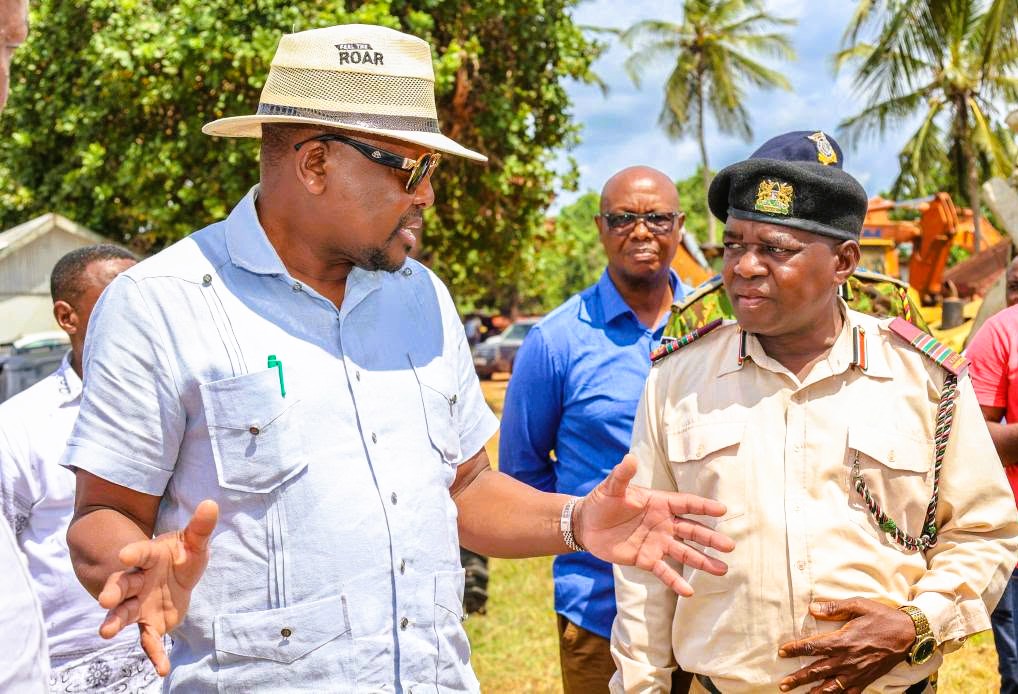
Speaking during an inspection tour of the factory, irrigation dams, plantations and out grower areas, CS Kagwe said the government’s priority was not politics, but rebuilding the livelihoods of thousands of families who depend directly and indirectly on the sugar value chain.
“This visit is about the lives and livelihoods of the people of Kwale. A factory is only important because of the people whose lives it transforms,” he said.
The revival Committee, to be led by the Kenya Sugar Board, will bring together the National Government, Kwale County Government, investors, farmers, security agencies and local leaders to resolve the legal, operational and social challenges that have kept the mill closed.
Stakeholders contend Kenya consumes approximately 1.2 million metric tonnes of sugar annually, yet domestic production has frequently been unable to meet this demand, averaging between 600,000 and 700,000 metric tons per year.
Kagwe pointed to the widening gap in the country’s sugar production and domestic demand and rooted for the ramping up of sugar production.
The agriculture minister warned that the widening gap between domestic production and demand poses serious risks to food security, industrial growth, and job creation in the country.
“Bridging this gap would reduce foreign exchange pressure, stimulate agribusiness, and accelerate industrial growth,” he said.
He stressed the reliance on imports undermines food security, raises production costs for industries, and limits job creation.
The CS said KISCOL remains one of the country’s most strategic sugar investments, possessing modern milling infrastructure, an extensive irrigated nucleus estate and a large out grower network capable of transforming the economy of Kenya’s coastal region once operations resume.
“Currently the country faces a significant deficit of sugar and that is why we are ramping up production,” he said.
He said at full capacity, the integrated sugar complex has the potential to mill thousands of tons of cane every day, supporting tens of thousands of direct and indirect livelihoods across farming, transport, mechanical services, irrigation, input supply, retail trade and manufacturing.
Beyond producing sugar, the factory has the capacity to stimulate value addition through molasses, ethanol production, electricity co-generation from bagasse and other downstream industries, significantly expanding economic activity in Kwale and neighbouring counties of Mombasa and Kilifi.
The revival is also expected to reduce Kenya’s dependence on imported sugar by increasing domestic production while creating a stable market for local cane farmers. CS Kagwe acknowledged that KISCOL’s challenges extend beyond financing, citing land disputes, cane shortages, vandalism, delayed farmer payments and insecurity as key issues requiring coordinated intervention.
Among the immediate measures announced is the planned clearance of Sh66 million in outstanding farmer arrears, a move aimed at restoring confidence among cane growers and encouraging them to resume production.
He also urged residents to protect sugarcane farms and irrigation infrastructure, warning that the burning of cane fields and vandalism of pipelines only prolong the suffering of farmers and delay economic recovery.
The CS further appealed to the devolved government of Kwale to fast-track the resettlement of approximately 15,000 squatters occupying nearly 7,000 acres of factory land, describing the issue as one of the biggest obstacles to restoring full-scale operations.
Drawing lessons from the successful leasing and turnaround of public sugar factories in Western Kenya, Kagwe said similar collaboration between government, investors and local communities could restore KISCOL into a profitable enterprise that benefits everyone.
“We have seen what cooperation can achieve in other sugar-growing regions especially when the government, investors and communities work together, factories reopen, production increases and farmers begin earning again. Kwale can achieve the same success here,” he said.
The CS said the revival committee will develop a clear framework defining the responsibilities of each stakeholder while ensuring farmers remain at the centre of every decision.
He maintained that government support would be anchored on transparency, accountability and a technically sound revival plan that addresses irrigation, cane development, factory operations, financing and long-term sustainability.