
State to phase out printed exams in education reforms
ERASTUS GICHOHI-KNA
The Ministry of Education has unveiled plans to phase out paper-based examinations across Kenya’s education system in the coming years, in a sweeping reform aimed at reducing the billions of shillings spent annually on printing and administering national tests.
Dr. Elyas Abdi, Director General for Basic Education, said the initiative will be implemented in partnership with the Kenya National Examinations Council (KNEC) as part of broader reforms to streamline the sector.
“Exams in this country have been an expensive affair, and paperless exams seek to address this in the coming years,” Dr. Abdi noted.
Currently, KNEC requires about Sh12.5 billion annually to conduct examinations and invigilation, yet budget allocations have consistently fallen short.
In the 2024/2025 financial year, the council faced a Sh3.7 billion deficit, nearly crippling its operations before Parliament intervened.
Projections for the 2026/2027 financial year show that exam administration will cost Sh14.7 billion, but only Sh9.9 billion has been allocated, leaving a Sh4.82 billion shortfall. A significant portion of these costs has historically stemmed from outsourcing exam printing abroad.
For years, KNEC has relied on foreign security printers to produce examination booklets and optical mark recognition forms, a practice criticised by stakeholders as both costly and logistically cumbersome.
Treasury Cabinet Secretary John Mbadi has questioned the need to continue printing materials in London, arguing that the practice imposes unnecessary expenses on taxpayers.
KNEC Chief Executive Officer David Njengere said the shift to electronic assessments has been inspired by the successful rollout of digital examinations in teacher training colleges.
Over the past three years, more than 37,000 trainees have undertaken digital examinations and graduated.
What began as a pilot programme with 45 candidates in 2021 had expanded to more than 50,000 candidates across over 100 institutions by 2025.
Trainees now sit examinations entirely online, with scripts submitted electronically through the KNEC portal for marking.
Building on this success, KNEC plans to introduce digital assessments in senior schools beginning in 2027.
The council says the system will enhance digital literacy, enable remote marking, speed up result processing, and improve policy decision-making through automated analytics.
Analysts estimate that digitising assessments could significantly reduce operational costs in the long term while improving efficiency and transparency in the examination process.
Further reforms are outlined in the Kenya National Educational Assessments Council (KNEAC) Bill 2025, which proposes modernising learner testing with technologies such as electronic marking, AI-powered scoring, and real-time assessments.
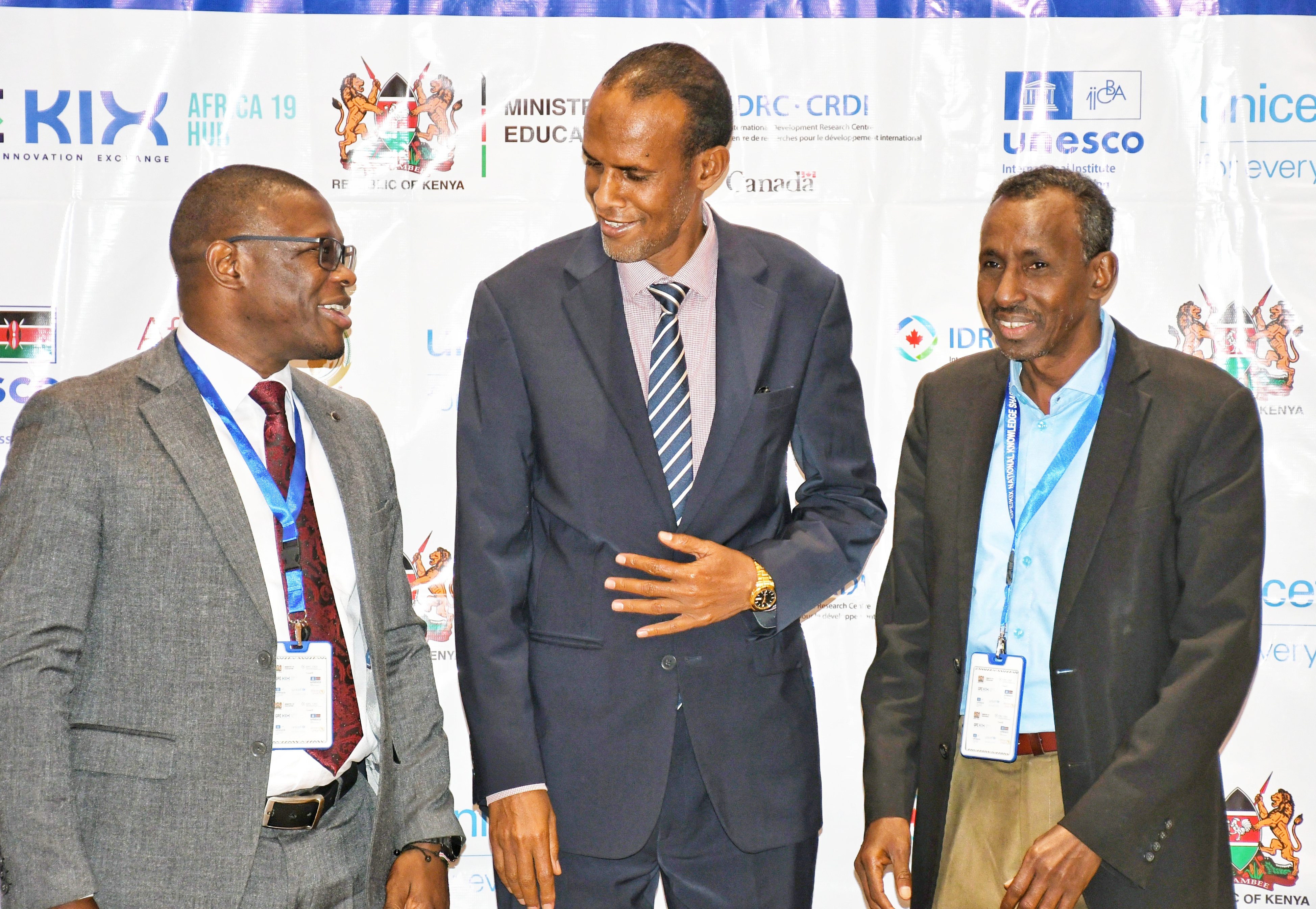
Dr. Abdi made the announcement during a national knowledge-sharing and policy meeting organized by the Kenya National Commission for UNESCO in Naivasha.
He highlighted that Grade 10 learners have already settled into their chosen pathways, curriculum design for Grade 12 is complete, and teacher capacity-building is underway.
He reaffirmed the government’s commitment to strengthening education policies and ensuring access for all.
Hassan Ali, Permanent Secretary for the Ministry of Education, Culture and Higher Education of Somalia, shared that his country has made significant progress in reviving its education sector after years of civil war.
He noted that Somalia has increased financing to improve access and quality, while also addressing challenges faced by pastoral and remote communities.
Dr. James Njogu, Acting CEO of UNESCO Kenya, said the stakeholders’ meeting aimed to harness research to inform education policies.
He added that UNESCO is currently supporting nine projects across Kenya and is finalising a report with recommendations to strengthen the sector.