

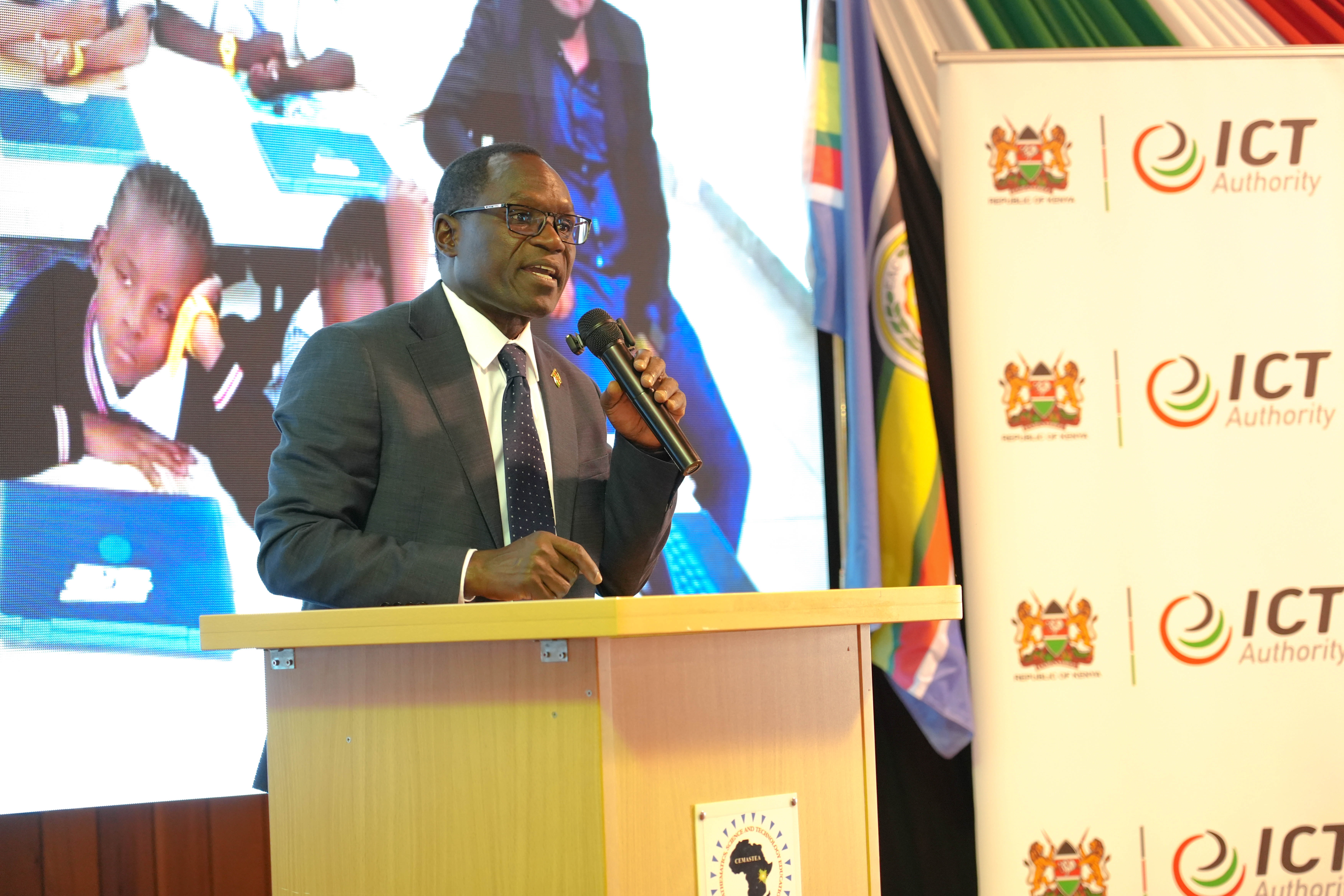
State begins distribution of laptops, smart boards to public junior schools
JOSEPH NG’ANG’A-KNA
The Government has begun distributing laptops and interactive smart boards to 10,382 public junior schools across the country.
Under the programme, each school will receive one laptop and one interactive smart board in a move aimed at strengthening digital learning and supporting the implementation of the Competency-Based Education (CBE) framework.
The initiative, being implemented under the Kenya Digital Economy Acceleration Project (KDEAP), marks a significant milestone in the country’s digital transformation agenda and ongoing efforts to modernise the education sector.
The launch ceremony, held at the Centre for Mathematics, Science and Technology Education in Africa (CEMASTEA) in Nairobi, brought together senior government officials, education stakeholders, development partners, and representatives from the ICT sector.
Broadcasting and Telecommunications Principal Secretary Stephen Isaboke said the initiative demonstrates the government’s commitment to preparing learners for a future increasingly driven by technology.
“This occasion marks an important milestone in Kenya’s digital transformation journey and demonstrates our commitment to preparing learners for a future where technology will increasingly shape how we learn, work and create opportunities,” said Isaboke.
The initiative forms part of the government’s broader vision to build a digitally connected, knowledge-driven economy under the Bottom-Up Economic Transformation Agenda (BETA).
According to Isaboke, the programme complements ongoing investments under the Digital Superhighway Programme, which includes the rollout of 100,000 kilometres of fibre optic infrastructure and the establishment of 1,450 digital hubs across all wards in Kenya.
He emphasized that digital inclusion remains a key priority, noting that learners in remote regions should have access to the same opportunities as those in urban centres.
“Whether a learner is in Turkana, Mandera, Marsabit, Kwale, Kisumu or Nairobi, every child deserves access to the same opportunities and the same digital future,” he said.
The PS called for responsible use of technology in schools and urged stakeholders to safeguard educational infrastructure amid recent incidents of school unrest and fires reported in some parts of the country.
“Technology should become a tool that inspires curiosity, innovation and hope, not frustration or destruction,” he said.
Outgoing Basic Education Principal Secretary Prof. Julius Bitok described the launch as a historic moment for the education sector, identifying technology and equity as two critical priorities in delivering quality education.
Bitok said digital learning tools will help bridge longstanding disparities in access to education between learners in urban and remote parts of the country.