
Sh76b education drive transforms schools
HEZEKIEL GIKAMBI AND PHILLIP RUTO-PCO
Kenya’s Sh76 billion education programme, jointly funded by the Government and the World Bank, is delivering record gains in school retention, learner transition and science infrastructure.
The Kenya Secondary Education Equity and Quality Improvement Programme (SEEQIP), launched in partnership with the International Development Association (IDA), is already surpassing several of its targets.
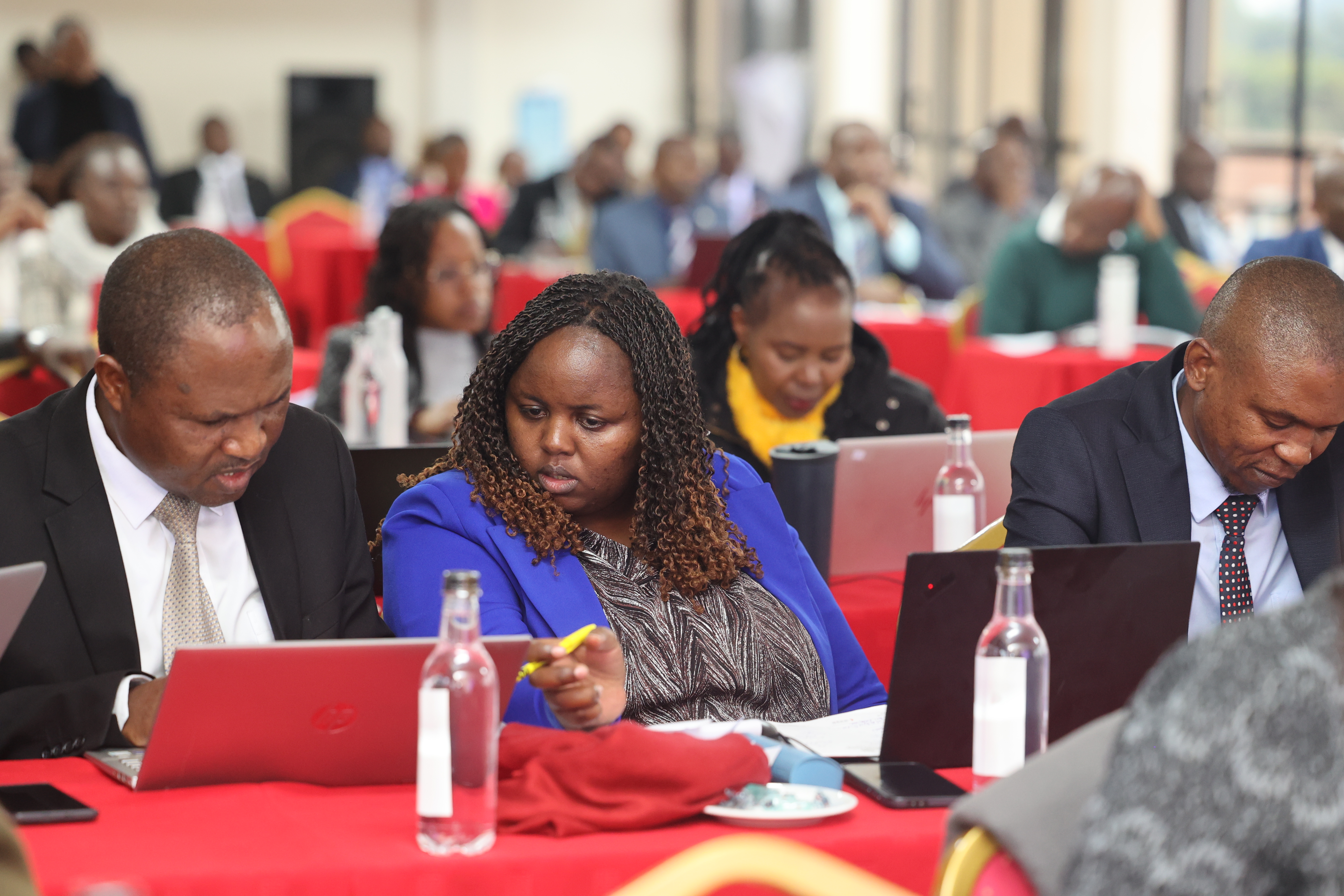
Progress was highlighted during a joint implementation review meeting at the Kenya Institute of Special Education (KISE), where stakeholders hailed the initiative as a game‑changer for equitable access to quality education.
Director of Project Coordination and Delivery Elijah Mungai said SEEQIP is combining infrastructure development with policy and institutional reforms to strengthen education systems nationwide.
“The progress we are witnessing shows that strategic investments in education are translating into tangible outcomes. We are not only expanding access to quality learning facilities but also strengthening the systems that ensure every learner has an opportunity to complete school and transition successfully,” Mungai noted.
The programme, which runs until December 2029, focuses on expanding access to secondary education, improving junior school teaching and reinforcing governance reforms to deliver inclusive, equitable learning across all 47 counties.
A flagship component is the construction of 1,600 science laboratories in senior schools and 37 laboratories in special needs institutions.
Already, 273 laboratories are under construction, with the remaining 1,327 scheduled for funding in the 2026/27 financial year. To complement physical infrastructure, 35 virtual science laboratories have been developed for junior schools, with another 72 in progress.
These innovations are designed to strengthen science teaching and ensure learners in remote or resource‑constrained areas can access modern learning tools.
The programme has recorded remarkable gains in learner retention and transition. Junior school retention in target counties stands at 96.34 per cent, far above the 80 per cent target.
With three years remaining before completion, officials said SEEQIP will focus on completing the remaining science laboratories, expanding scholarships, upgrading teacher training institutions and deepening reforms.
The programme’s long‑term goal is to deliver quality, inclusive and equitable education across all counties, ensuring that every child—regardless of background—has the opportunity to thrive.
Transition from Grade 9 to senior school has reached 97.57 per cent, with girls recording slightly higher transition rates than boys.
These figures underscore the impact of targeted interventions in keeping learners in school and ensuring smooth progression through the education system.
SEEQIP has expanded support for vulnerable learners through the Elimu Scholarship, which has already benefited 10,000 students with scholarships and school kits.
Beneficiaries include learners from refugee camps and host communities. The programme aims to raise the number to 15,000 in the coming years.
School feeding has also exceeded expectations, with 2.6 million learners receiving daily meals against an annual target of two million.
The initiative is piloting clean cooking technologies through a centralized kitchen in Uasin Gishu County and clean energy solutions in schools in Turkana County, ensuring healthier, sustainable learning environments.
Retention rates in Kakuma and Garissa refugee camps have improved, supported by School Improvement Plans for 50 camp‑based schools.
These plans are unlocking grants for infrastructure, teaching and learner welfare, ensuring refugee children are not left behind in the national education agenda.
Teacher Support and Training. Teacher support has been reinforced through a revised School‑Based Teacher Support System and training of school heads across 17 counties.
Plans are underway to upgrade infrastructure in 35 public teacher training colleges, ensuring educators are equipped to deliver quality instruction under the Competency‑Based Curriculum (CBC).
Education governance reforms are progressing steadily. The Basic Education Bill is already before Parliament, alongside new quality assurance frameworks and school safety standards.
These reforms are expected to entrench accountability, improve oversight and safeguard learners’ welfare.