
Sh34bn programme to transform agriculture and natural resource management, says PS
EKUWAM SYLVESTER-KNA
The Government, in partnership with the International Fund for Agricultural Development (IFAD), has launched the Integrated Natural Resources Management Programme (INReMP).
The initiative is valued at approximately Sh34.1 billion ($262.7 million). It aims to boost climate-smart agriculture and enhance food security.
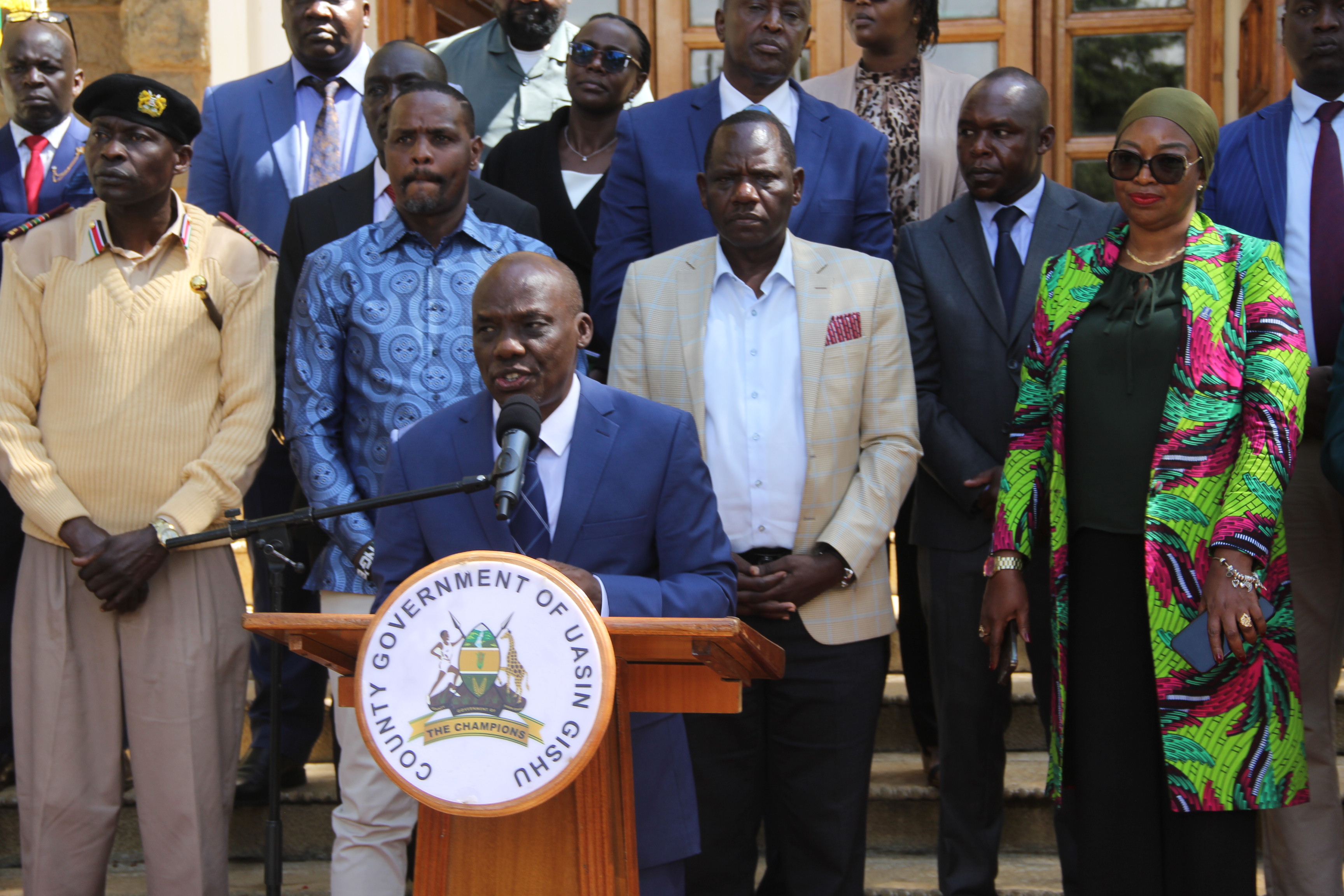
Speaking at the Uasin Gishu County Headquarters, officials paid a courtesy call to Governor Jonathan Chelilim ahead of the INReMP workshop launch in Eldoret.
The Principal Secretary for Agriculture, Dr. Kipronoh Ronoh Paul, attended the meeting.
He was accompanied by Principal Secretary Eng. Festus K. Ng’eno from the State Department for Environment and Climate Change.
The leaders praised the eight-year programme as a transformative initiative.
They said it will support climate-resilient agriculture and sustainable natural resource management.
The programme will also improve livelihoods for rural communities in 10 target counties in western Kenya. Uasin Gishu is one of the key target areas.
They were accompanied by Mariatu Kamara, International Fund for Agricultural Development (IFAD) Country Director, among other distinguished guests.
Ronoh pointed out that the program is implemented by the State Department of Agriculture together with the State Department for Environment which will see the implementation of major water infrastructure, natural resource protection and the development of farmland in addition to supporting livestock in terms of dairy and also animal feed sector through equipment and technologies for production.
“The program has three components. There is a big component for the management of natural resources. It involves making sure that we take care of the soil, we take care of the forested areas, we take care of the water-affected areas, and also we take care of our farming mechanisms,” he explained.
The next component is livelihood and value chain development. This involves support from the cooperatives in terms of machinery for value addition for a number of value chains, including coffee being one of the key value chains supported in the program.
The third component is on governance and administration.
“This is a big programme will change our farming community in a positive way and also support marketing for the farm to produce and enhance capacity building and support of our cooperatives and support the natural environment. So we are really looking forward to its implementation,” alluded the Agriculture PS.
INReMP is driving the greening and commercialization of naturebased value chains, promoting regenerative agriculture, and advancing climate-smart solutions to strengthen farmers’ resilience and adaptive capacity.
Uasin Gishu Governor affirmed his administration’s commitment as one of the food basket counties and programme host, to provide necessary infrastructure to ensure successful implementation of the project to promote sustainable natural resource management and enhance food security.
The eight-year initiative aimed at long-term rural transformation seeks to strengthen climate resilience by enhancing the ability of rural communities to adapt to climate change impacts, boost natural resource management through sustainable management of forests, rangelands, arable land, wetlands, and water resources and improving livelihoods by increasing incomes for smallholder farmers, women, and youth through value chain development.
Uasin Gishu’s participation in the programme focuses on its core economic strengths, particularly dairy and highvalue crops.
The county leverages IFAD support to enhance dairy value chain in terms of expanding Artificial Insemination (AI) services, improve livestock genetics, and support dairy cooperatives.
It will also promote crop diversification alongside traditional maize farming.