
Rare mountain bongos repatriated to Kenya in bid to save high risk species
DOUGLAS NAMUNANE AND WANGARI NDIRANGU-KNA
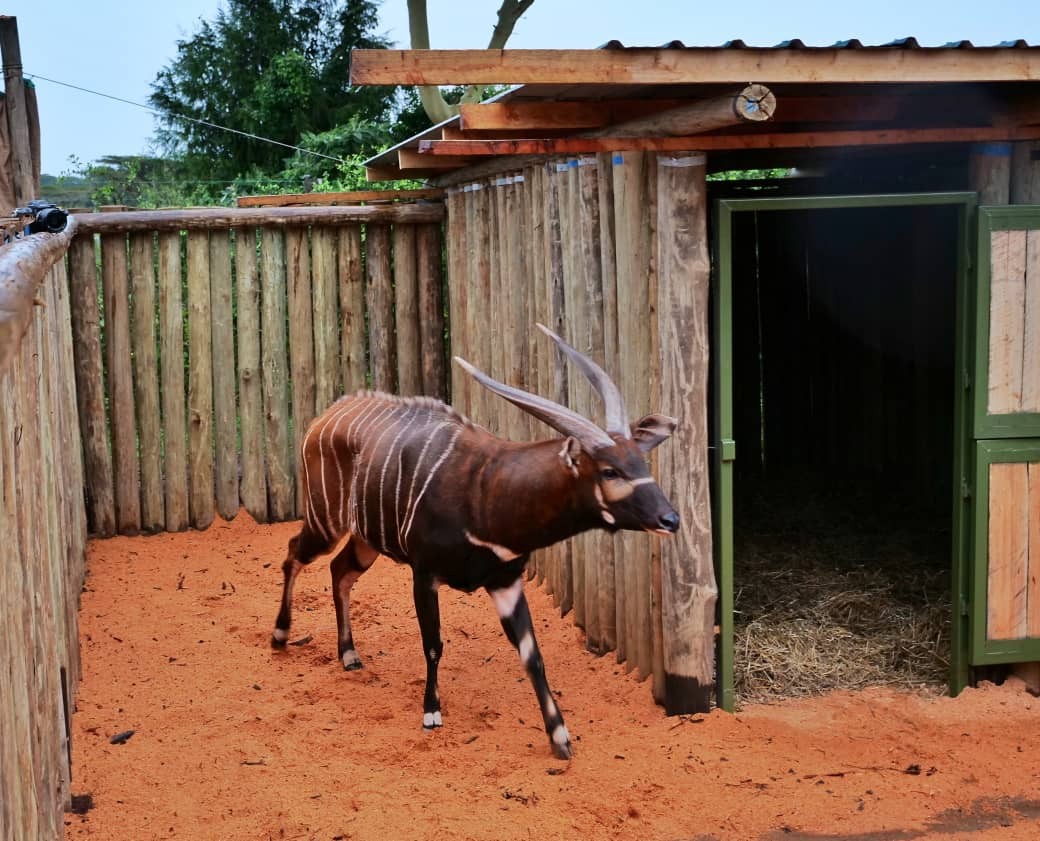
Kenya’s efforts to conserve and restore the population of the endangered mountain bongo have received a significant boost following the repatriation of four young male bongos from Europe.
The animals were sourced from three countries: one from the Czech Republic, two from Germany, and one from Denmark.
According to Kenya Wildlife Service Director General Dr. Erastus Kanga, the animals were repatriated to strengthen the genetic diversity of the existing population of 102 mountain bongos at the Mount Kenya Wildlife Conservancy.
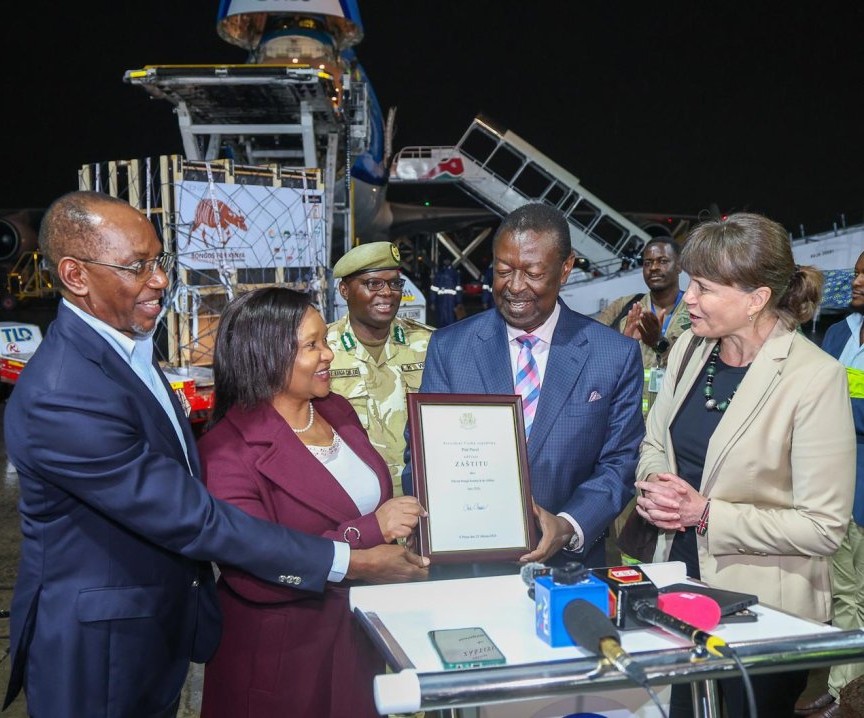
While officially receiving the consignment at the Jomo Kenyatta International Airport in Nairobi, Prime Cabinet Secretary Musalia Mudavadi described the repatriation as a significant milestone in Kenya’s conservation journey.
Mudavadi noted that with approximately 100 mountain bongos remaining in the wild, the country faces both a challenge and a responsibility.
“The story of the mountain bongo is, in many ways, a reflection of our broader environmental reality. Once thriving across our montane forests from the Aberdares to Mount Kenya, the Mau, and Eburu, this iconic species now faces the stark reality of near extinction,” he said.
The Prime Cabinet Secretary emphasized that the government remains firmly guided by national policies and legislative frameworks, particularly the Wildlife Conservation and Management Act of 2013, which provides a strong foundation for species protection, habitat restoration, and biodiversity management as a national heritage.
“Today’s milestone, anchored in science, collaboration, and long-term planning, demonstrates the effectiveness of policy, when matched with action.
"The Mountain Bongo Recovery Programme aligns directly with Kenya’s national biodiversity strategies, our climate action commitments, and the global Sustainable Development Goals,” he added.
Mudavadi noted that the collaboration between government, conservation institutions such as the Mount Kenya Wildlife Conservancy and international partners was critical, describing it as a model of the multi-sectoral approach needed for conservation success.
“Conservation today requires unity of purpose across borders, institutions, and communities. Species recovery is not an isolated effort; it is a strategic national priority. It speaks to our environmental security, our tourism economy, and our intergenerational responsibility,” he said.