
Nakuru boosts cancer care, diagnostic capacity
By Jane Ngugi and Jefther Afuyo (KNA)
The County Government of Nakuru has partnered with the National Cancer Institute of Kenya (NCI-K) to strengthen cancer diagnosis, treatment and follow-up services at the Nakuru County Teaching and Referral Hospital (NCTRH).
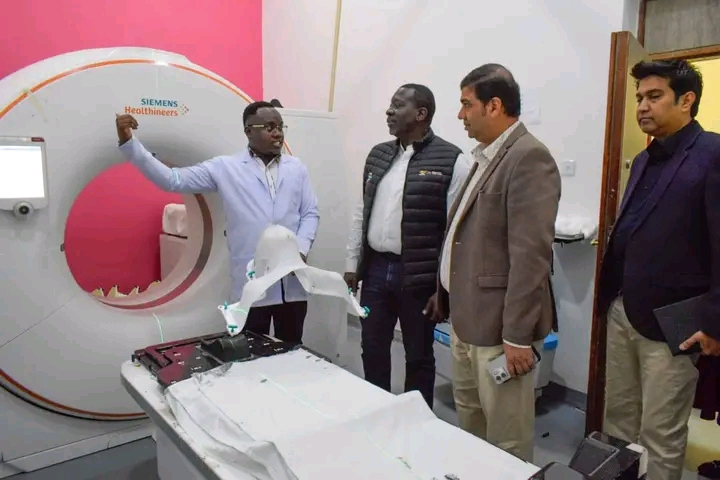
The partnership was reviewed during a joint monitoring exercise by an NCI-K delegation led by its Chairman, Dr Timothy Olweny, NCTRH Director Dr Santosh Devaraj, and senior county health officials, medical specialists and community health stakeholders.
The engagement focused on strengthening the sustainability of cancer services, building the capacity of healthcare workers and improving the use of specialised diagnostic and treatment equipment.
Dr Devaraj said the county was committed to expanding equitable access to cancer care for residents of Nakuru and neighbouring counties.
“Cancer has become a major burden in our communities, and we truly value this partnership, which allows us to extend vital support to patients,” he said.
He said the initiative would strengthen diagnosis, treatment and follow-up care while integrating Social Health Authority (SHA) and laboratory services to provide a coordinated cancer-care pathway.
The teams inspected cancer treatment and palliative care facilities at the Regional Cancer Centre and Nakuru Hospice where they assessed existing services and identified areas requiring additional support.
Dr Devaraj called for specialised training for healthcare workers, particularly in the operation and management of cancer diagnostic and treatment equipment.
Dr Olweny said NCI-K would consider the request and called for integration of health financing and laboratory services to support seamless cancer management.
“Cancer management requires coordinated services ranging from screening and laboratory investigations to diagnosis, staging, treatment and follow-up,” he said.
The engagement comes as Kenya continues to face a significant cancer burden. The International Agency for Research on Cancer (IARC) estimated 44,726 new cancer cases and 29,317 cancer deaths in Kenya in 2024, with breast, cervical, prostate, oesophageal and colorectal cancers among the leading cancers.
The National Cancer Control Strategy 2023–2027 identifies early detection, diagnosis, treatment, palliative care, survivorship, surveillance and sustainable financing as key pillars of the national response.
Dr Olweny said about 70 per cent of cancer cases in Kenya are diagnosed at late stages, highlighting the need to strengthen diagnostic capacity and early detection. He also cited inadequate and unevenly distributed pathology services as a national challenge.
Nakuru has emerged as an important regional oncology centre. The county’s 2024 health sector report indicates that the Regional Cancer Centre at NCTRH, commissioned in June 2022, had served more than 5,000 clients from Nakuru and other counties.
The centre offers screening, chemotherapy, radiotherapy and palliative care, while cancer surgery is available at Nakuru Level 5 Hospital. The county has also conducted cancer screening outreaches across all 11 sub-counties.
In February 2026, the Ministry of Health announced intergovernmental and service-level agreements covering regional cancer centres in Nakuru, Mombasa and Garissa. The agreements provide for preventive maintenance, quality assurance and technical support for radiotherapy equipment, including linear accelerators.
The Ministry has also announced plans to upgrade the Nakuru Regional Cancer Centre into a major referral facility serving patients from 24 counties.
Dr Olweny said strengthening specialist capacity, infrastructure, equipment and referral networks would enable NCTRH to provide more comprehensive oncology services while supporting its wider regional role.
As Kenya expands regional cancer services, the NCI-K and NCTRH partnership is expected to support the development of skilled personnel and reliable diagnostic and treatment systems, bringing specialised care closer to communities.