
From Vision 2030 to Vision 2060: Kenya Must Now Build for the Next Generation
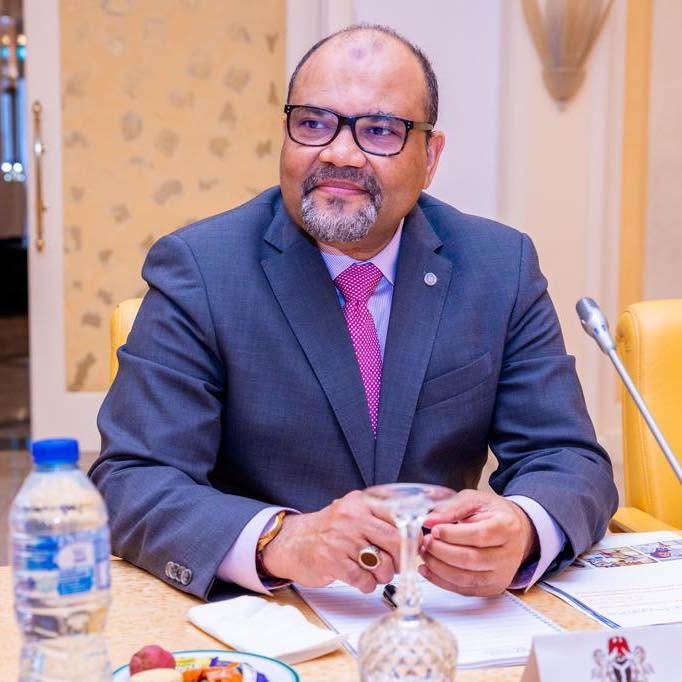
PROF. SHAUKAT ABDULRAZAK
Kenya Vision 2030 has served our country well. Launched in 2008, it gave Kenya a longterm national compass: to become a globally competitive, newly industrialising middle-income economy offering a high quality of life.
As 2030 approaches, the question is not whether Vision 2030 succeeded or failed. The more useful question is: what have we learnt, what remains unfinished, and what kind of Kenya do we want by 2060?
The evidence shows substantial progress. Vision 2030 delivered transformative projects including the Standard Gauge Railway, expansion of the Port of Mombasa, LAPSSET, Nairobi Expressway, Konza Technopolis, renewable-energy investments, national fibre infrastructure, digitisation of government, devolution and major improvements in roads, education, health and financial inclusion.
These investments created the physical and institutional foundation upon which the next transformation must be built.
The latest implementation assessment presented under Vision 2030 is equally instructive. Progress is estimated at 88.2% for the political pillar, 61.6% for foundations and enablers, 59.5% for the social pillar and 55.5% for the economic pillar.
The message is clear: Kenya has made progress, but economic and social transformation must accelerate – we must leapfrog to catch up with the rest. Some indicators are encouraging.
GDP per capita has risen from about US$840 in 2007 to above US$2,300, diaspora remittances have increased from roughly US$570 million to over US$5 billion annually, and international tourist arrivals have recovered to around 2.6 million.
Water access has expanded significantly, while health insurance registration has risen to more than 32 million people. These gains demonstrate national capacity to transform when policy, institutions, and investment are aligned.
Yet Vision 2030 has also revealed important delivery gaps. These include weak continuity across political cycles; fiscal and financing constraints; fragmented policies and legal mandates, Silo mentality; dispersed institutional responsibility; procurement and logistical delays; inadequate outcome-based monitoring; and vulnerability to pandemics, climate change and geopolitical shocks.
Flagship projects have sometimes competed for resources and political attention rather than forming one coherent national transformation programme.
This is precisely why the timing for Vision 2060 is right. The Fourth Medium Term Plan runs from 2023–2027.
The next planning cycle can provide the bridge from Vision 2030 into a new long-term framework, avoiding a strategic vacuum while carrying forward unfinished programmes.
Vision 2060, however, should not simply be Vision 2030 with another date. Listening to President William Ruto, I see this to represent a paradigm shift from predominantly government-driven planning to a genuinely people-driven national compact.
Citizens, counties, young people, women, universities, researchers, industry, MSMEs, professional bodies and the diaspora will participate from conception through implementation and evaluation.
Public participation will not be ceremonial; it will establish public ownership. Vision 2030 itself recognised people-centred and accountable governance; Vision 2060 should deepen that principle.
Secondly, Vision 2060 will be anchored in law, with defined institutional responsibilities, financing mechanisms, fiveyear implementation plans and mandatory independent performance reporting.
That would help insulate national development priorities from electoral cycles. This will be a game changer. Thirdly, science, technology and innovation must become the engine rather than merely an enabler.
Artificial intelligence, biotechnology, advanced manufacturing, robotics, clean energy, digital finance and data will determine competitiveness over the next three decades.
An innovative capacity constrained by insufficient investment, infrastructure and human capital has stagnated the sector. My anticipation is that Vision 2060 will adopt bold KPIs: such as 7–10% sustained economic growth; R&D expenditure of at least 2% of GDP; manufacturing at 20% or more of GDP; universal digital connectivity; substantially higher tertiary and technical enrolment; and progression into the world’s top 50 innovation economies.
Above all, the youth and women must be co-authors of this future. Kenya’s population is about 56 million, and our youthful population can become either our greatest competitive advantage or our greatest missed opportunity.
Vision 2030 built the foundations. Vision 2060 must build the nation we want those foundations to support: productive, innovative, inclusive, resilient, globally competitive and prosperous for every Kenyan. We must believe is possible and believe in ourselves to craft collectively and implement it.
The author is the Principal Secretary of the State Department for Science, Research and Innovation. He can be reached at saabdulrazak@gmail.com