
National Ambulance Dispatch Centre to revolutionise emergency response
MARGOT WASHIALI - PCO
The launch of the National Ambulance Dispatch Centre is expected to cut emergency response times, strengthen coordination between health facilities, and improve access to emergency and critical care services for all Kenyans.
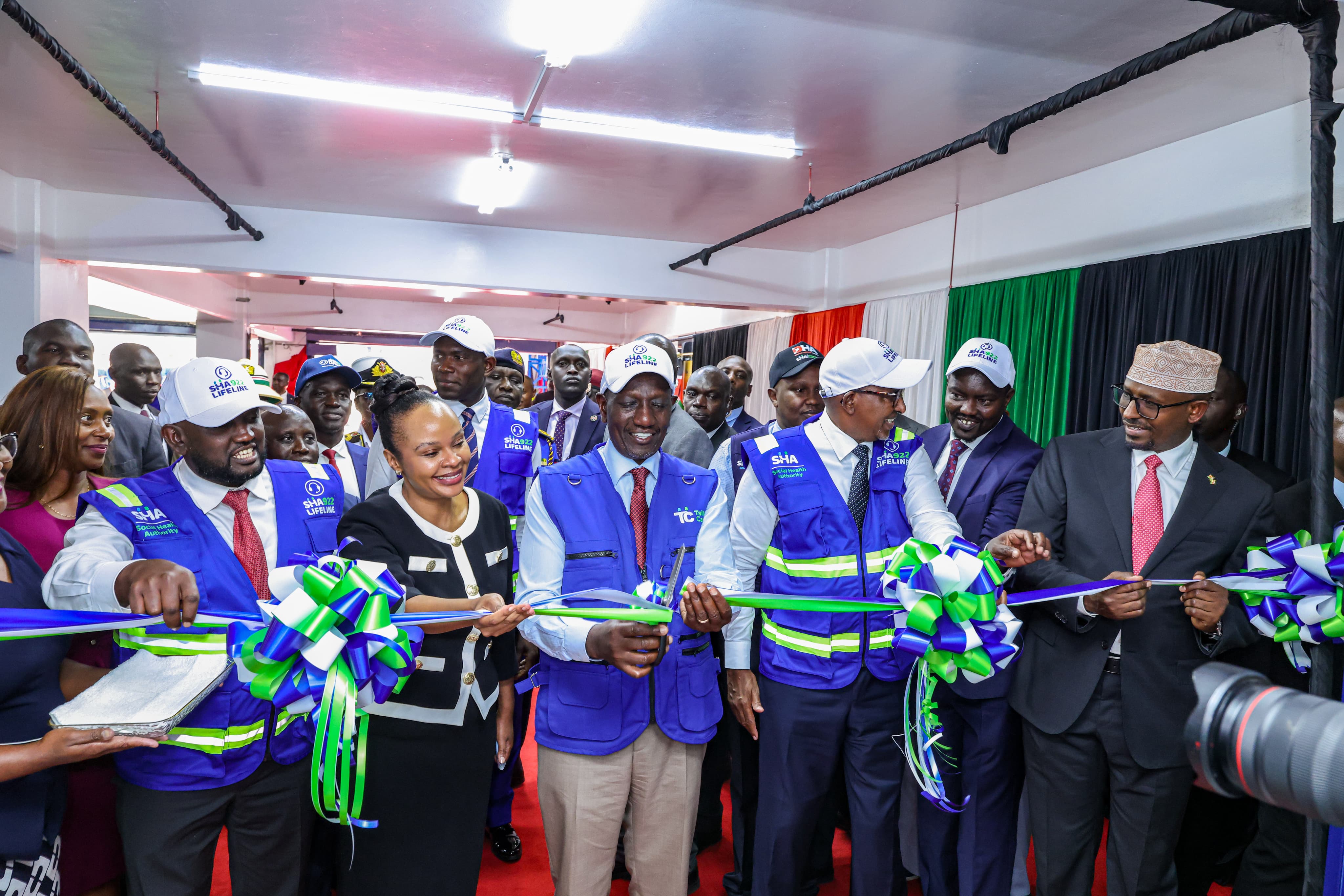
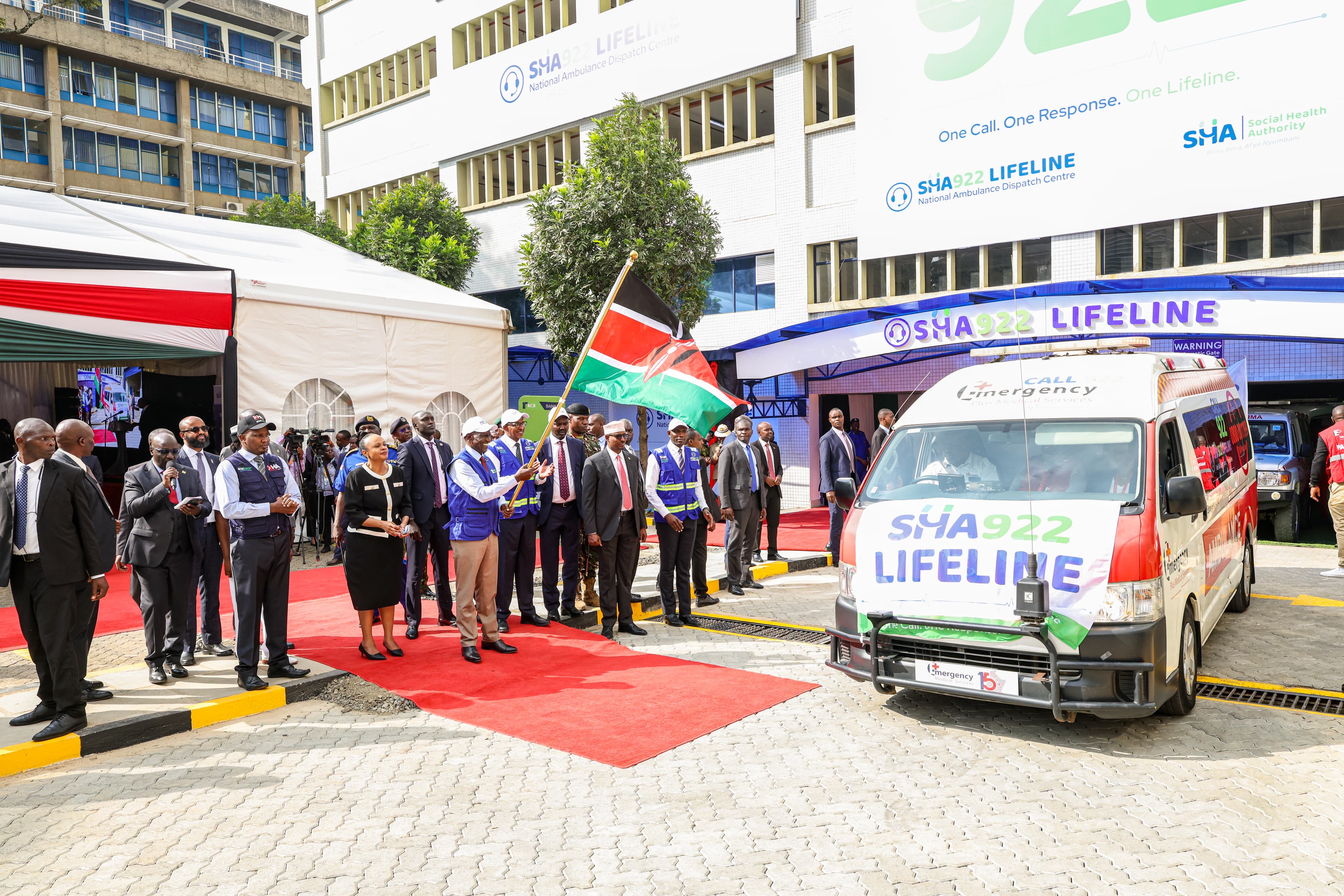
The initiative, launched alongside the SHA 922 Lifeline, will transform emergency medical services across the 47 counties. Unveiled by President William Ruto at the Social Health Authority (SHA) Headquarters in Nairobi, the Centre establishes the country’s first centralized emergency medical dispatch hub designed to coordinate rapid response services in the country.
To make the system operational, the government has deployed 1,243 emergency medical service providers nationwide, significantly expanding the country’s emergency response workforce and reinforcing the delivery of coordinated pre-hospital care.
More than 200 ambulances accredited by the Kenya Medical Practitioners and Dentists Council (KMPDC) have already been onboarded, with additional public and private providers expected to join the network as integration continues.
President Ruto anchored the initiative on the Constitution, reminding Kenyans that Article 43(2) makes a clear declaration: no person shall be denied emergency medical treatment.
He noted that for too long, this constitutional guarantee had remained beyond reach, with families often left to fend for themselves in critical moments such as childbirth complications, road accidents, or sudden illness. “In a medical emergency, every minute matters.
Doctors call the first 60 minutes the golden hour because what happens during that brief window can determine whether a patient lives, recovers fully, or suffers permanent injury or death,” he said.
The President underscored that the fate of Kenyans in emergencies should never again depend on money in their pocket, where they live, or whom they know. “That is not the equality promised by our Constitution. It is a lottery with human life. Today, we begin to change that,” he declared.
President Ruto said Kenya has one national emergency medical number: 922, which is more than a telephone number, he said, calling it a national lifeline.
“It connects a citizen in distress to emergency medical assistance, an available ambulance, an appropriate health facility, and the public financing required to pay for that intervention,” he said.
Calls to 922 will be free on every network, accessible even without airtime, he said, adding that a trained emergency dispatcher will answer, establish the caller’s location, assess the emergency, and remain on the line to provide guidance while identifying the nearest available ambulance and the most suitable health facility.
He said that ambulance evacuation and the first 24 hours of emergency treatment will be paid for through the Emergency, Chronic, and Critical Illness Fund at approved tariffs.
“No deposit. No guarantee. No negotiation. No relative sent running for money while a patient’s life hangs in the balance. In an emergency, the first question must never be whether a patient can pay. The first duty is to save life,” the President affirmed.
He reiterated that no person requiring emergency medical treatment shall be denied, delayed, referred, or transferred because they cannot pay, because their cover cannot immediately be confirmed, or because a form is incomplete.
This, he said, is not just government policy but a constitutional requirement. The President highlighted the broader health reforms implemented since 2023, noting that 32.2 million Kenyans are now registered with SHA, eight million have received treatment, and Sh178.5 billion has been paid to hospitals, health centres, and dispensaries.
He pointed out that 107,000 Community Health Promoters have been deployed to households, while the Primary Healthcare Fund has disbursed KSh23.3 billion to more than 10,000 facilities.
More than 50,000 Kenyans have received cancer care, nearly 21,000 are on dialysis, and the Emergency, Chronic and Critical Illness Fund has been financed with Sh8 billion to protect Kenyans when every other safety net runs out.
“The 922 Lifeline now brings these reforms together. The call, the dispatch of an ambulance, the admission of the patient, the treatment provided, and the payment made will form one coordinated digital process.
The money will move through the system. It will not move through the patient’s pocket,” he said.
President Ruto acknowledged that the success of the service depends on collaboration with counties, faith-based organisations, the Kenya Red Cross Society, St John Ambulance, and private providers.