
KEFRI unveils a national center of excellence for Mangrove in Lamu
EVERLINE KIMORGO AND BRIDGIT NASURUMBI-MYGOV
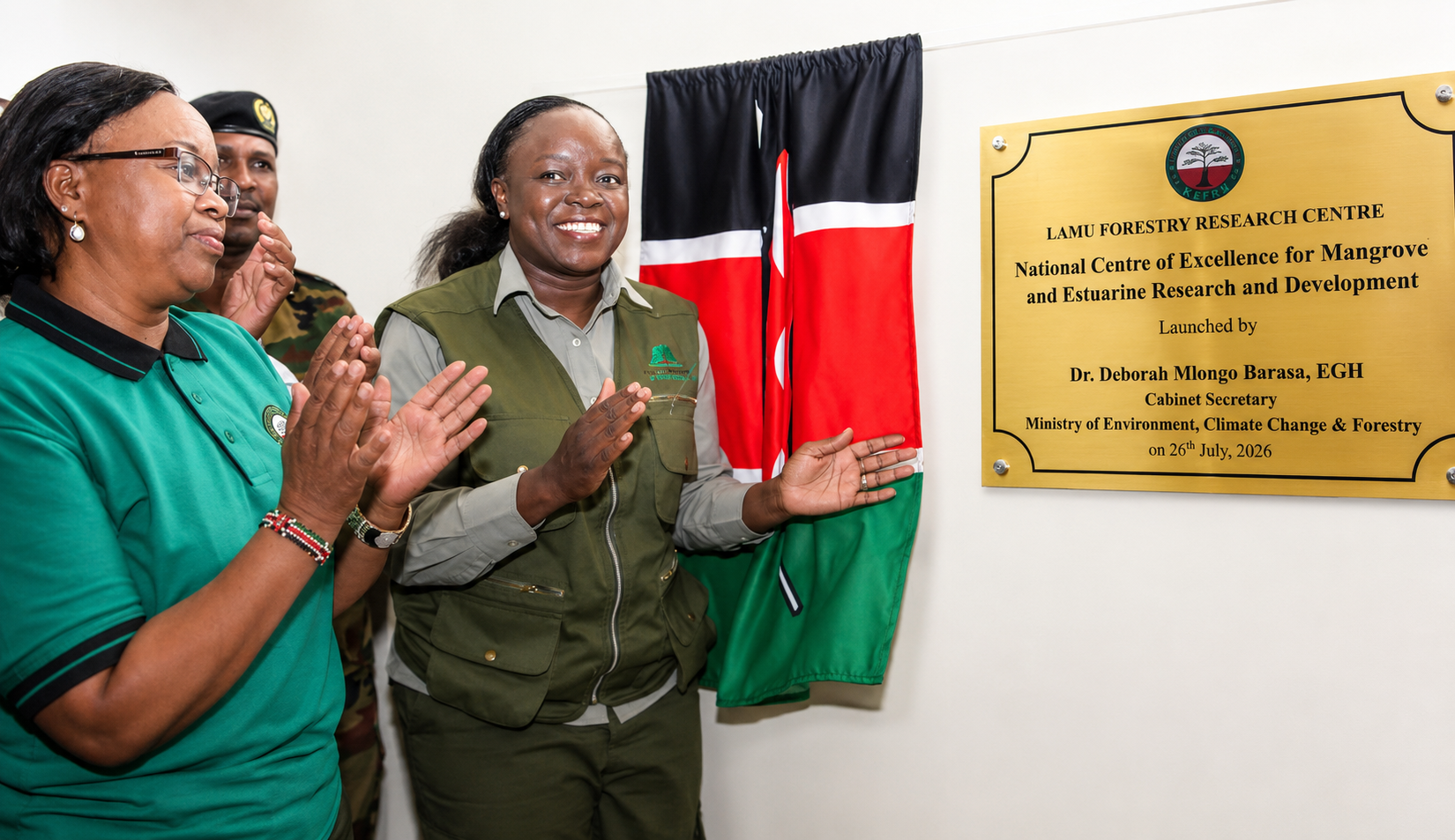
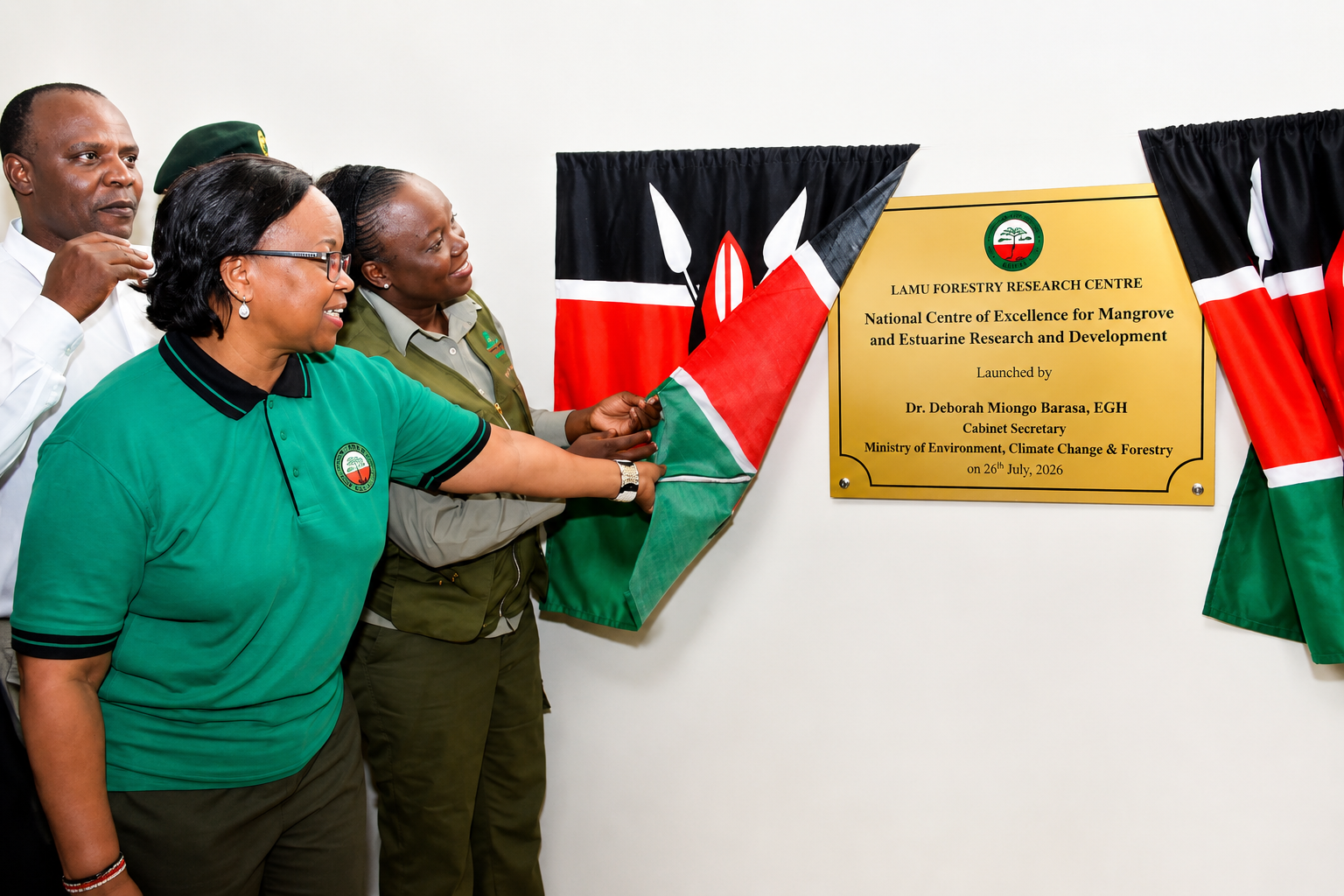
Kenya Forestry Research Institute (KEFRI) has unveiled a National Centre of Excellence for Mangrove and Estuarine Research and Development in Mokowe, Lamu County.
This positions Lamu as a key hub for advancing the protection, restoration and sustainable use of Kenya’s mangrove and estuarine ecosystems.
The centre was officially launched by Cabinet Secretary for Environment, Climate Change and Forestry Dr. Deborah Barasa, accompanied by Lamu County Governor Issa Timamy, KEFRI Chairman Lt. Gen. (Rtd.) Walter Koipaton and Director General Dr. Jane Njuguna.
During the launch, Dr. Barasa, commended KEFRI for strengthening mangrove research and advancing forestry research and conservation efforts along Kenya’s coastline.
“Although mangroves occupy a relatively small share of Kenya’s forest cover, their contribution to people, nature and the economy is immense”, she said.
Mangroves play a key role in supporting fisheries and food security, protecting shorelines, storing carbon, providing wood products, conserving biodiversity and strengthening the blue economy.
In Kenya, the total economic value of mangroves is estimated at Sh9.54 billion per year, while Lamu County accounts for Sh3.96 billion, representing 41.5 per cent of the country’s total mangrove ecosystem value.
Wood products from mangroves in Lamu are valued at Sh266.5 million, while their contribution to fisheries and food security is estimated at Sh167 million.
“Lamu County covers about 61 per cent of Kenya’s mangrove coverage, generating significant value for livelihoods and ecosystem services. However, these critical ecosystems continue to face threats, underscoring the urgent need for research, restoration and innovation,” Dr. Njuguna said.
Through the Coast Eco-Regional Research Programme, KEFRI continues to develop practical technologies for restoring degraded mangroves and conserving coastal forests.
The Centre of Excellence will serve as a platform for generating scientific knowledge, innovation and policy solutions for healthier mangroves, stronger climate resilience and a more sustainable blue economy.
KEFRI has played a key role in advancing sustainable mangrove conservation and management in Kenya through partnerships with government agencies, development partners, communities and other stakeholders.
Its contributions include developing key policy and technical tools, such as the National Mangrove Ecosystem Management Plan, restoration guidelines, technical orders, nursery manuals and county harvest plans.
KEFRI has supported the production of more than 1 million mangrove seedlings in Lamu and Kilifi counties, contributing to the national target of growing 15 billion trees by 2032.
The Institute has spearheaded technical support and capacity building on Community-Based Ecological Mangrove Restoration approaches with CFAs, BMUs, and conservation partners.