
New mining policy targets end of raw mineral exports
GODFREY WANG’ANYA AND PAUL NYOKECH-KNA
The Ministry of Mining, Blue Economy and Maritime Affairs has unveiled the draft Minerals, Mining and Beneficiation Policy 2026, a comprehensive framework aimed at transforming Kenya’s mining sector from its current contribution of about one per cent of Gross Domestic Product (GDP) to a projected 10 per cent by 2030.
The policy marks a major milestone in the country’s efforts to unlock the full potential of its mineral resources and reposition mining as a key driver of industrialisation, job creation and export earnings.
Speaking during a stakeholders’ meeting held at Magharibi Hall in Kakamega, Mines Inspector Philip Kirui said the policy builds on the foundation laid by the Mining Act, 2016, but introduces critical reforms to address emerging challenges and opportunities in the sector.
“The government recognises that mining has the capacity to contribute significantly to economic development, and this policy provides the roadmap to achieve that vision,” said Kirui.
The meeting brought together miners, investors, community representatives and government officials from the State Department for Mining to discuss the draft policy and provide input ahead of its final adoption.
The proposed policy, titled Transforming Livelihoods through Sustainable Development and Utilisation of Mineral Resources, outlines eight thematic areas: policy and legal framework; mineral resource endowment; mining and mineral management; mineral value addition and beneficiation; artisanal and small-scale mining; mineral promotion and marketing; sector enablers and sustainability; and emerging cross-cutting issues.
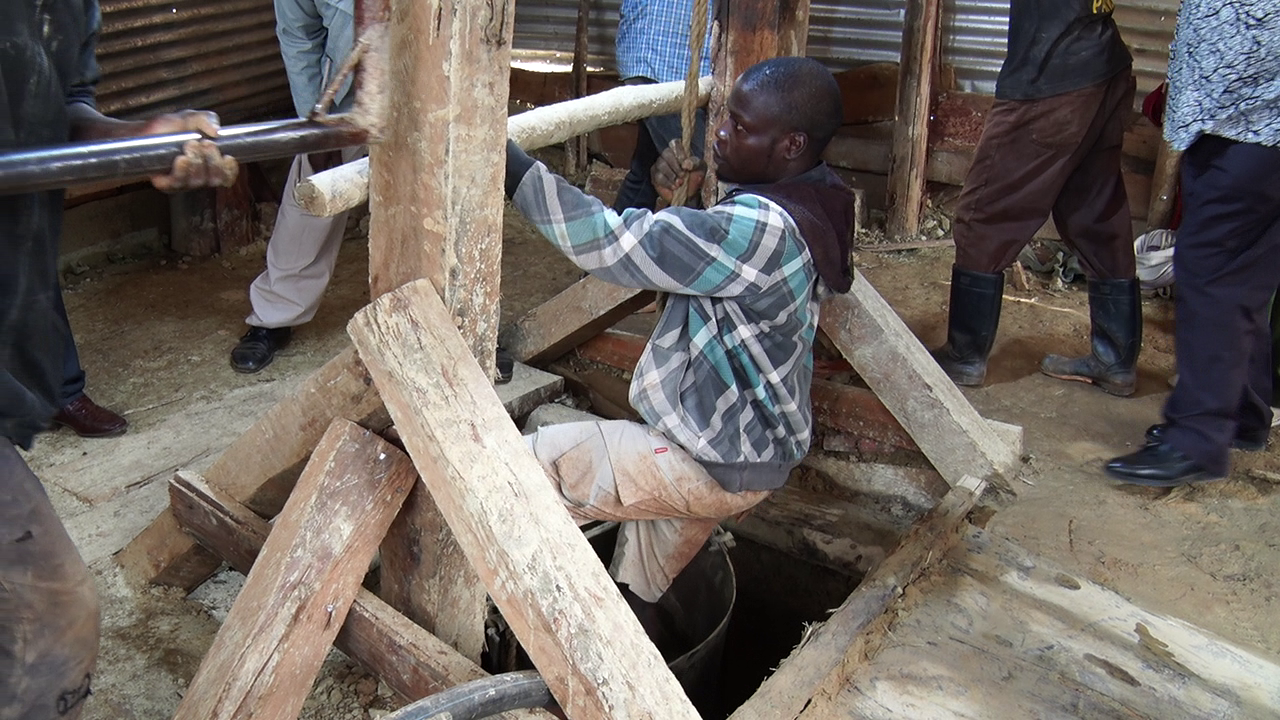
A key feature of the policy is the formalisation and integration of artisanal and small-scale mining into the mainstream economy, supported by structured mechanisms aimed at improving safety, productivity and incomes for small-scale miners.
Mines Inspector Jeff Muchiri said the policy places strong emphasis on in-country value addition and mineral processing, noting that Kenya has for long exported raw minerals with minimal benefits.
“Currently, Kenya exports the bulk of its minerals in raw form, fetching low returns on the international market. The government is committed to reversing this trend by promoting local processing and beneficiation to create jobs and retain value within the country,” said Muchiri.
He added that Kenya cannot continue exporting raw minerals while other countries reap the benefits of value addition, noting that the new framework seeks to correct this imbalance.
A major highlight of the policy is the gazettement of 14 strategic minerals considered essential for key industrial sectors, including renewable energy, electric vehicle manufacturing and advanced technology industries.
The government says prioritising these minerals will position Kenya as a regional hub for mineral exploration, processing and value addition.
The forum also revealed that the government has completed a nationwide airborne geophysical survey covering the entire terrestrial landmass of Kenya.
The survey identified 970 geophysical anomalies, which will undergo ground-truthing to confirm mineral potential and provide reliable geological data for investors.
Brian Bundi, the Ground Chief Mining Officer for Busia County, urged stakeholders to provide constructive feedback, noting that public participation would shape the final policy.
“This is your opportunity to be heard. The government has developed this policy in a consultative manner, and we want to ensure it reflects the aspirations of all stakeholders,” said Bundi.
Participants raised concerns about implementation, particularly access to geological data, fair distribution of mining benefits and royalties, and the participation of local communities in mining revenues.
Investor Henry Shikanga shared his experience of losing over Sh1 million in mining ventures due to lack of reliable geological information, calling for improved access to data.