
Kenya pushes farm mechanization to improve harvests
NANCY OMONDI AND ZIPPORAH ODIONYI-KNA
Kenya is intensifying efforts to modernize agriculture through mechanization and digital innovation, with Agriculture and Livestock Development Cabinet Secretary Mutahi Kagwe urging farmers, financiers, and investors to embrace technology as the key to productivity and food security.
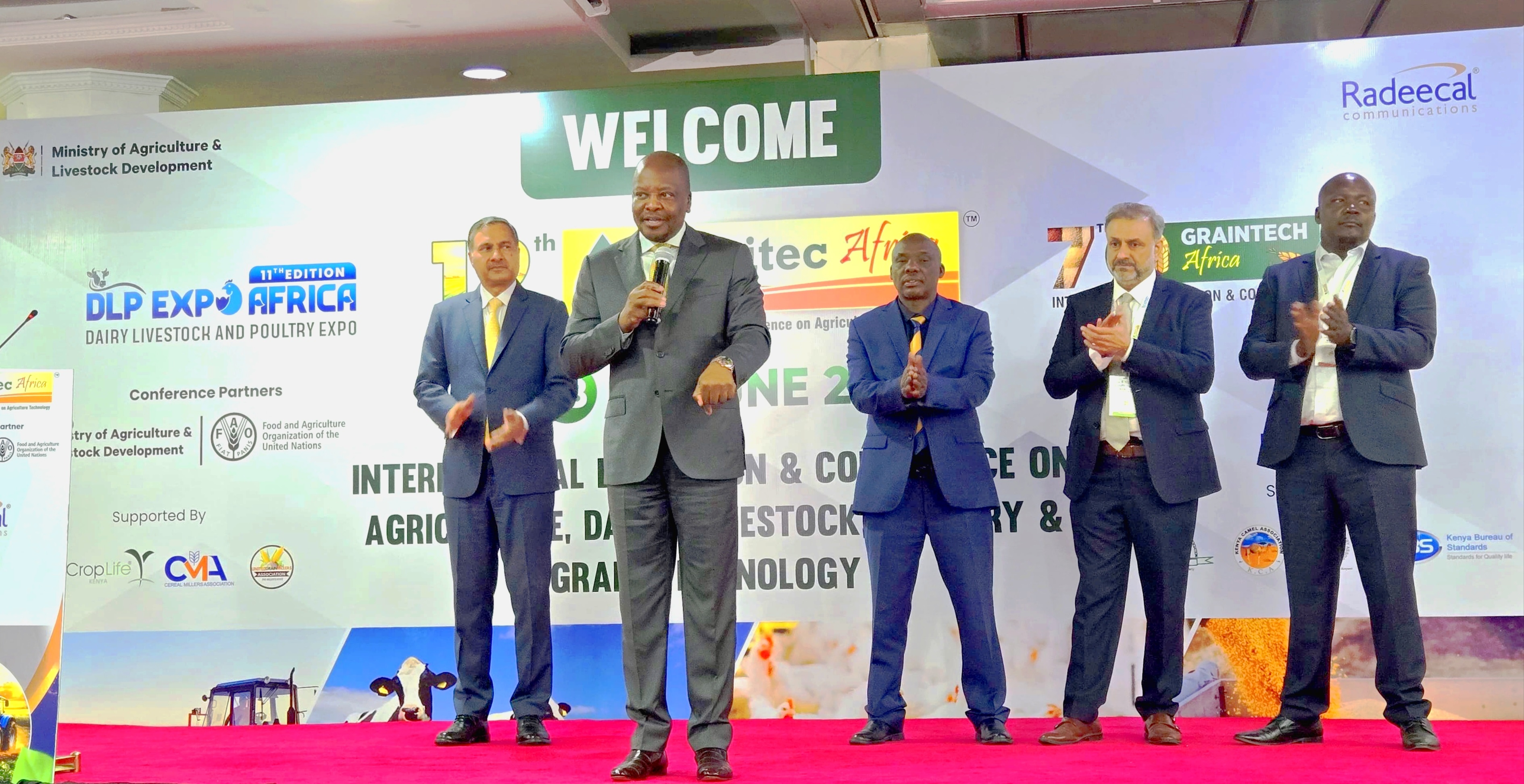
Speaking at the opening of the 12th Agritec Africa Exhibition at the Kenyatta International Convention Centre (KICC) in Nairobi, Kagwe described mechanization as the game changer that will transform farming into a profitable, youth-driven enterprise.
“The average Kenyan farmer is 64 years old. We want to move from 64 to 34. That is the idea behind mechanisation and digitisation,” he said, drawing applause.
His remarks underscored the urgency of revitalising a sector grappling with an ageing workforce and the need to attract younger generations into agriculture.
Kagwe stressed that Kenya cannot continue relying on traditional methods if it hopes to feed a growing population and remain competitive in regional and global markets.
Mechanisation, he argued, is the lever that will boost productivity, reduce losses, and generate higher incomes while creating new opportunities for skilled employment. He dismissed fears that machines would replace human labour, insisting instead that they would redefine it.
“You remove the jembe job, but you train the same person to become a tractor operator and give them a better-paying opportunity,” he explained.
In his vision, mechanisation is not about eliminating jobs but upgrading them—creating specialised roles in equipment operation, maintenance, repair, and spare parts supply chains.
The Cabinet Secretary revealed that the Government is working with the National Treasury to craft policies that ease the importation of farm machinery while simultaneously encouraging local assembly and manufacturing.
He emphasised that Kenya must not only buy tractors from abroad but also build them locally. “We are happy to buy equipment from China, India, Italy and elsewhere, but we will be even happier when those tractors are manufactured or assembled here in Kenya,” he said.
Kagwe extended an open invitation to both local and international investors to partner with the Government in establishing assembly and manufacturing plants.
Such ventures, he noted, would reduce costs, create jobs, and strengthen Kenya’s industrial base while adding value to the agricultural transformation agenda.
To make mechanisation more accessible, Kagwe urged farmers to embrace cooperative approaches.
Village groups, savings organisations and cooperatives, he suggested, could pool resources to jointly purchase equipment and share operational costs.
He also encouraged young entrepreneurs to explore opportunities in tractor hire services, equipment leasing and mechanisation support businesses emerging sectors he described as ripe with growth potential.
Kagwe challenged banks to rethink their lending models, arguing that interest rates of 20 to 25 per cent are prohibitive.
“We are prepared to buy the tractors, but not at 20 or 25 per cent interest rates. Affordable financing of around 10 per cent with repayment periods of between three and five years would make mechanisation accessible to more farmers,” he said.
He called on machinery suppliers to collaborate with financial institutions to provide integrated packages that ease acquisition for smallholders.
Beyond mechanization, Kagwe highlighted the Government’s partnership with the Food and Agriculture Organization of the United Nations (FAO) to advance digital agriculture.
Through technology driven farmer registration, the initiative seeks to capture identities, land ownership details, farm locations and acreage, ensuring subsidies and inputs reach legitimate beneficiaries.
“The title, the location, the size of the land and the farmer’s identity will be linked through technology to ensure support reaches the right beneficiaries,” he explained.
Digital platforms, he added, will improve planning, monitoring and resource allocation, enabling government agencies to make decisions based on accurate data.
The exhibition itself underscored the scale of innovation sweeping across the continent.
Local and international exhibitors showcased cutting edge farm machinery, irrigation technologies, renewable energy solutions and digital farming systems all designed to accelerate Africa’s agricultural transformation.
India’s High Commissioner to Kenya Dr. Adarsh Swaika reaffirmed New Delhi’s commitment to deepen cooperation through technology transfer, innovation and shared best practices.