
State-led street families’ rehabilitation effort cuts their population by half
ERASTUS GICHOHI-KNA
The Government’s tailor made rehabilitation interventions for street families have achieved remarkable progress, reducing the vulnerable population by half over the past eight years.
Through sustained investment in rehabilitation, integration, family care, and child protection programs, the number of street families has declined from more than 46,000 in 2018 to 18,049 by the end of 2025.
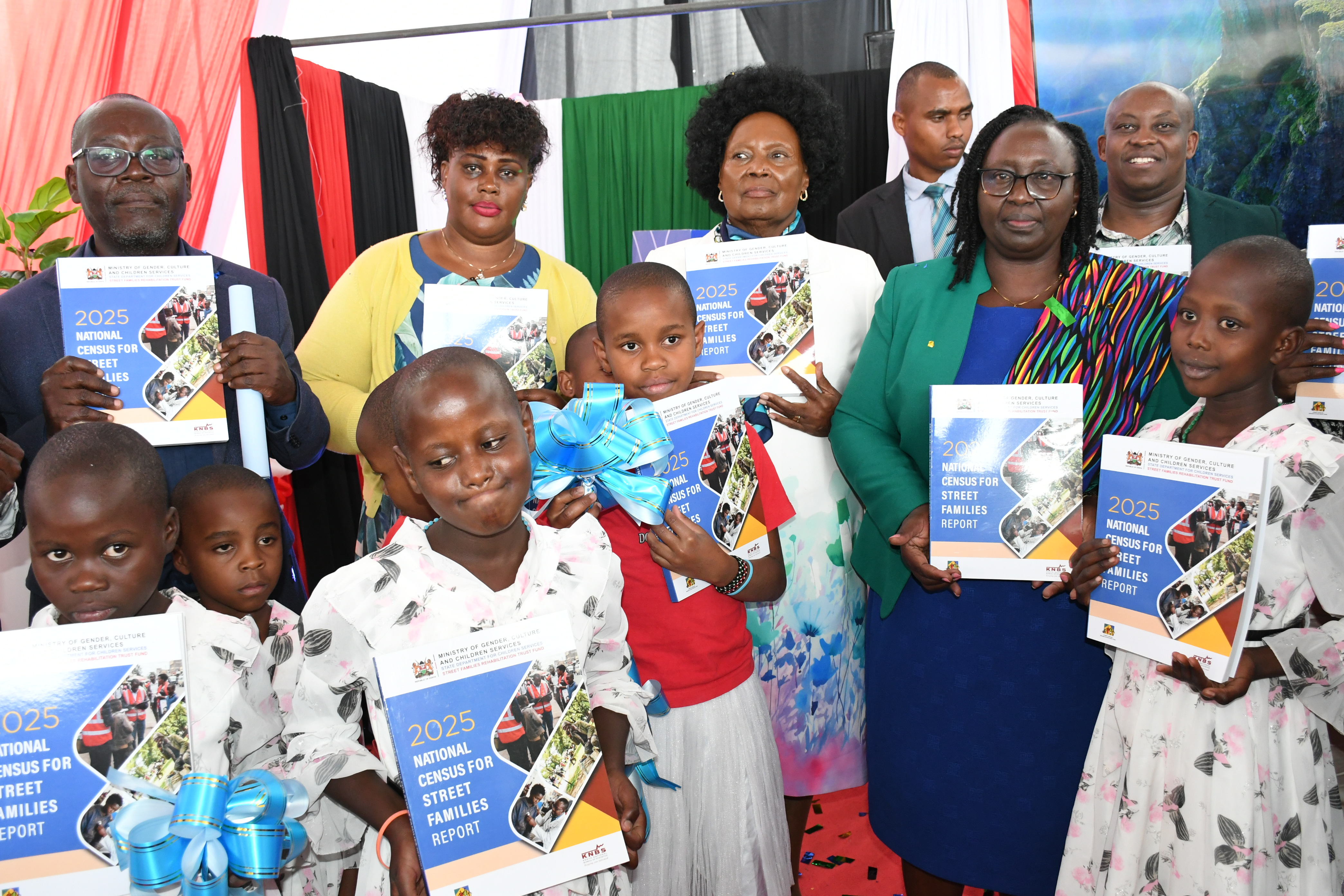
These findings are contained in the 2025 National Census for Street Families report, conducted by the Street Families Rehabilitation Trust Fund in collaboration with the Kenya National Bureau of Statistics (KNBS).
The report is intended to guide data driven strategies as the country advances toward a street families free environment.
This emerged as Nairobi, Nakuru and Mombasa counties continue to record the highest numbers, with poverty, family instability, economic hardships, and drug and substance abuse being the major contributors of the influx.
Of the 18,049 street-connected persons recorded during the months-long 2025 census, 78.6 per cent were male and 21.4 per cent female. Nairobi recorded the highest count at 4,690 persons, followed by Nakuru with 1,546, Mombasa 1,428 and Kiambu 1,370, while Nyandarua, Lamu and Tana River recorded the lowest figures.
According to Gender, Culture and Children Services Cabinet Secretary Hanna Wendot, the government was committed to scaling up rehabilitation and integration interventions to rid the country of street families.
Wendot noted that since the rehabilitation exercise was initiated in 2003, the country had made significant strides and remained on course to ensure all persons enjoyed equal human dignity.