
Nyeri entrepreneur turns 100 hectares into animal feed hub
SAMUEL MAINA AND STEPHEN NDERITO-KNA
To own 100 hectares of land is a feat that most Kenyans can only dream of. To dedicate such vast acreage exclusively to animal feed production is a decision few would dare to make.
Yet this is exactly what Githaiga Kihara chose to do after shutting down his printing business in Nairobi a decade ago. Today, he is grateful for that seemingly unconventional choice.
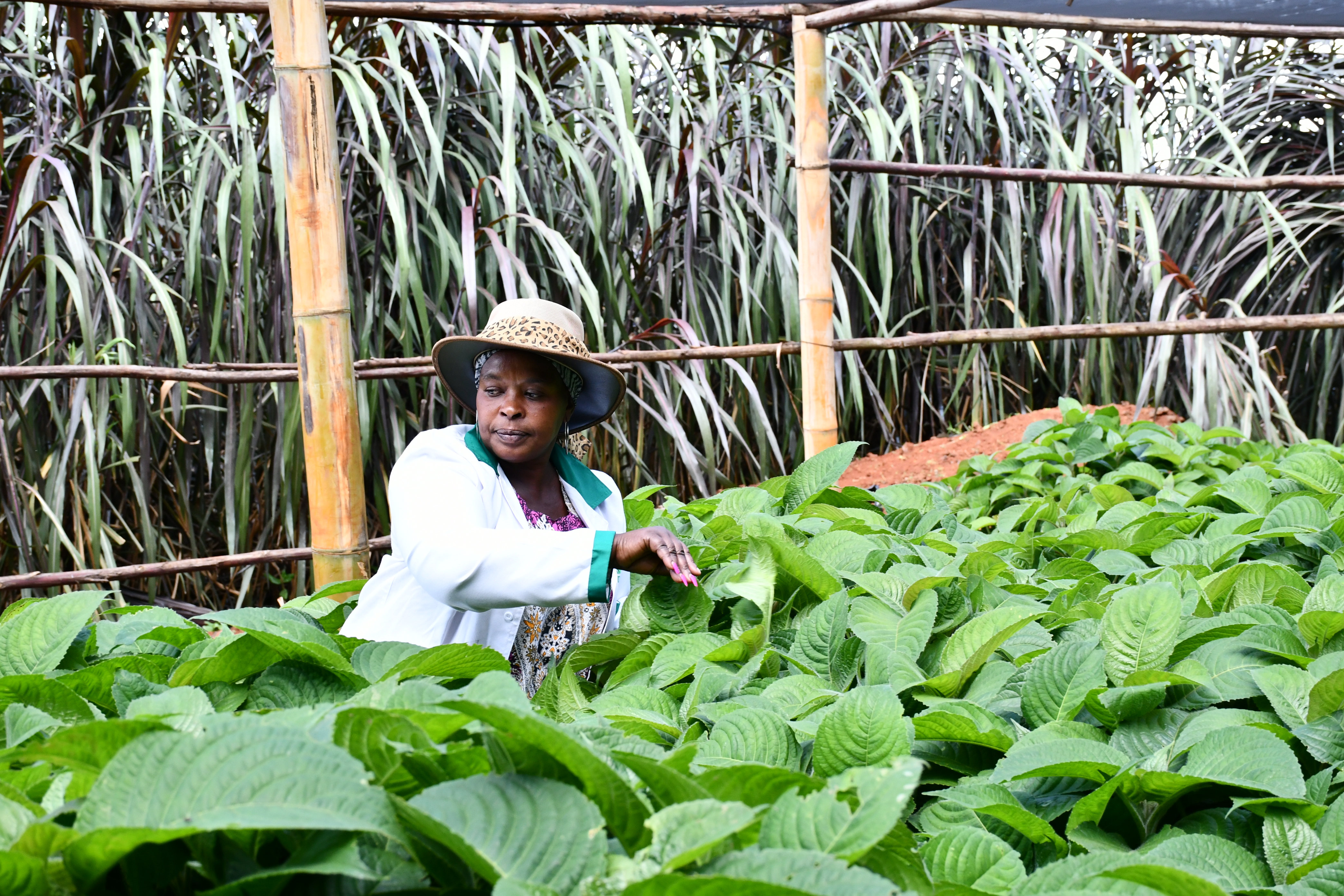
During our visit to one of his farms in Chorong’i village, Nyeri Central Sub-County, we encountered a team of workers busily preparing Napier grass cuttings for sale.
Here, just like in his other farms in Nyeri, you will find workers either harvesting nappier cuttings or preparing fodder for the local market or for export to other countries.
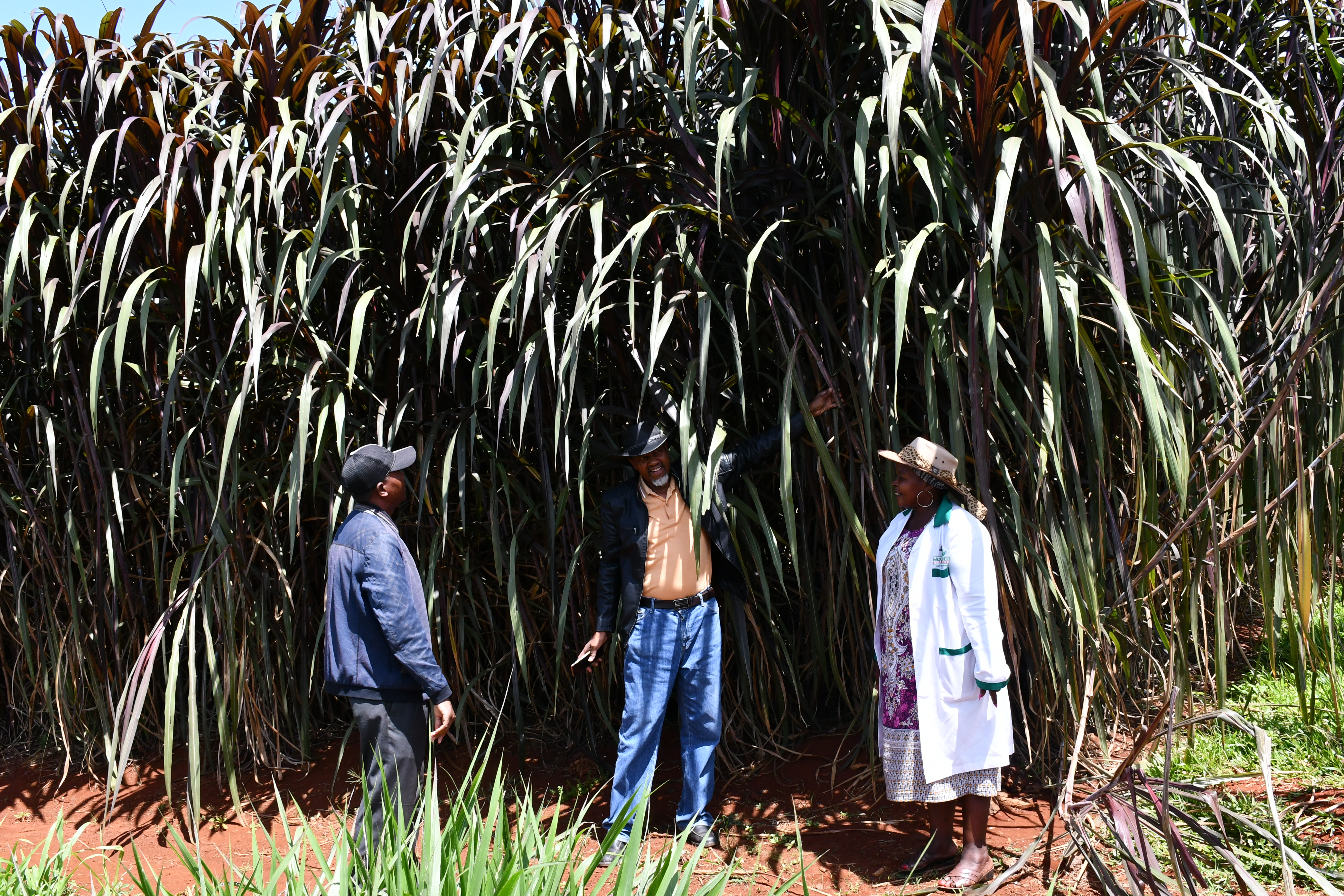
Here one comes across neatly tendered rows and bushes of Australian napper grass (pennisetum purpureum), Guinea grass (panicum siambasa), Guatemala grass, juceo grass (cenchrus fungigraminus), super k vine and signal grass (branchairia basilisik) and Nacedero(trichantera giganthera ).
It’s from these fodder species that Kihara has carved a name for himself locally and also globally.
“I started this enterprise about ten years ago in Gakindu, Mukurwe-ini subcounty, out of a need because I had some dairy goats which did not have enough feed.
When I did some research, I realized that I could get better feed and I went for it,” he told KNA at the farm.
Kihara started off by planting signal grass with help from then Kenya Agriculture Research Institute (now KALRO) station at Katumani in Machakos.
It is this single trial which eventually opened a floodgate for the introduction of other fodder species such as Australian Red nappier which has become a key product in his enterprise.
Today, his farm is exporting red nappier cuttings to farmers in 12 other African countries including Nigeria, Congo and Sierra Leone.
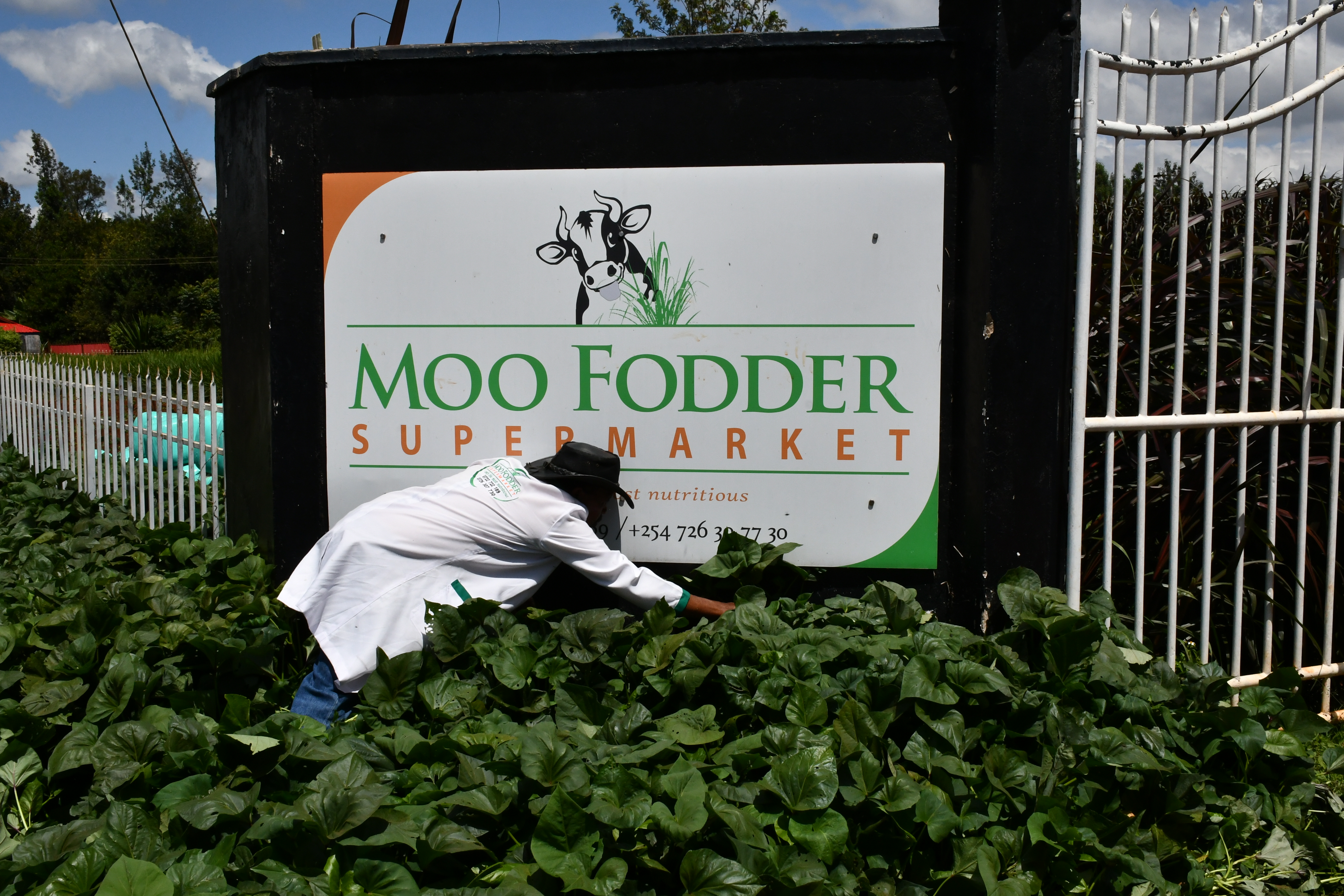
But this breakthrough, according to him, could not have been possible without employing social media platforms such as Facebook, WhatsApp, Instagram and Tik Tok where the business goes by the tag name Moo Fodder Supermarket.
“When I started posting my products on my Facebook page, people started inquiries and it became a business. This went on and on until I got what I can call a breakthrough when I got an order of one million splits,” he narrates.
Having succeeded in getting his first clients, Kihara went further and sourced for another variety of fodder and introduced the Super nappier which he attests did quite well.
He also used this expertise to sensitize the neighbouring communities on the need to grow their own fodder for their livestock as one way of improving productivity and cutting down dependence on commercial feeds that costed heavily.