

State urges broadcasters to embrace new digital era to stay competitive
NICHOLAS OCHIENG AND MIKE NJARIA-KNA
The Government has challenged African broadcasters and media stakeholders to embrace emerging technologies to position the continent competitively in a rapidly evolving global broadcasting landscape.
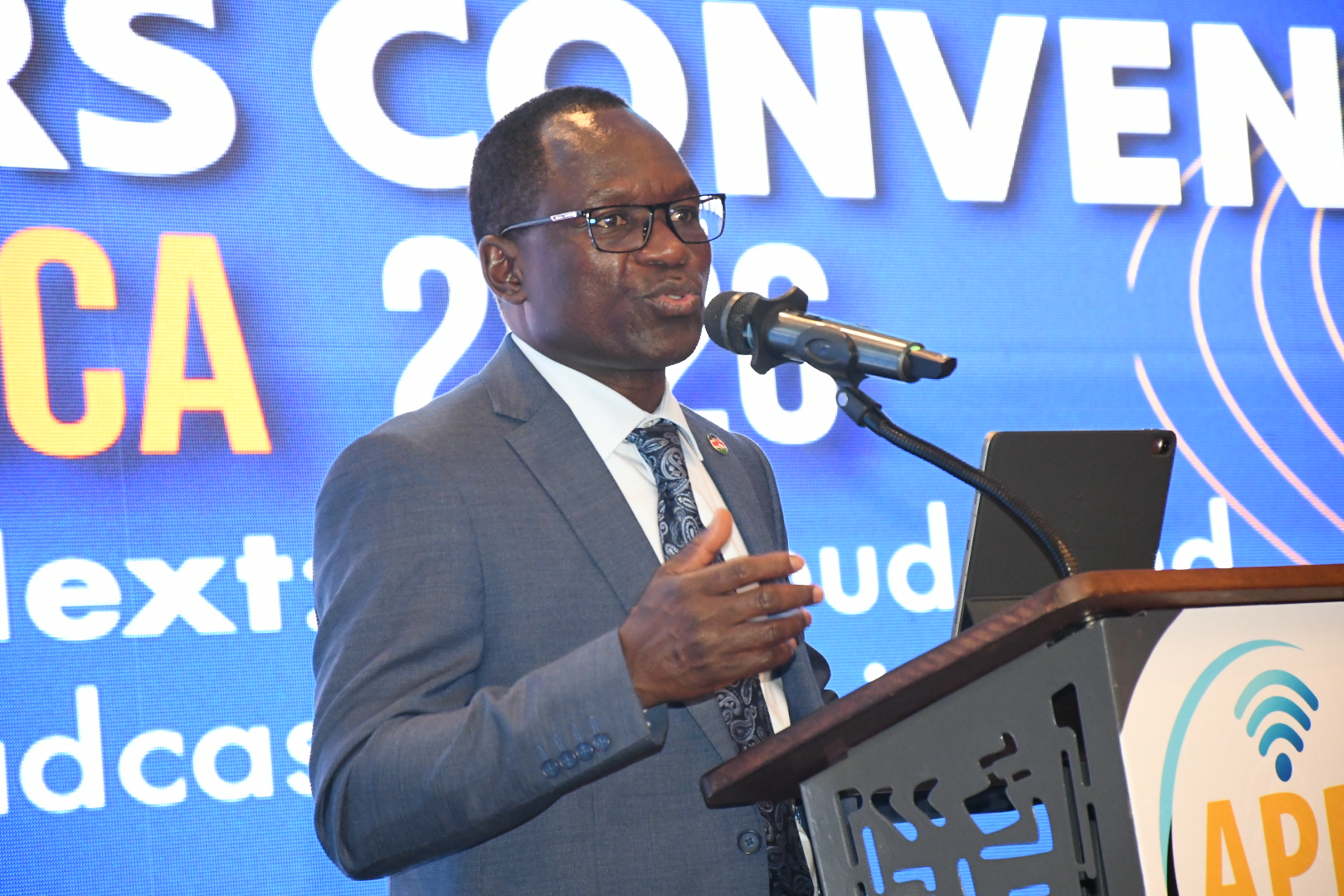
Speaking during the opening of the Broadcasters Convention – East Africa 2026 in Nairobi, State Department for Broadcasting and Telecommunications Principal Secretary Stephen Isaboke noted that Africa’s media industry has already entered a new digital era driven by data, AI, and cloud-enabled technologies.
Isaboke noted that the transition from traditional broadcasting to digital-first media ecosystems is fundamentally changing how content is created, distributed and consumed.
“When we talk about AI and digital transformation, it is no longer about what is coming in the future. The transformation is already here with us,” Isaboke stressed.
The PS explained that conventional broadcasting models centred on transmission infrastructure are steadily giving way to cloud-enabled and platform-driven systems that support greater efficiency, scalability and audience engagement.
He recalled Kenya’s migration from analogue to digital broadcasting in 2015, describing the move as one of the country’s most significant technological milestones despite legal and operational challenges experienced at the time.
According to Isaboke, Kenya’s early adoption of digital broadcasting positioned the country among Africa’s leading digital economies and laid the foundation for rapid internet expansion and innovation.
The PS emphasized that the government continues to prioritize digital transformation under the Bottom-Up Economic Transformation Agenda (BETA), where the digital superhighway and creative economy form key pillars of national development.
He disclosed that the government is accelerating the roll-out of digital infrastructure through expansion of fibre optic connectivity, establishment of digital hubs and installation of public Wi-Fi hotspots across the country.
Isaboke said the State is rolling out about 100,000 kilometres of fibre optic cable nationwide, including underserved rural areas, to strengthen connectivity and bridge the digital divide.
He further revealed that digital hubs equipped with computers and internet access are being established in wards across the country so as to equip young people with digital skills and support innovation.
In addition, the government is setting-up 5,000 free public Wi-Fi hotspots in markets, schools, hospitals and other public spaces the time had come to confront the challenges decisively and eliminate them.
She reaffirmed the Government’s commitment to tackling GBV and the abuse of illicit alcohol in the region.
She said it is disheartening that the Central region has recently been in the news for all the wrong reasons with reports of children being abducted, defiled and later killed in a gruesome manner.
The PS pointed out that the region is currently grappling to enhance internet accessibility.
“These investments are intended to strengthen connectivity, support innovation ecosystems and create an enabling environment for the creative and media industries to thrive within the digital economy,” he explained.
The PS observed that Kenya’s mobile connectivity had expanded significantly, driven by increased smartphone penetration, 5G rollout and rising data consumption.
He noted that changing media consumption habits, especially among young people, were compelling broadcasters to rethink traditional business models and adopt mobile-first and digital content strategies.
“The younger generation consumes content differently. Their lives revolve around mobile technology and digital platforms, and broadcasters must adapt to this reality,” he added.
Isaboke said emerging technologies are transforming the media value chain through automated production, real-time translation, audience analytics and personalized content delivery.
He cited advancements in AI-powered translation technologies, that now enable audiences to consume foreign productions seamlessly in local languages.