


Kenya pivots to prevention-led health security as new national frameworks launched
Judy Sheri-PCO
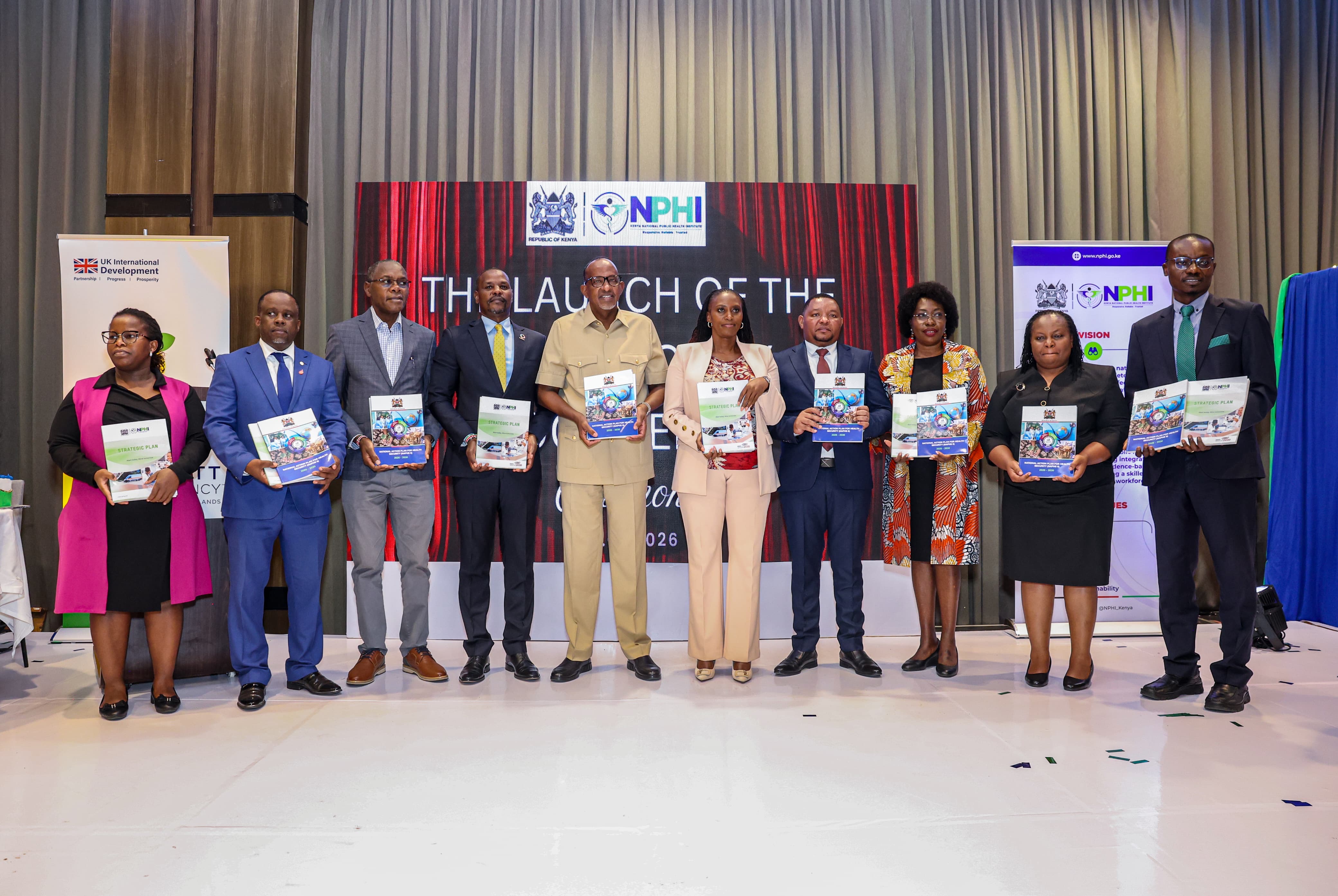
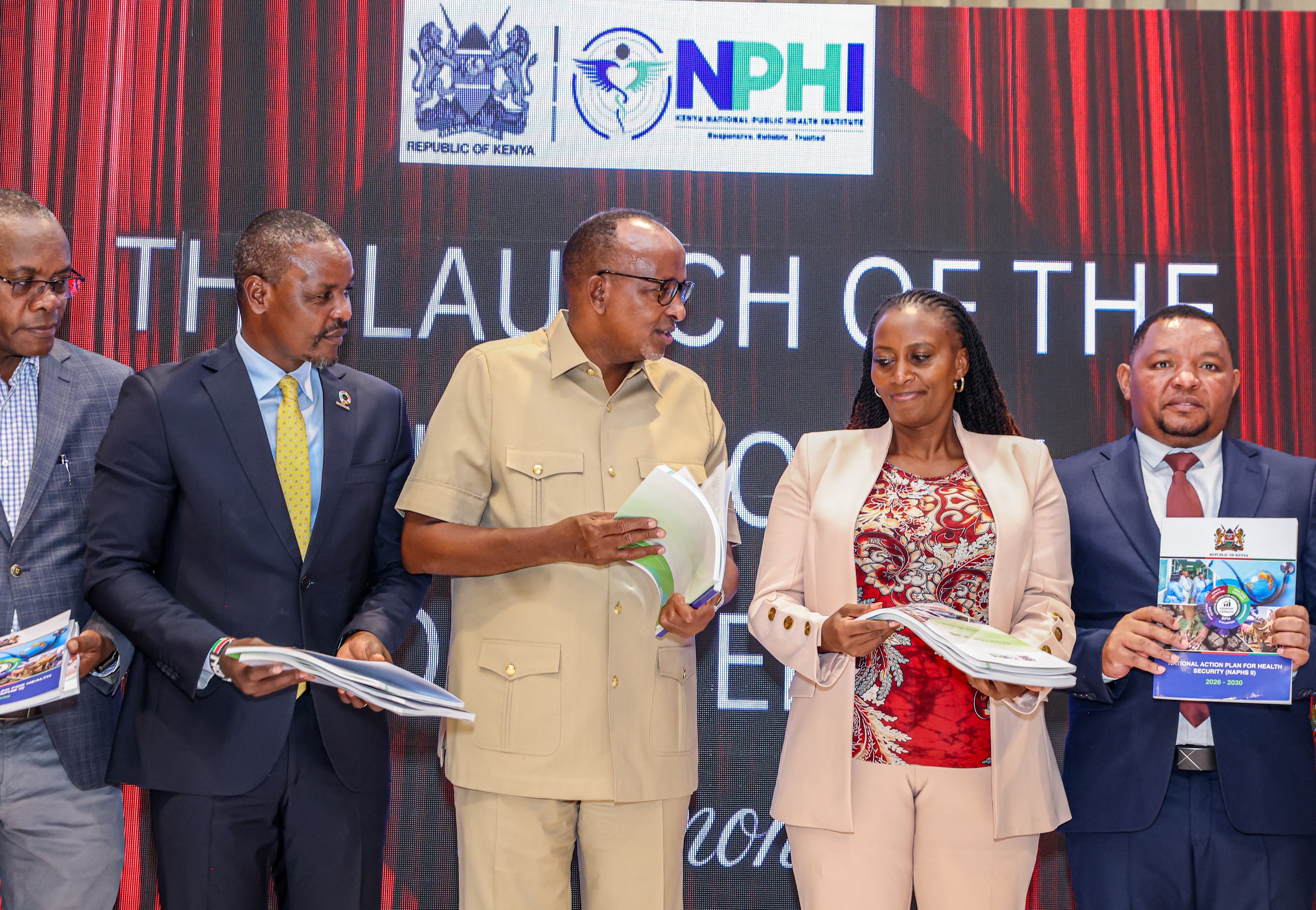
Health Cabinet Secretary Aden Duale has announced a major policy shift placing preparedness, prevention and system resilience at the centre of Kenya’s health security strategy following the launch of the Kenya National Public Health Institute (KNPHI) Strategic Plan (2023–2027) and the National Action Plan for Health Security (2026–2030).
Speaking in Nairobi, the Cabinet Secretary said the new frameworks signal a transition from a reactive, crisis-driven model to one that anticipates, detects and responds to health threats in a timely and coordinated manner.
He emphasised that strengthening preparedness is critical not only for protecting lives but also for safeguarding livelihoods and sustaining economic stability in the face of emerging public health risks.
He described the Kenya National Public Health Institute as the backbone of the country’s health security architecture, integrating disease surveillance, laboratory networks and emergency operations into a unified national system.
The institute is expected to strengthen early detection of outbreaks, improve coordination of responses and enhance accountability across all levels of government.
The Cabinet Secretary highlighted progress in operationalising the institute, including the establishment of governance structures, transition of technical functions and mobilisation of sustainable financing to support its mandate, laying the foundation for a more responsive and resilient health system.
Under the new frameworks, the government will prioritise real-time data use, strengthen emergency preparedness and response, enhance risk communication and advance a One Health approach linking human, animal and environmental health.
The approach is expected to improve the country’s capacity to detect and manage complex and emerging health threats.
On Universal Health Coverage, the Cabinet Secretary said more than 30 million Kenyans have registered under the Social Health Authority, expanding access to healthcare and financial protection while strengthening early detection at the community level.
He underscored Kenya’s growing regional role in health security, citing the Africa CDC Eastern Africa Regional Coordinating Centre and the WHO Regional Emergency Hub in Nairobi, which position the country as a hub for regional coordination and rapid response to cross-border threats.
The Cabinet Secretary called for sustained domestic financing to anchor health security gains, noting that strong, self-reliant systems are essential for long-term resilience.
He also announced plans to convene the inaugural Kenya Health Security Convention to align priorities and position the country as a regional centre for health security dialogue.
Those in attendance included Mary Muthoni, Principal Secretary for Public Health and Professional Standards; Festus K. Ng’eno, Principal Secretary for Environment and Climate Change; Neema Rusibamayila Kimambo, WHO Acting Country Representative; John Kariuki, Chairperson of the Kenya National Public Health Institute Board; and Kamene Kimenye, Acting Director-General of the Kenya National Public Health Institute, alongside representatives from Africa CDC, development partners, and stakeholders from national and county governments.