
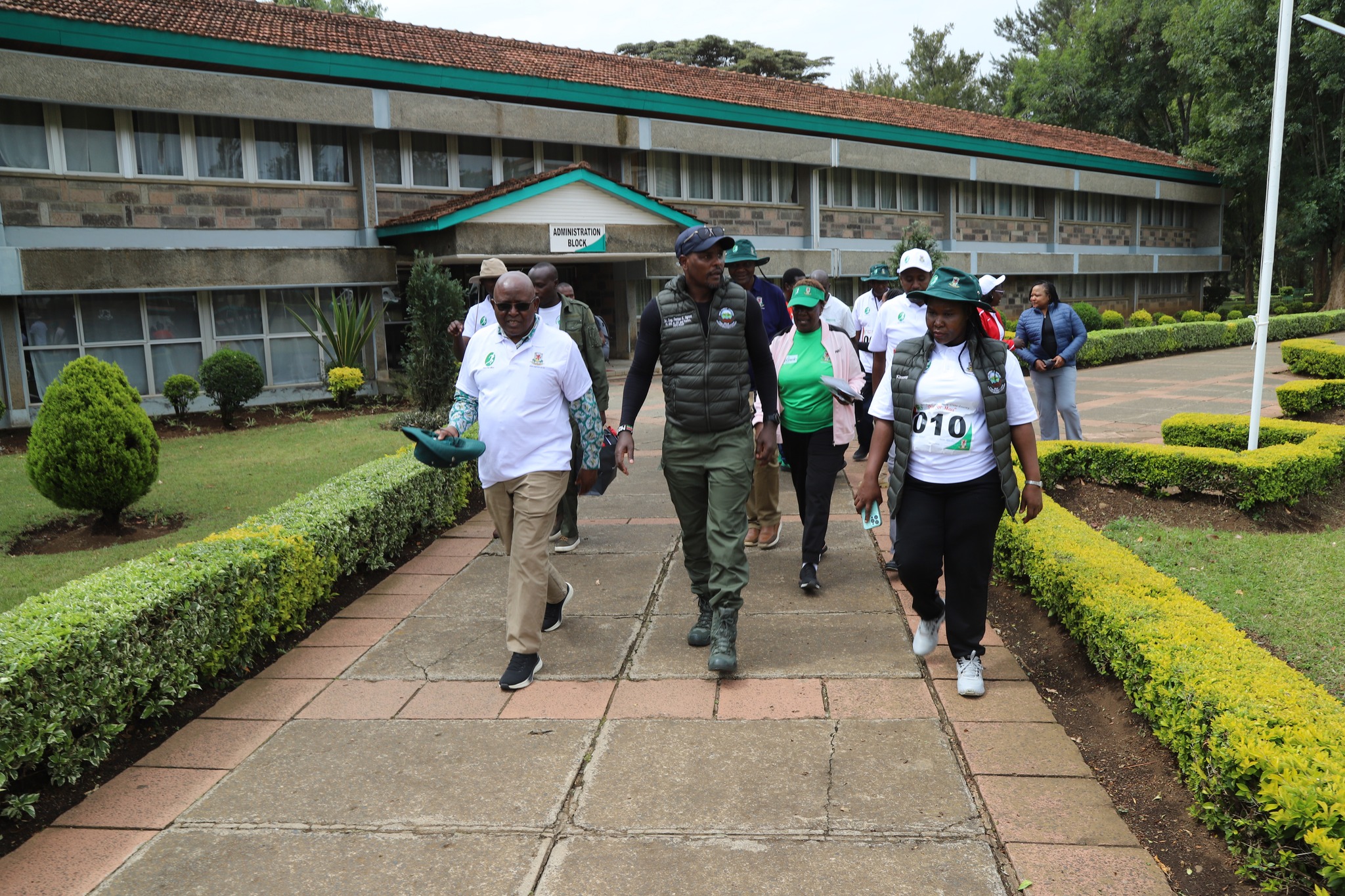
Mau Forest Restoration Programme records major gains
CHRISTINE CHERYL-MYGOV
The Government has reported significant progress in the restoration of the Mau Forest Complex under the first edition of the Mau Forest Complex Integrated Conservation and Livelihood Improvement Programme (MFC-ICLIP), as preparations begin for the second phase scheduled to launch in July 2026.
Speaking during a media and partners’ stock-take meeting, Principal Secretary for Environment and Climate Change, Dr. Eng. Festus Ng’eno, said the programme has demonstrated that integrated landscape restoration in the Mau is both achievable and impactful when driven by communities and supported through partnerships.
“The Mau Forest Complex remains Kenya’s most important water tower, supporting millions of livelihoods. Its restoration is not just an environmental imperative but a national social and economic priority,” Dr. Ng’eno said.
The programm e , launched by President William Ruto in October 2025, is designed as a 10-year transformative initiative to combat climate change through community-centered and partnership-supported interventions.
Since its rollout, implementation activities have been ongoing, with encouraging results across restoration, livelihoods, and partnerships.
Under the restoration objective, more than 1.2 million seedlings have been planted across 1,200 hectares of forest blocks. In Bararget Forest Station alone, 132 hectares have been restored with 130,000 seedlings under the Adopta-Block Initiative.
Youth and women-led tree nurseries have also been established, strengthening local enterprises while providing critical inputs for restoration.
Dr. Ng’eno praised the leadership of President Ruto, First Lady Rachel Ruto, senior government officials, and Nakuru Governor Susan Kihika, who have adopted forest blocks as part of the initiative.
He noted that the programme is being delivered by a volunteer multi-institutional technical team, underscoring the spirit of national stewardship.
A key catalyst of the programme is the Trees Establishment and Livelihood Improvement Scheme (TELIS), which allows communities to grow trees alongside crops in forest land.
The model is proving to be a game changer in achieving the presidential directive to grow 15 billion trees by 2032.
Through TELIS, the government aims to restore 3,300 hectares during the long rainy season between March and May 2026.
“TELIS fosters deep community ownership, reduces restoration costs, improves household income and food security, and enhances tree survival. It demonstrates that conservation and livelihoods are mutually reinforcing objectives,” Dr. Ng’eno said.
Complementing TELIS, the Nyayo Tea Zones Development Corporation is rolling out socio-economic buffers to provide livelihood options while curbing encroachment.
Indigenous tree seedlings supplied by the corporation are also being used in restoration efforts.
The programme has further supported climate-smart enterprises in dairy, potato, pyrethrum, avocado, and beekeeping value chains, benefiting community groups through partnerships with government agencies and private foundations.
According to the Ministry, the first edition of MFCICLIP has been resourced by 76 institutions.
Kenya Commercial Bank, Dedan Kimathi Foundation, Mama Doing Good, and other partners have established fruit orchards in 6,150 schools across Kuresoi North, Kuresoi South, Molo, and Njoro sub-counties.
Safaricom, Kenya Deposit Insurance Corporation, Kenya Tea Development Agency, and several other institutions have also contributed to restoration work, while the Kenya Forest Research Institute has provided certified seedlings.
The programme has attracted support from Athletics Kenya, Cooperative Bank, Egerton University, Coca-Cola, Kenya Pipeline Corporation, and Kenya Literature Bureau, among others, who backed the successful MFC-ICLIP Marathon.
International organizations including UNDP, WWF Kenya, and Conservation International have also partnered in the initiative.
Dr. Ng’eno emphasized that while the first edition has made notable progress, the second edition will focus on scaling up restoration efforts, deepening livelihood integration, and ensuring measurable impact.
“With the enormity of these targets, our focus must now shift towards rapidly expanding restoration, strengthening farmer support systems, closing infrastructure gaps, and improving value chain efficiency so that restoration translates into real economic opportunity for communities,” he said.
The second edition, set to begin in July 2026, will require stronger coordination and deeper partnerships with county governments, development partners, the private sector, and community organizations.
“Our immediate priority is to accelerate delivery on the ground, mobilize additional partners and resources, and ensure that restoration and livelihoods advance together with urgency and accountability,” Dr. Ng’eno added.
The Mau Forest Complex, Kenya’s largest water tower, continues to be at the center of national climate action.
The government hopes that the MFC-ICLIP programme will serve as a model for integrated conservation and livelihood improvement, reinforcing Kenya’s commitment to environmental sustainability and community empowerment.