
Schools’ LPG adoption project earns praise
Fatma Said-KNA
Some 20 schools have pioneered and benefitted from the Liquefied Petroleum Gas Adoption Project which aims to increase LPG usage in Kenya by promoting it as a clean and affordable cooking fuel in public schools and institutions.
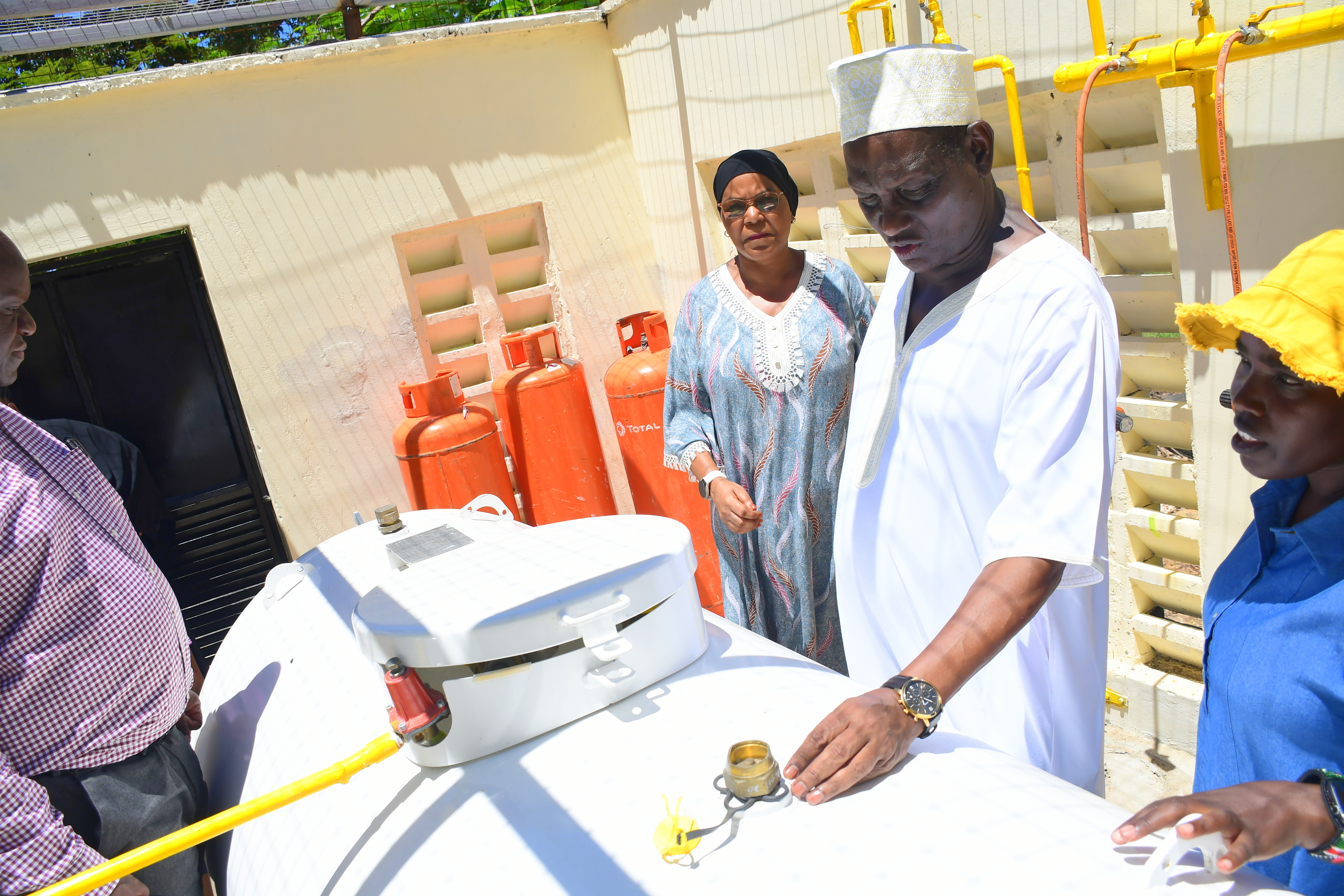
The Principal Secretary for the State Department for Petroleum, Mr. Mohammed Liban, who led a high-level assessment visit to Bahari Girls and Shimo La Tewa National Schools in Mombasa County Liban expressed satisfaction with the implementation of the project and commended the schools for embracing the new cooking technology.
These two schools are among the first beneficiaries of the government-led initiative aimed at transitioning from traditional biomass fuels to clean cooking solutions.
The PS gave resounding praise for the program’s impact on daily operations, health, and the environment.
The LPG in Schools Project is part of the government’s broader commitment to promoting clean energy access and environmental conservation.
“This is not just about gas. It is about our health, our forests, and our future. What we are seeing here is a transformation in how we care for our children, our workers, and our environment,” he sai
School administrators and kitchen staff from both schools expressed their enthusiasm about the change and adoption of LPG, citing reduced workload and increased productivity.
According to Bahari Girls’ Principal, Sylvano Hamaro, the introduction of LPG has significantly improved efficiency in the kitchen.
She stated that they previously spent a lot of money on firewood and charcoal, not to mention the health risks for their staff due to prolonged exposure to smoke.
She noted they are saving time and improving the overall kitchen environment.
At Shimo La Tewa, the impact was similarly notable. The principal, Mathew Mutiso, stated that it takes the cooks a shorter time to prepare meals while emphasizing that they no longer deal with smoke-filled kitchens or soot-covered walls.
The government is committed to scaling up the program to reach more schools across the country. Training sessions on safe usage, regular maintenance, and long-term sustainability have also been prioritized.
PS Liban said the shift from firewood and charcoal to LPG is a strategic step in reducing deforestation and carbon emissions, aligning directly with Kenya’s climate change mitigation goals under Vision 2030 and the Bottom-Up Economic Transformation Agenda (BETA).