
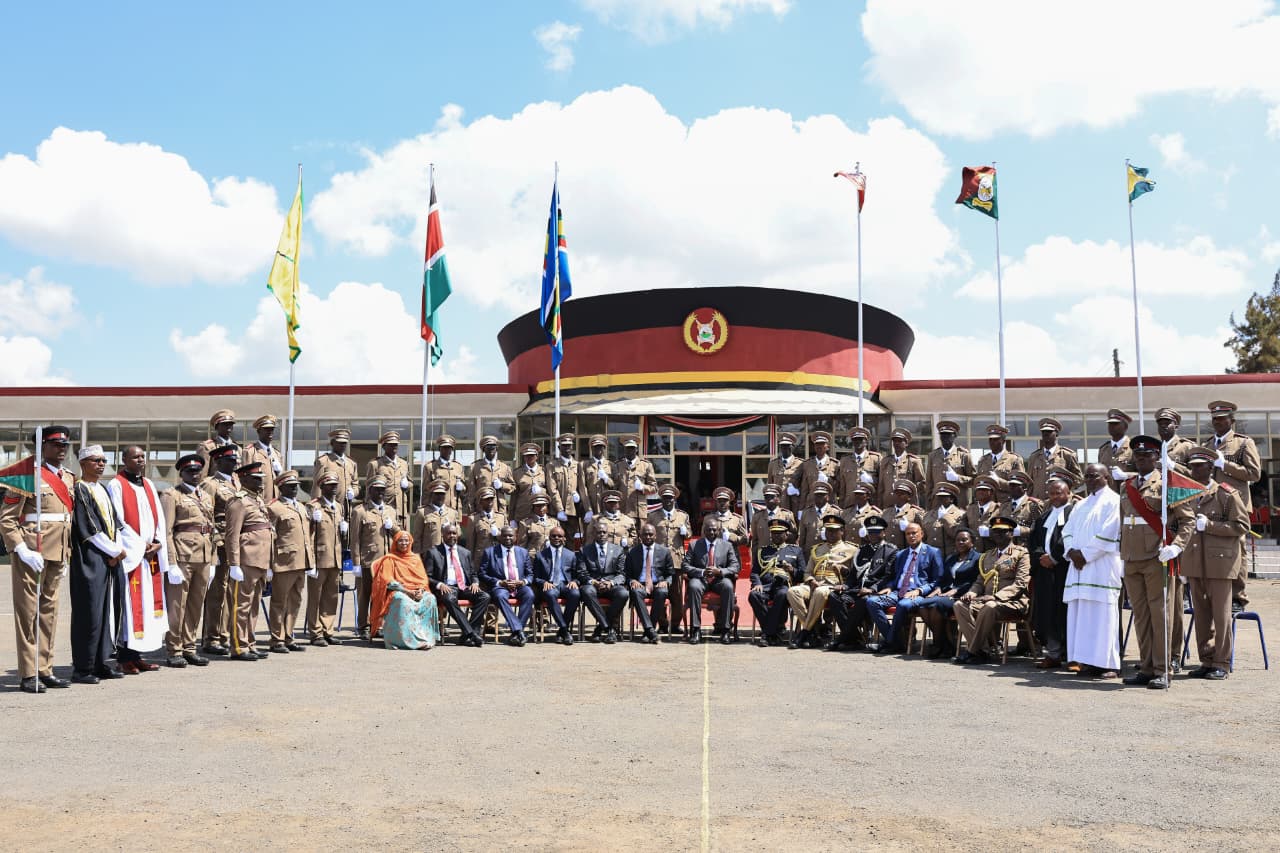
Nearly 6, 000 trained Chiefs billed to strengthen grassroots governance
KOBILO JEPTUMO-MYGOV
The Government has noted that 5,892 chiefs and assistant chiefs who graduated from the National Police College, Embakasi ‘A’ Campus will significantly boost grassroots governance and community security across the country.
The officers, who serve as National Government Administration Officers (NGAOs), underwent a three-week intensive programme covering induction, paralegal practice, and security management.
The training, delivered in three cohorts throughout 2025, was designed to equip chiefs with updated skills in conflict resolution, legal processes, and security coordination.
Principal Secretary for Internal Security and National Administration, Dr. Raymond Omollo, said the initiative reflects the government’s commitment to strengthening the frontline of public administration. “Chiefs are the most immediate representatives of government authority in communities.
This training ensures they are better prepared to respond to disputes, emergencies, and security threats,” he said. Dr Omollo noted that some chiefs had gone more than 25 years without structured refresher training, despite rising legal and security complexities.
The programme was introduced to close this gap, ensuring that officers are equipped with modern skills to manage evolving challenges at the community level.
The training is anchored in the government’s Jukwaa la Usalama framework, which prioritises community-based approaches to safety and stability.
Through the programme, chiefs strengthened their understanding of legal processes, sharpened conflict-resolution skills, and enhanced operational preparedness.
The PS highlighted that chiefs are often the first responders to local disputes, emergencies, and threats.
In high-risk areas such as parts of North Eastern Kenya and the Rift Valley, additional paramilitary training and appropriate arming were introduced to acknowledge the realities officers face.
Dr. Omollo said the training will enable chiefs to detect emerging threats, coordinate effectively with the National Government Administration Police Unit (NGAPU), and maintain order within their jurisdictions.
He added that the restoration of direct police support through NGAPU – with 1,800 officers already deployed and plans to scale up to 19,000 – will reinforce grassroots administration by ensuring authority is matched with enforcement capacity.
“Beyond law enforcement, chiefs and assistant chiefs play a central role in community wellbeing. They lead campaigns against drug and substance abuse, respond to gender-based violence cases, and facilitate access to government services such as national registration, social protection schemes, and health campaigns,” said Dr Omollo.
Urban chiefs in Nairobi, Mombasa, and Kisumu were singled out for their role in managing dense populations and complex social dynamics.
The PS noted that these officers operate in especially demanding environments, coordinating multi-agency responses and navigating diverse social challenges daily.
He pointed out that there are approximately 13,000 chiefs and assistant chiefs serving across all 47 counties.
They are often the most immediate representatives of government authority, particularly in remote areas where other institutions have limited reach.
Dr Omollo said the training will improve emergency response to floods, disease outbreaks, and intercommunal tensions, while also ensuring smoother implementation of programmes under the Bottom-Up Economic Transformation Agenda (BETA).
The programme also addressed issues raised during Jukwaa la Usalama consultations, including delayed promotions, inadequate mobility, insufficient equipment, and outdated uniforms.
Dr. Omollo said tackling these concerns alongside capacity development sends a clear message that chiefs and assistant chiefs are recognised as professionals whose effectiveness depends on both skills and working conditions.
He underscored the economic rationale behind strengthening local administration. Effective grassroots governance lowers the time and financial costs citizens incur when accessing services, prevents minor disputes from escalating into costly conflicts, and creates predictable environments for businesses to operate.
The PS noted that strong administrative presence also contributes to social cohesion.
“In Kenya’s diverse society, chiefs often serve as mediators and stabilisers, bridging divides between ethnic groups, age sets, and competing interests.
"They enforce the rule of law while remaining sensitive to local contexts, maintaining order without distancing themselves from the communities they serve,” he said.