
Ministry rolls out 10.8m mosquito nets in fight against malaria
By Chris Mahandara (KNA)
The Government has launched a nationwide campaign to distribute 10.79 million Long-Lasting Insecticidal Nets (LLINs) across 18 malaria-endemic counties in a major push to reduce malaria infections, hospital admissions and preventable deaths.
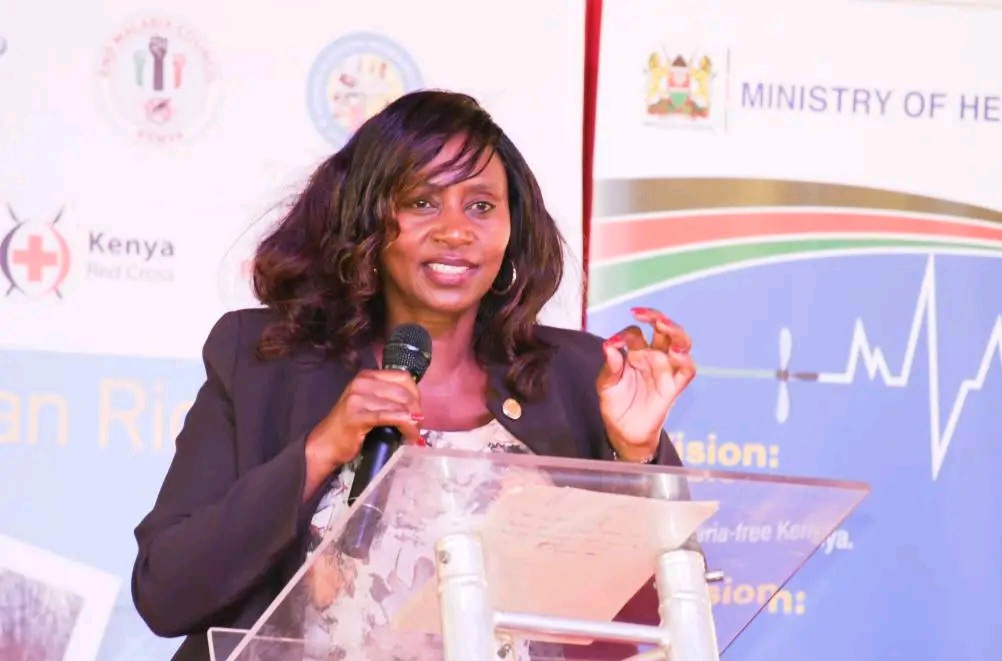
Public Health and Professional Standards Principal Secretary Mary Muthoni flagged off the 2026/2027 Mass LLIN Distribution Campaign at Bayula Stadium in Sirisia Sub-County, Bungoma County, calling on households to use the nets consistently to maximise their impact.
"Receiving a mosquito net is only the first step; using it every night is what makes the difference," said Muthoni.
She warned residents against diverting the nets for fishing, fencing or farming, stressing that proper use remains one of the most effective ways of protecting vulnerable populations, particularly pregnant women and young children.
The campaign is part of the Government's broader strategy to accelerate malaria prevention and strengthen primary healthcare services in areas with high disease prevalence.
To address growing resistance to conventional insecticides, Muthoni said mosquito net allocations will be informed by local transmission patterns and resistance profiles, with high-risk areas receiving next-generation dual-active ingredient nets.
The Ministry of Health has also introduced a digital tracking system to monitor the movement of nets from central warehouses to households, helping curb diversion and improve accountability.
Community Health Promoters will play a central role in household registration, verification and public awareness campaigns aimed at encouraging consistent use of the nets.
Bungoma County, one of the country's malaria hotspots, is expected to benefit significantly from the programme, with more than 1.28 million residents targeted for net distribution.
According to Ministry of Health data, Bungoma's malaria prevalence stands at 19 per cent, more than three times the national average of 5.6 per cent.
Sub-county figures indicate that Bumula bears the highest malaria burden at 40.7 per cent, followed by Sirisia at 32.1 per cent. Kabuchai and Kimilili recorded prevalence rates of 26.5 per cent and 26.2 per cent respectively, while Webuye West, Cheptais, Webuye East and Kanduyi also remain significantly affected.
Mt Elgon recorded the lowest prevalence rate in the county at 4.4 per cent, making it the only sub-county below the national average.
Health officials noted that malaria continues to place a heavy burden on health facilities despite progress in prevention and treatment.
Between late 2024 and mid-2025, more than 112,000 suspected malaria cases were tested at community level in Bungoma, with nearly 58,000 patients receiving treatment after testing positive.
Although more than 79 per cent of households in the county own treated mosquito nets, inconsistent usage remains a challenge.
However, health interventions have yielded encouraging results. Adult malaria cases dropped from 554 in 2023 to 334 this year, while infections among children declined from 1,094 to 1,019 over the same period.
"Malaria prevention is a shared national responsibility. We must strengthen primary healthcare services across the country to ensure early diagnosis, timely treatment and improved access to essential healthcare services," said Muthoni.
Bungoma Deputy Governor Janepher Mbatiany reaffirmed the county government's commitment to strengthening malaria prevention, surveillance, diagnosis and treatment programmes.
"Our goal should not merely be to distribute mosquito nets, but to significantly reduce malaria infections, hospital admissions and preventable deaths," she said.
She urged local leaders, administrators, healthcare workers and religious institutions to support the transparent distribution of the nets and encourage households to use them consistently.
Officials say the campaign is expected to contribute significantly to Kenya's efforts to eliminate malaria as a public health threat while protecting millions of people living in high-transmission areas.