Ministry commits to strengthening livestock sub-sector
EMILY KADZO AND HILLARY SHIMNAGHA-KNA
The Government is pushing for higher standards, stronger market intelligence and strategic investment partnerships to boost Kenya’s competitiveness in the global meat and milk export market.
The Principal Secretary for the State Department for Agriculture Dr Paul Ronoh said plans are underway to establish a livestock processing zone in Narok to meet regional demand for meat and milk.
He said the Govern ment will to continue to strengthen Kenya’s live stock sector by investing in projects that help farmers reduce post-harvest losses and increase their incomes.
Dr. Ronoh noted that a national wide digital livestock tracking system, expanded vaccination programs and reforms in meat production systems are at the center of a new strategy aimed at growing Kenya’s livestock industry into a Sh1 trillion economic powerhouse within the next two years.
The PS said the govern ment is supporting initia tives towards transforming the country’s milk and meat value chain from live stock production to export by strengthening animal health systems, introduc ing mandatory traceability, improving food safety, increasing value addition and attracting private investments into the sub sector.
Speaking when he offi cially inaugurated the Agri cultural, Environment and Climate Change exhibition at the William Ole Ntimama Stadium in Narok, Dr Ronoh said traceability was no longer optional if Kenya is to compete in the global meat market.
For years, Kenya’s live stock sector has struggled to meet the demands of the premium export market that require proof of animal origin, health history, production systems and compliance with food safety standards.
Dr. Ronoh, who rep resented Cabinet Secretary for Agriculture and Livestock Development Mr Mutahi Kagwe at the event, said the Govern ment remains committed to building a stronger and more profitable dairy sector for Kenyan farmers.
He pointed out that the dairy value chain is a vital economic pillar, supporting millions of livelihoods from farmers and transporters to processors, retailers and consumers.
The Principal Secretary emphasized that the interventions are part of the government’s efforts to revitalize the dairy sector in the country aimed at boosting value addition and creating sustainable jobs.
“The government is actively strengthening the dairy value chain to boost productivity, minimize post-harvest losses, and increase farmers’ incomes.
"Key initiatives include nationwide milk cooler distributions, tax exemp tions on animal feed, and a transition to quality-based milk payment systems to reward farmers,” he stated.
He called for collective support to strengthen the dairy value chain as a pathway to reducing poverty and creating jobs and reiterated the Gov ernment’s commitment to working with farmers through capacity building and improved market access both locally and internationally.
Official statistics indicate that nationally, livestock contributes 50 percent of Agricultural Gross Domestic Product (GDP) and over 10 percent of the National GDP.
Dairy production is the largest contributor to the livestock GDP. The statistics reveal that the dairy sub-sector yields about Sh237 billion annu ally and that Kenya is one of the leading Country in Africa in dairy cattle pro duction.
Dr. Ronoh stated that the industry is on an upward trajectory with an estimated growth rate of 3 percent to 4 percent per year adding that the Kenya Kwanza administra tion recognizes dairy value chain as one of the main sources of household incomes and a crucial contributor to food security.
Vision 2030 which has been adopted as a new model for Kenya’s develop ment, emphasizes the enhancement of dairy productivity as key to increasing incomes, food security and nutrition.
The Ministry of Agriculture and Livestock Develop ment developed a Dairy Master Plan 2010– 2030, and Kenya Dairy Industry Transformation Strat egy & Investment Plan 2022-2032, developed by the Kenya Dairy Board, currently guides the Dairy Industry.
Dr. Ronoh said the government is striv ing to make the dairy subsector one of the leading sub-sectors in social-economic development through production, value addition and mar keting.
This, he added, is being done by mobi lizing and working with all stakeholders and development partners as Kenya seeks to maximize the utilization of all available opportu nities and resources for the benefit of the entire country.
According to the United Nations Popu lation Fund (UNFPA), with the world human population expected to increase to 10.5 billion, from7.6 billion by 2067, an increase in demand for dairy products is expected globally.
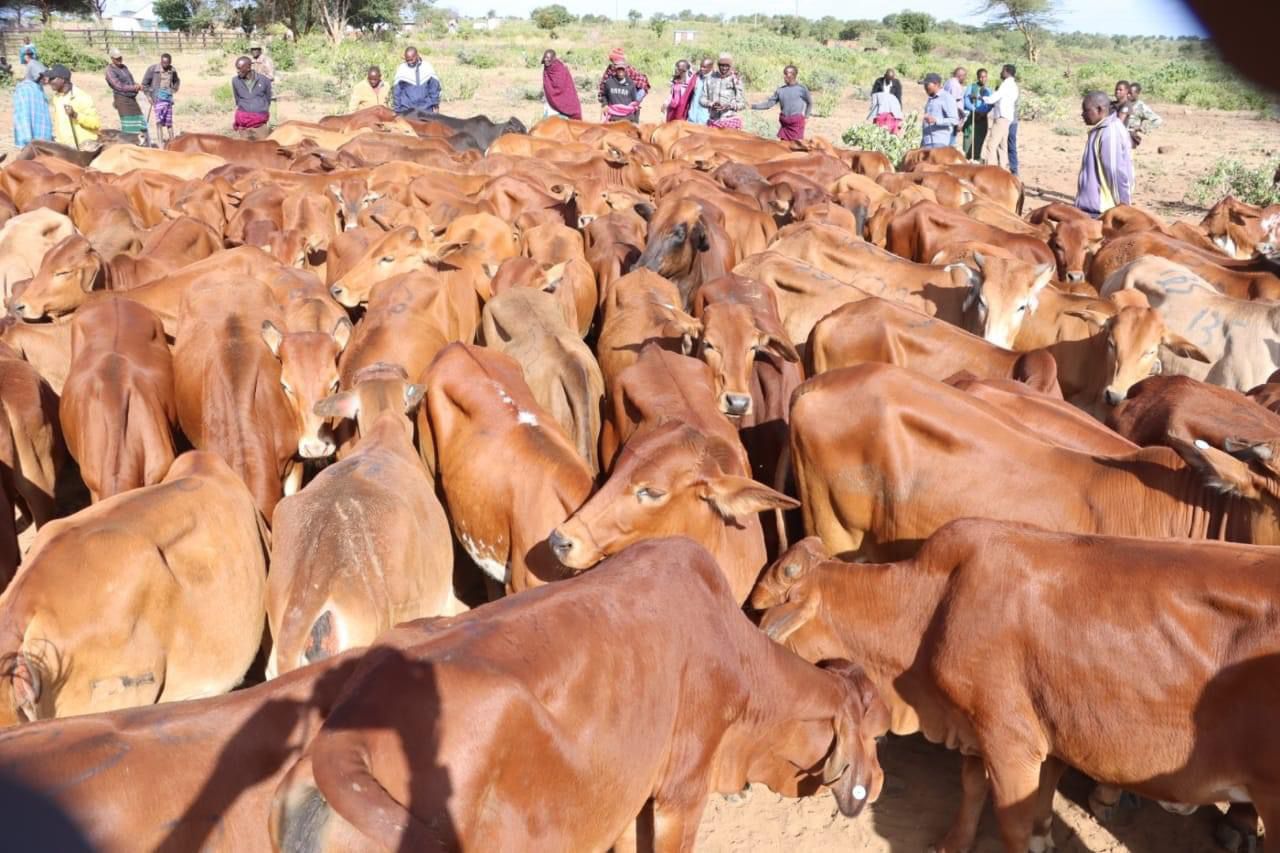
This, Dr. Ronoh noted, should be an opportunity for more milk production, especially in regions which are not the main milk pro ducers in the country. According to Kenya National Bureau of Statistics (KNBS) data, Kenya had 22.4 million cattle, 26.2 million sheep, and 38.4 million goats in 2024.
“Kenya’s dairy sector is widely celebrated as one of Africa’s most dynamic. With a strong culture of milk consumption and thousands of households relying on dairy farming, the country has all the ingredients for high productivity,” noted the Principal Secretary.
With annual production of more than 5 billion litres each year, Kenya currently contributes at least 10 percent of Africa’s total milk production and 35 percent of the East African Community’s supply.
The sector supports over 1.8 small holder farmers making it a crucial cog in the wheel of Kenya’s national progress.
Dr. Ronoh underscored the importance of value addition in minimizing post-harvest losses, improving milk quality, creating employment opportunities and increas ing returns for farmers.