
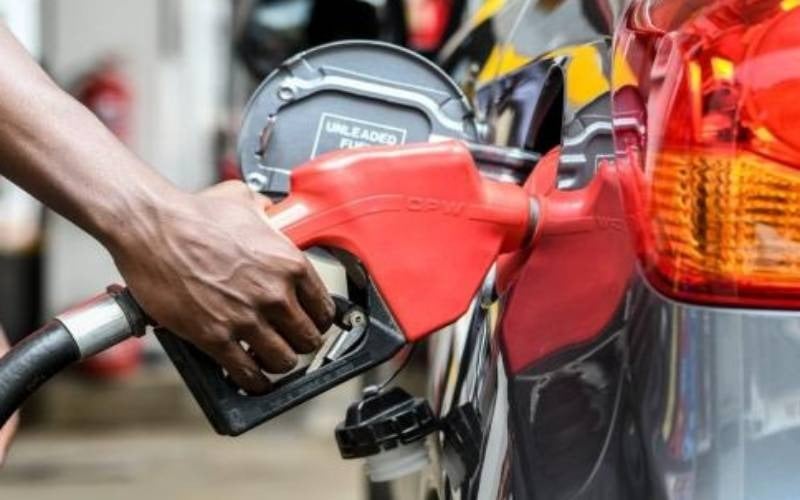
Ministry affirms adequate fuel stocks in the country
JOYCE LUTOMIA AND FATMA SAID-PCO
The Ministry of Energy and Petroleum has assured Kenyans that the country has sufficient fuel stocks, dispelling fears of an impending shortage.
Speaking in Nairobi, Energy and Petroleum Cabinet Secretary, Opiyo Wandayi, emphasized that fuel supply remains secure, with deliveries arriving as scheduled and storage levels stable noting that distribution across the country continues uninterrupted.
“On supply, Kenya remains secure. Fuel continues to arrive as scheduled, storage levels are stable, and distribution across the country is ongoing without interruption,” Wandayi said.
The Cabinet Secretary reiterated that there is no national shortage, adding that systems at the Port of Mombasa and inland depots are operating normally.
He explained that the Ministry has institutionalized spot checks at all levels of storage and supply to ensure full compliance.
On pricing, Wandayi clarified that fuel prices are determined by global market forces beyond the control of any single country.
He acknowledged that international prices have risen and fluctuated in recent months but assured Kenyans that the country has robust systems designed to mitigate such changes in a structured and predictable manner.
“At a time when global energy markets remain uncertain, Kenya’s fuel supply remains secure, stable, and well-managed.
"The G2G framework is working as intended anchoring supply, reducing exposure to volatility, and providing a buffer during global uncertainty,” he stated.
He highlighted that the Government-to-Government (G2G) framework provides Kenya with predictability and stability, which has been crucial in managing supply reliability and cushioning consumers from sharper price shocks.
The Cabinet Secretary explained that the framework has enabled greater diversification in sourcing fuel.
Cargoes are now being loaded from a wider range of international supply points, including Europe, the US Gulf Coast, India, and the Red Sea region.
This diversification, he said, strengthens resilience, reduces reliance on any single route, and ensures continuity even when traditional supply channels face disruption.
Wandayi also pointed out that Kenya’s stability in pricing is attributed to the G2G framework.
He noted that while freight and premium costs in Kenya remained relatively stable at approximately USD 78–97 per tonne under preagreed arrangements, other markets exposed to open spot purchasing experienced costs rising to USD 250–300 per tonne during the same period.
The Cabinet Secretary urged Kenyans to exercise patience, expressing optimism that global conditions will stabilize and oil prices may decline.
He revealed that the government is also establishing plans to set up a local refinery as a long-term measure to mitigate future escalations in petroleum commodity prices.
“We will continue to engage closely with all stakeholders across the energy value chain including manufacturers, oil marketing companies, transport and logistics players, public transport operators, distributors, and sector regulators while keeping the public informed as the situation evolves,” Wandayi affirmed.