
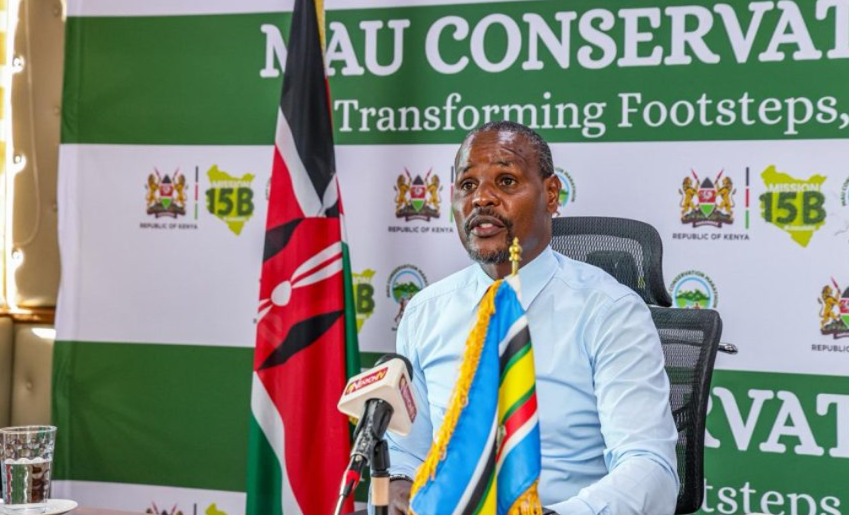
Mau Forest restoration gains momentum as marathon is launched
IAN CHEPKUTO-KNA
The Government has intensified efforts to restore the Mau Forest Complex, Kenya’s largest water tower, with the launch of the Second Edition of the Mau Conservation Marathon.
The race is scheduled for July 3, 2026, and will be held under the Mau Forest Complex Integrated Conservation and Livelihood Improvement Programme (MFC-ICLIP), a ten-year initiative aimed at reversing decades of degradation in the country’s most important forest ecosystem.
The Marathon is a flagship initiative spearheaded by the Ministry of Environment, Climate Change and Forestry, aimed at mobilizing resources, creating environmental awareness, and supporting community livelihoods through conservation efforts.
Approximately 500 athletes so far have registered for the event dubbed; “Linda Mau, Boresha Maisha”, with organizers targeting 2,500 participants before registration closes on June 25, 2026.
Speaking during a media briefing in Nairobi, Environment and Climate Change Principal Secretary, Dr Eng. Festus Ng’eno, urged Kenyans, institutions, and corporate organizations to support the initiative by participating in the race.
The PS said the race will be flagged–off in Olenguruone, Kuresoi South, and traverse the scenic Mau landscape before finishing at Baringo Senior Secondary School grounds in Kuresoi North.
“The Mau Forest Complex supports millions of livelihoods, sustains agriculture, provides water for hydropower generation, and is the source of 12 major rivers including Sondu, Mara, Ewaso- Ng’iro, Nzoia among others and also supports major lakes including; Turkana, Baringo, Nakuru, Natron and Victoria,” highlighted Dr. Ng’eno.
He regretted that the ecosystem continues to face threats from illegal logging, land-use changes, and overreliance on forest resources driven largely by poverty.
“The ecosystem has faced significant degradation and remains threatened by changes of land use” said PS.
As a native of the Mau region, the PS said, he has personally witnessed the degradation of the ecosystem and has since joined forces with local communities, development partners, the private sector, and government agencies, to establish the MFC-ICLIP programme.