
Kenya takes leadership of Sub-Saharan Africa skills network
JULIUS NDEGWA-PCO
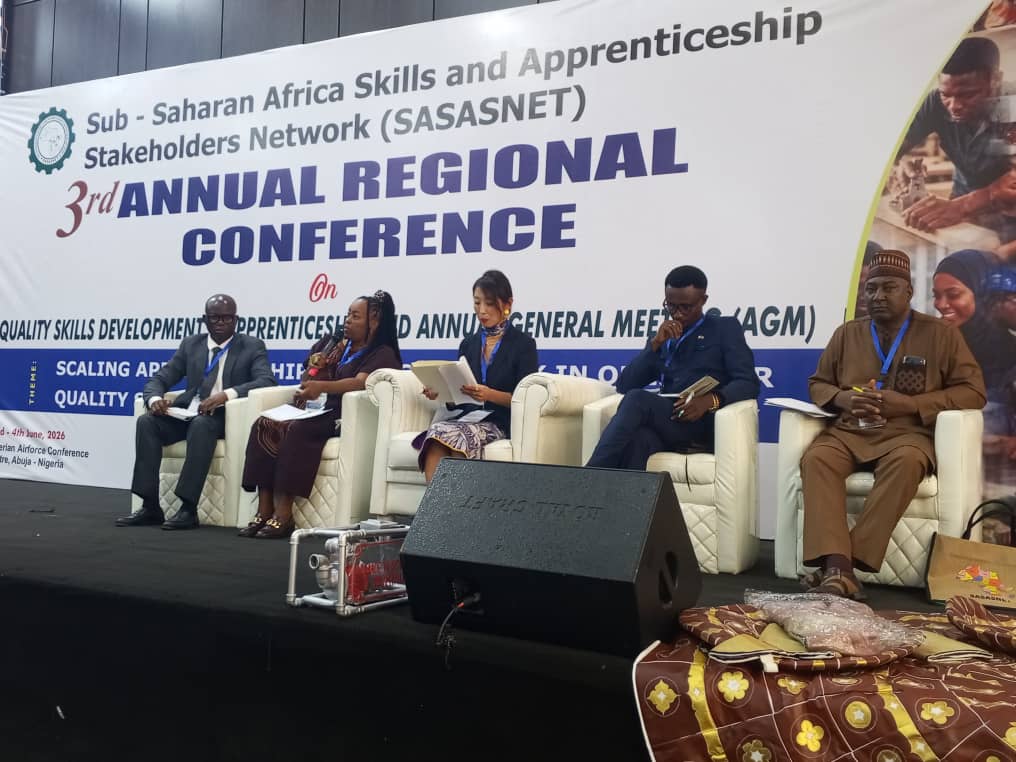
Kenya has been elected to chair the Sub-Saharan Africa Skills and Apprenticeship Stakeholders Network (SASASNET), following a unanimous vote that saw Principal Secretary for Labour and Skills Development Shadrack Mwadime selected as Continental Chair during the network’s Annual General Meeting held in Abuja, Nigeria.
The election reflects growing recognition of Kenya’s leadership in skills development and apprenticeship reforms across the continent.
Delegates from member countries endorsed Mwadime to steer the regional body as it advances quality apprenticeship systems and workforce development initiatives across Sub-Saharan Africa.
Kenya’s delegation to the conference was led by Dr. Wanjiru Kariuki, Secretary for Skills Development in the Ministry of Labour and Social Protection, and included Wambua Nyamai, Chief Executive Officer of the Kenya National Federation of Jua Kali Associations.
As Continental Chair, Mwadime is expected to champion stronger collaboration among Sub-Saharan African countries in advancing quality apprenticeships in line with International Labour Organization Recommendation 208, which provides a global framework for apprenticeship systems that are inclusive, demand-driven and anchored in decent work.
Further, his election signals renewed momentum toward strengthening apprenticeship programmes across Africa, ensuring that skills development remains industry-responsive and aligned with the continent’s broader socio-economic transformation agenda.
It also positions Kenya at the forefront of efforts to promote structured apprenticeships and accelerate the formalization of the informal economy.
Speaking on the significance of the election, Dr. Kariuki noted that Kenya’s elevation to the continental leadership role is underpinned by several key policy achievements.
These include the National Work-Based Learning Policy, which promotes the transition from informal apprenticeships to quality apprenticeship systems; the National Policy on Recognition of Prior Learning (RPL), through which 48,383 individuals have already been certified, and the National Strategy for Transformation of the Informal Economy, aimed at progressively integrating the informal sector.
Nearly 84 percent of Kenya’s labour force is engaged into a sustainable formal economy in the informal sector that supports decent work, improved livelihoods and inclusive economic growth.
The Annual General Meeting coincided with SASASNET’s Third Regional Conference, which brought together ministers responsible for labour, senior government officials, representatives of the informal sector, development partners, and international governmental and non-governmental organizations from across the continent.
According to Dr. Kariuki, the conference built on the momentum generated by the Second Regional Conference held in Mombasa in 2025, which attracted participants from 24 countries and culminated in the landmark Mombasa Declaration, a key framework for advancing apprenticeship and skills development reforms across Africa.