
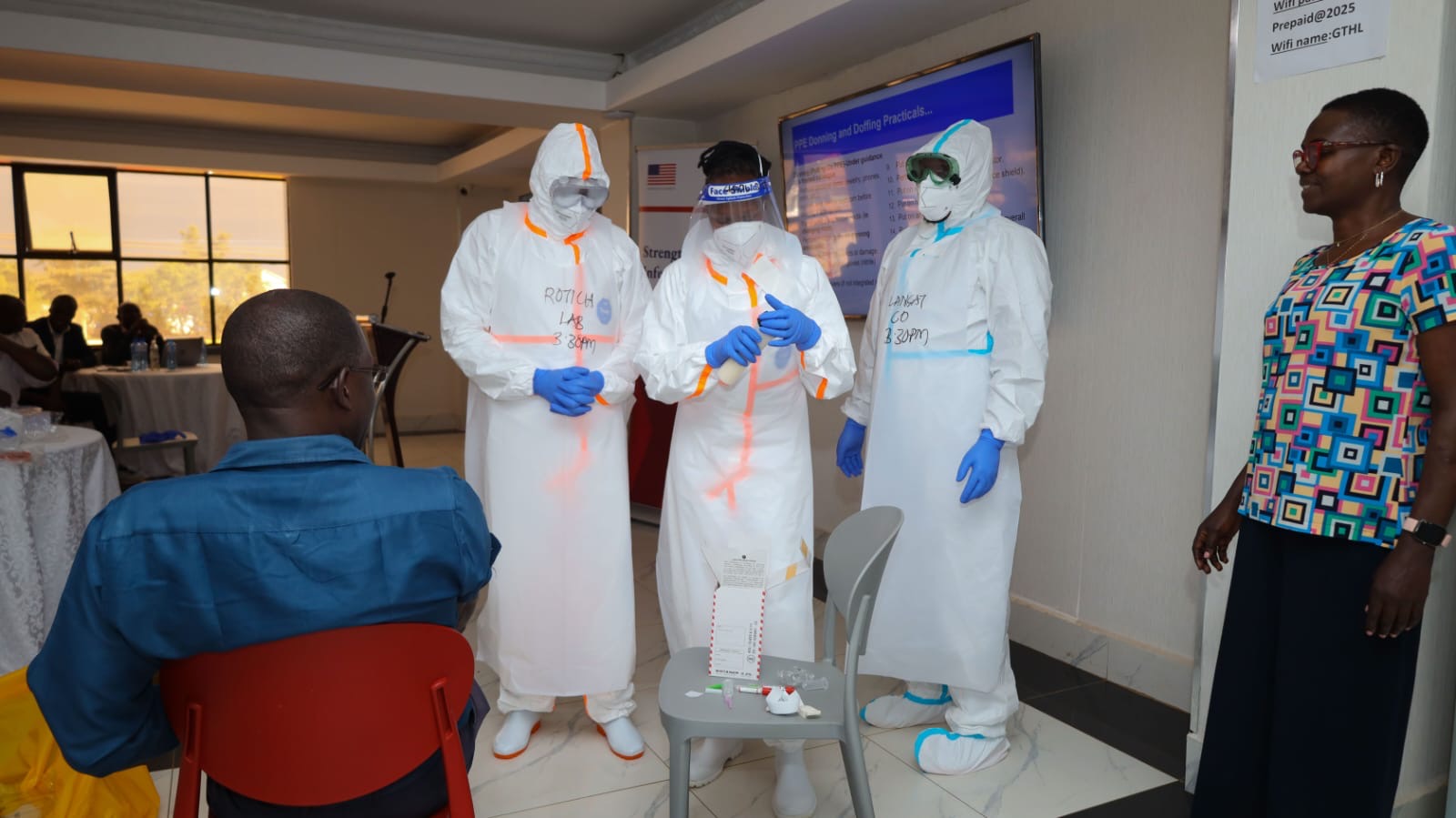
The Kenya National Public Health Institute strengthens Ebola preparedness in high-risk counties
By Judy Sheri (PCO)
The Kenya National Public Health Institute (KNPHI) has stepped up national Ebola preparedness with a week-long Integrated Rapid Response Team (RRT) training programme in Trans Nzoia and Turkana counties.
The initiative, supported by the U.S. Government-funded Strengthening Infectious Disease Detection Systems (STRIDES) programme, is part of a broader national effort to fortify frontline defenses against Ebola Virus Disease (EVD) and other public health emergencies.
The training targets counties classified as high-risk, sharpening their ability to prevent, detect and respond to outbreaks.
It brings together a multidisciplinary mix of epidemiologists, clinicians, laboratory experts, logisticians, risk communication specialists and psychosocial support professionals.
The goal is to build a skilled workforce capable of mounting rapid, coordinated responses when disease threats emerge.
Participants are immersed in both theory and practice in a bid to gain expertise in surveillance, screening, case investigation, contact tracing, infection prevention and control, risk communication and outbreak coordination.
Practical sessions simulate real-world emergencies, covering the safe use of personal protective equipment, patient triage, sample collection, isolation procedures, dignified burials and the safe transportation of suspected Ebola cases.
These exercises are designed to ensure that responders can act swiftly and safely under pressure.
Speaking during the training, Trans Nzoia County Executive Committee Member for Health and Sanitation, Christopher Kerio Lorot, underscored the county’s commitment to strengthening preparedness.
Lorot highlighted investments in workforce development, rapid response capacity, and sustainable emergency systems as critical pillars of resilience.
Dr. Babu Kisiangani, Trans Nzoia County Director of Health, praised KNPHI for spearheading a proactive campaign that aligns with global best practices while keeping communities at the center of disease prevention and response.
Trans Nzoia’s proximity to Uganda, coupled with significant cross-border movement, places it among the counties most vulnerable to Ebola.
While Kenya has not recorded any confirmed Ebola case, vigilance remains high, ongoing outbreaks in the region have prompted nationwide surveillance and preparedness measures, ensuring that counties remain alert and ready.
KNPHI’s work reflects a broader vision of building a robust public health emergency framework that can withstand emerging threats.
By strengthening surveillance systems, expanding workforce capacity, and enhancing rapid response mechanisms, the institute is laying the groundwork for a safer, more resilient Kenya.
The training in Trans Nzoia and Turkana signals Kenya’s determination to stay ahead of potential outbreaks, protect its citizens and contribute to regional health security.
In a world where disease threats can cross borders in hours, preparedness is not optional; it is essential.
As the simulation exercises concluded, KNPHI’s investment in rapid response training is meant to equipping counties with the tools, knowledge and confidence to act decisively when the next health emergency strikes.
Ends