
Kenya must build AI that speaks its languages and serves its people
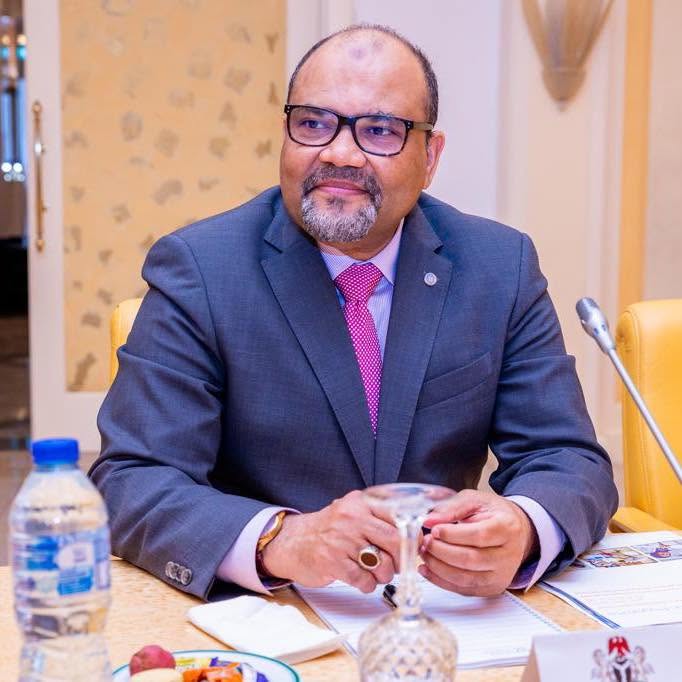
PROF. SHAUKAT ABDULRAZAK
Artificial intelligence (AI) is no longer merely an emerging technology.
It is rapidly becoming a critical component of the infrastructure through which nations deliver healthcare, improve agriculture, educate citizens, manufacture goods, manage public services, and compete in the global economy. Kenya is already experiencing this transformation.
At the regional level, Africa faces a defining choice: to remain consumers of algorithms, platforms, and digital systems developed elsewhere, or to become creators, owners, and exporters of homegrown technologies.
Africa’s future must not be coded for us; it must be coded with us and, increasingly, by us. From my perspective, the central question is no longer whether AI will transform our country.
The real question is whether we will shape that transformation deliberately, responsibly, and in the national interest. Kenya must develop AI systems that understand our crops, diseases, institutions, and communities.
We need technologies that can communicate in Kiswahili and other indigenous languages, support teachers, strengthen healthcare delivery, improve public administration, empower businesses, and respond to the realities of our people.
Fortunately, Kenya already has strong foundations on which to build.
We have a dynamic digital economy, globally recognised mobile innovations, capable universities and research institutions, a vibrant start-up ecosystem, and a youthful population eager to innovate.
The National Artificial Intelligence Strategy 2025–2030 provides a clear framework for advancing digital infrastructure, strengthening data and AI governance, and promoting research, innovation, and commercialisation.
The Government has therefore established an important policy direction. The greater task before us now is to translate that vision into action through effective implementation.
First, we must strengthen research and innovation clusters in strategic areas such as artificial intelligence, digital health, agriculture, climate intelligence, cybersecurity, bioeconomy, energy, and advanced manufacturing.
Clusters allow institutions to share expensive infrastructure, combine expertise, avoid duplication, and pursue national missions at scale. Second, we should initiate National Research Chairs in responsible AI, robotics, cybersecurity, computational agriculture, digital health, and AI ethics.
These Chairs should serve as platforms for excellence, mentorship, postgraduate training, international collaboration, and the mobilisation of additional research resources.
Their success must be measured not only through publications but also through patents, enterprises, policies influenced, students trained, external financing attracted, and lives improved.
Above all, they must demonstrate clear impact in society. Third, we must organise research around Grand Challenges that directly affect citizens.
AI can help reduce maternal and infant deaths, predict droughts, floods, disease outbreaks, and crop pests, improve learning outcomes in underserved schools, reduce post-harvest losses, and strengthen public-sector productivity.
Under the framework of the Bottom-Up Transformation Agenda (BETA), these national development missions should be pursued with multidisciplinary teams, measurable milestones, and clear pathways from research to implementation.
Fourth, adequate and predictable financing is essential. Kenya’s ecosystem of research and development is on a trajectory of progressively raising investment in science, research, and innovation from at least 1 per cent towards 2 per cent of gross domestic product.
This investment will support competitive research grants, modern infrastructure, postgraduate training, research chairs, proof-of-concept development, intellectual-property protection, and commercialisation.
As government, we value international cooperation and the contribution of development partners.
However, the long-term sustainability of Kenya’s research system cannot depend excessively on external financing.
Our national priorities must increasingly be financed through domestic resources. Domestic financing is the real sovereignty.
This requires stronger allocations from the National Treasury, greater private-sector participation, contributions from county governments, university investment, philanthropy, and innovative financing instruments.
Research funding must be understood as an investment in national productivity, resilience, and economic competitiveness not merely as public expenditure.
President William Ruto has stated: “To change our country, we must make decisions that will change the course and destiny of our nation.”
One such decision is to place science, research, innovation, and artificial intelligence at the centre of Kenya’s development financing. The private sector must also move from being a spectator to becoming a co-creator.
Companies should co-finance research, sponsor research ideas, provide datasets, host students, test technologies, and invest in university spin-offs.
Government, in turn, must provide enabling policies, appropriate standards, supportive infrastructure, and procurement opportunities for credible Kenyan innovations.
Our greatest challenge is not the shortage of ideas. It is the failure to convert enough of those ideas into economic and social value.
President Ruto often reminds us that we must believe it is possible and believe in ourselves.
The State Department for Science, Research and Innovation will continue to provide a stronger pathway from research to invention, invention to intellectual property, intellectual property to enterprise, and enterprise to markets, exports, and jobs.
— The author is the Principal Secretary of the State Department for Science, Research and Innovation. He can be reached at saabdulrazak@gmail.com