
Kenya leather industry poised for major growth under Italy–Kenya collaboration
GLORIA GICHERU-PCO
The Kenya leather indus try is poised for major transformation after the Association of Italian Manufac turers (ASSOMAC) and the Kenya Leather Development Council (KLDC) entered into a new part nership aimed at strengthening the value chain.
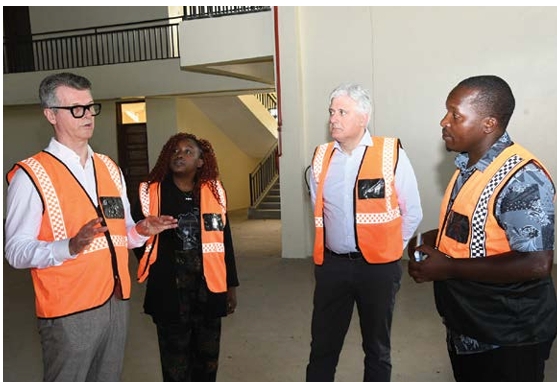
The deal, announced during a visit to the Kenanie Leather Industrial Park (KLIP), is expected to inject world-class technology, machinery and expertise into Kenya’s leather sector, posi tioning the country as a regional hub for leather processing and manufacturing.
KLDC Acting CEO Jimmy Odhiambo said that leather is one of Kenya’s most underutilized resources despite the country ranking third in Africa for live stock population.
For decades, Odhiambo said that the industry has been dom inated by raw hides and skins exports, leaving local manufac turers unable to compete globally.
“The leather value chain from livestock rearing, tanning, and processing to the production of footwear and leather goods has immense potential to create jobs, reduce imports, and boost exports,” said the Ag CEO.
However, Odhiambo noted that the sector has been constrained by outdated technology, limited investment, and environmental challenges.
The partnership with ASSOMAC, which represents over 130 specialized Italian companies supplying machinery to global fashion brands, is seen as a game changer.
Italy is globally recognized as a benchmark in leather processing, and its expertise could help Kenya bridge the gap between raw mate rial abundance and high-value f inished products.
Located just 50 kilometers from Nairobi, KLIP is designed as a one stop shop for the leather value chain.
It already boasts tanneries, warehouses, ICT infrastructure, power and water supply, and a common effluent treatment plant to ensure environmentally sustainable production.
Odhiambo described the park as a flagship project that will transform Kenya into a regional hub for leather manufacturing.
He emphasized that the park offers investors affordable labour, modern infrastructure, and envi ronmental safeguards, making it an attractive destination for both local and international players.
He said that the park is expected to create over 100,000 jobs, expand local production, and reduce reliance on imports, this is not only economic growth but also a stronger presence in international markets ASSOMAC President Mauro Bergozza, who led the Italian delegation, highlighted the opportunities for collaboration across the leather value chain.
He noted that Italian technology and integrated supply chain models could help Kenya establish sustainable and competitive production ecosystems.
“This project promotes the development of a structured manufacturing system in which Italian technology and machinery play a leading role, representing a genuine strategic asset for the global leather industry,” Bergozza said.
He added that the partner ship would strengthen Kenya’s ability to produce high-quality leather goods for international markets.
The delegation also visited the Kenya Industrial Research and Development Institute (KIRDI), where discussions focused on modernizing equipment and enhancing research capacity.
Acting Director Dr. Kelvin Khisa underscored the importance of collaboration in areas such as leather testing, waste recycling, human health, and skills transfer.
KIRDI plays a vital role in supporting micro, small, and medium enterprises (MSMEs) with modern leather processing technologies.
By working with ASSOMAC, the institute hopes to introduce cleaner and more efficient tanning methods, reduce waste, and empower small-scale leather investors.
The partnership was formalized through a strategic agreement signed between ASSOMAC and the Kenya Association of Manufacturers during the Kenya International Investment Conference.
The agreement aligns with Kenya’s leather master plan and aims to strengthen industrial relations between Italy and Kenya.
By leveraging Italian expertise, Kenya hopes to build a structured manufacturing system that can compete globally. T he collaboration is expected to promote sustainable production, enhance skills transfer, and open new opportunities for Kenyan companies in international markets.
With the Kenanie Leather Industrial Park as the center piece, Kenya’s leather industry is entering a new era.