
Kenya launches assessment to align development with environmental safeguards
By Michael Omondi (KNA)
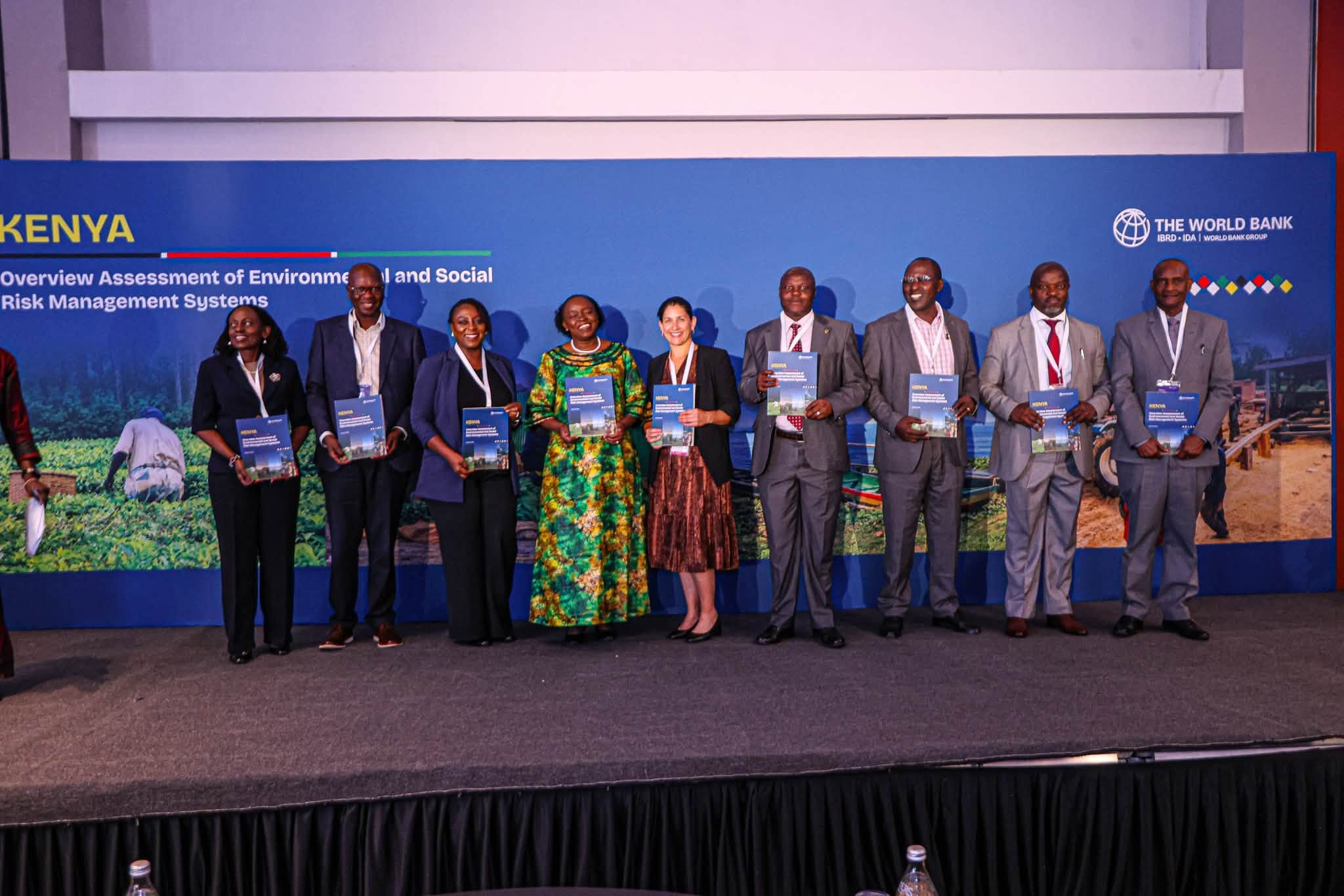
Kenya has officially launched the Overview Assessment of Environmental and Social Risk Management Systems, a new framework aimed at strengthening environmental and social safeguards across national development projects.
Speaking at the launch in Nairobi, Environment, Climate Change and Forestry Cabinet Secretary Dr Deborah Barasa said the assessment offers a timely opportunity to evaluate how the country plans, regulates, and executes projects while protecting natural resources and communities under the Bottom-Up Economic Transformation Agenda (BETA).
She noted that while Kenya is pursuing an ambitious rollout across infrastructure, energy, agriculture, water, housing, and manufacturing, progress should not be measured solely by physical structures or financial expenditure. Instead, projects must remain environmentally sustainable, socially inclusive, and beneficial to local residents.
“Environmental and social safeguards are not an obstacle to development. They are what make development sustainable, responsible, and economically viable,” Dr Barasa said.
According to the CS, the assessment confirms that Kenya possesses a solid constitutional, legislative, and institutional foundation anchored by environmental laws, the National Environment Management Authority (NEMA), impact assessment procedures, and public participation frameworks. However, she stressed that the real test lies in effective execution.
To bridge the gap between policy and practice, Dr Barasa called for a shift away from fragmented institutional efforts toward coordinated implementation across the entire project cycle, rather than focusing only on initial approvals.
She further emphasized the need to devolve risk management systems to county governments, enforce measurable accountability, and involve local communities as active partners from project inception to completion.
“The assessment should be a turning point from policy to implementation, from fragmentation to coordination, and from compliance on paper to measurable results on the ground,” she urged stakeholders.
World Bank Group Director for Environmental and Social Policy and Operations Kate Wallace commended Kenya for establishing strong regulatory foundations to maximize development impact.
She reaffirmed the World Bank Group’s commitment to supporting the country in capacity building, institutional coordination, and project execution to translate the assessment’s recommendations into actionable plans.
Also in attendance were Social Protection and Senior Citizen Affairs Principal Secretary Joseph Motare, NEMA Compliance Director David Ong’are, and representatives from the Council of Governors, the African Development Bank, the Horn of Africa Gateway Development Project, and the Financing Locally Led Climate Action (FLLoCA) Programme.
Ends