

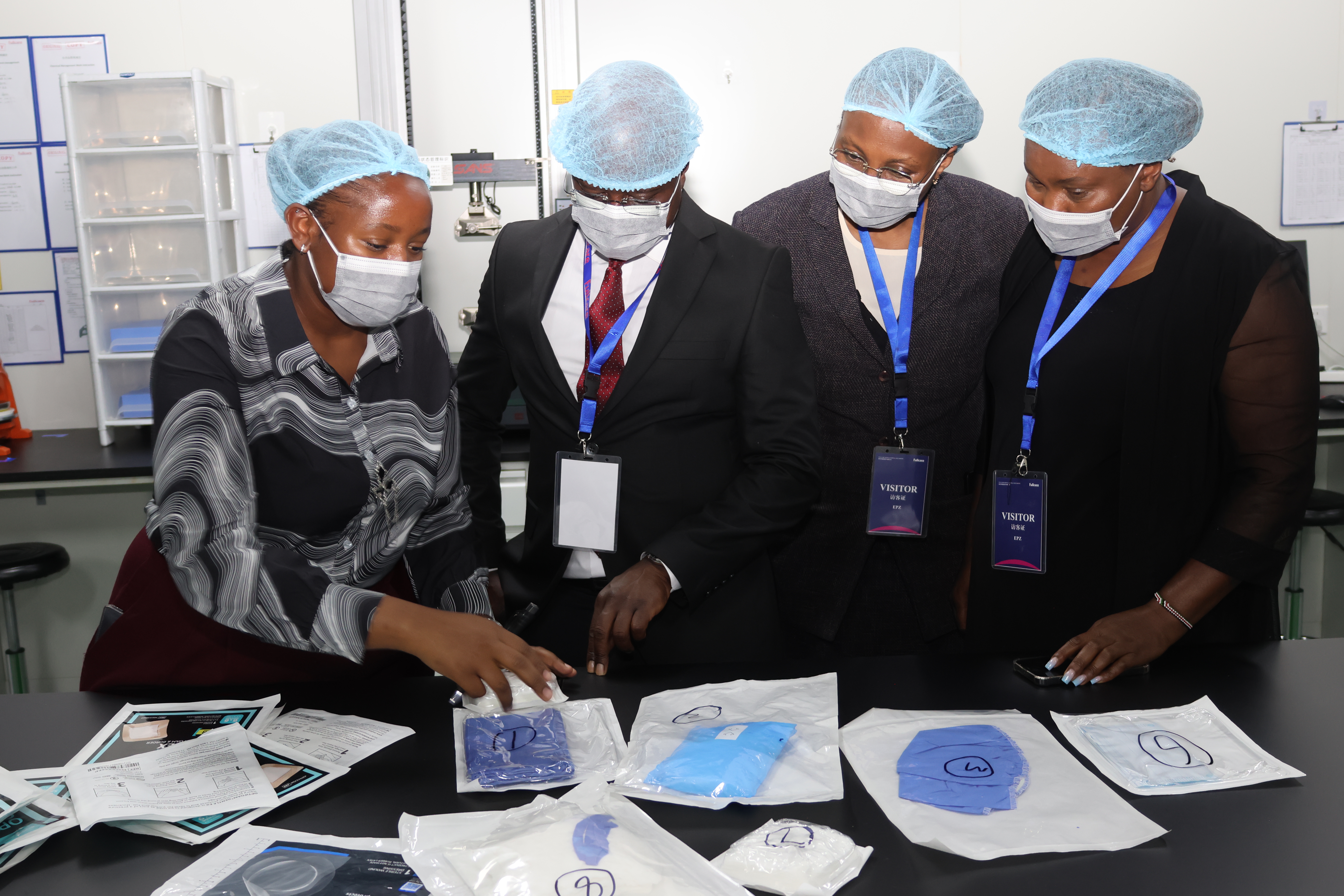
KENAS to strengthen accreditation and quality systems in the manufacturing sector
KOBILO JEPTUMO-MYGOV
The Kenya Accreditation Service (KENAS) has stepped up its engagement with the manufacturing sector, underscoring the critical role of accreditation in driving quality assurance, regulatory compliance, and global competitiveness.
This follows a strategic visit to FullCare Medical (Kenya) SEZ Limited at the Tatu City Special Economic Zone, where KENAS officials highlighted the importance of internationally recognized conformity assessment systems in supporting Kenya’s industrial growth.
The visit forms part of KENAS’ ongoing stakeholder outreach programme aimed at deepening awareness of accreditation requirements across priority economic sectors.
The initiative also seeks to enhance the capacity of conformity assessment bodies to deliver services that meet global standards.
FullCare Medical, a Kenyan-based manufacturer with more than 20 years of experience in producing and distributing medical care and protective equipment, has recently commissioned a modern facility at Tatu City SEZ.
The 5,000-acre mixeduse industrial hub continues to position Kenya as a regional manufacturing and export destination.
The new facility represents an investment of USD 30 million in its first phase and has already created approximately 1,800 jobs, with projections of up to 7,000 jobs in subsequent phases.
Designed to serve both regional and international markets including Africa, Europe, and the United States, the plant is expected to generate export output worth USD 60 million annually.
The scale of such investments, KENAS noted, highlights the growing need for robust conformity assessment systems to ensure product safety, regulatory compliance, and acceptance in global markets.
Special Economic Zones such as Tatu City are playing a strategic role in strengthening Kenya’s industrial base, where adherence to international standards is essential for trade facilitation and improved market access.
FullCare Medical’s investment also reflects confidence in Kenya’s industrial ecosystem, supported by USD 100 million in financing from the International Finance Corporation (IFC), the investment arm of the World Bank Group.
Speaking during the visit, KENAS Chief Executive Officer, Dr. Walter Ongeti, emphasized that accreditation has become a critical requirement for market access in today’s global economy.
“Accreditation is no longer a technical formality, it is a market access requirement. It determines whether products are trusted, accepted, and traded across borders.
"Our engagement with industry is therefore intentional, to ensure that no compliant manufacturer is excluded from markets due to lack of internationally recognized conformity assessment systems,” he said.
Dr. Ongeti noted that Kenya’s industrialization and export agenda, including opportunities under the African Continental Free Trade Area (AfCFTA), depends on a strong and credible quality infrastructure system.
“To compete effectively in global value chains, Kenya must continue strengthening its quality infrastructure. Accreditation remains a key pillar in achieving this objective,” he added.
Chief Manager, Laboratories at KENAS, Ms. Lucy Namu, highlighted the importance of laboratory competence in supporting industrial growth and export readiness.
“What we observed at FullCare Medical reflects the increasing sophistication of Kenya’s manufacturing sector. Our role is to ensure that laboratories supporting such industries are competent, reliable, and internationally recognized through accreditation,” she said.
Ms. Namu stressed that strong laboratory systems are fundamental in building trust in products and markets.
“When laboratory systems are strong, industries are strong. This translates into safer products, stronger regulatory confidence, and improved access to both local and international markets,” she added.
Manager, Testing Laboratories at KENAS, Ms. Felista Nyakoe, underscored the importance of testing systems in safeguarding product integrity and compliance.
“Testing laboratories are central to verifying that products meet required standards before reaching the market.
"As manufacturing becomes more advanced, particularly in high-risk sectors such as medical products, testing systems must remain robust, responsive, and aligned with international standards,” she said.