
KENAS elevates Kenya’s role in Africa’s accreditation system: Milestones at AFRAC General Assembly highlight Kenya’s technical leadership and growing influence in continental quality infrastructure
By Bridgit Nasurumbi (MYGOV)
As Kenya pursues industrialisation and Africa expands continental trade, accreditation will remain an important foundation for ensuring that African goods and services can demonstrate quality, inspire confidence and compete effectively at home and internationally.
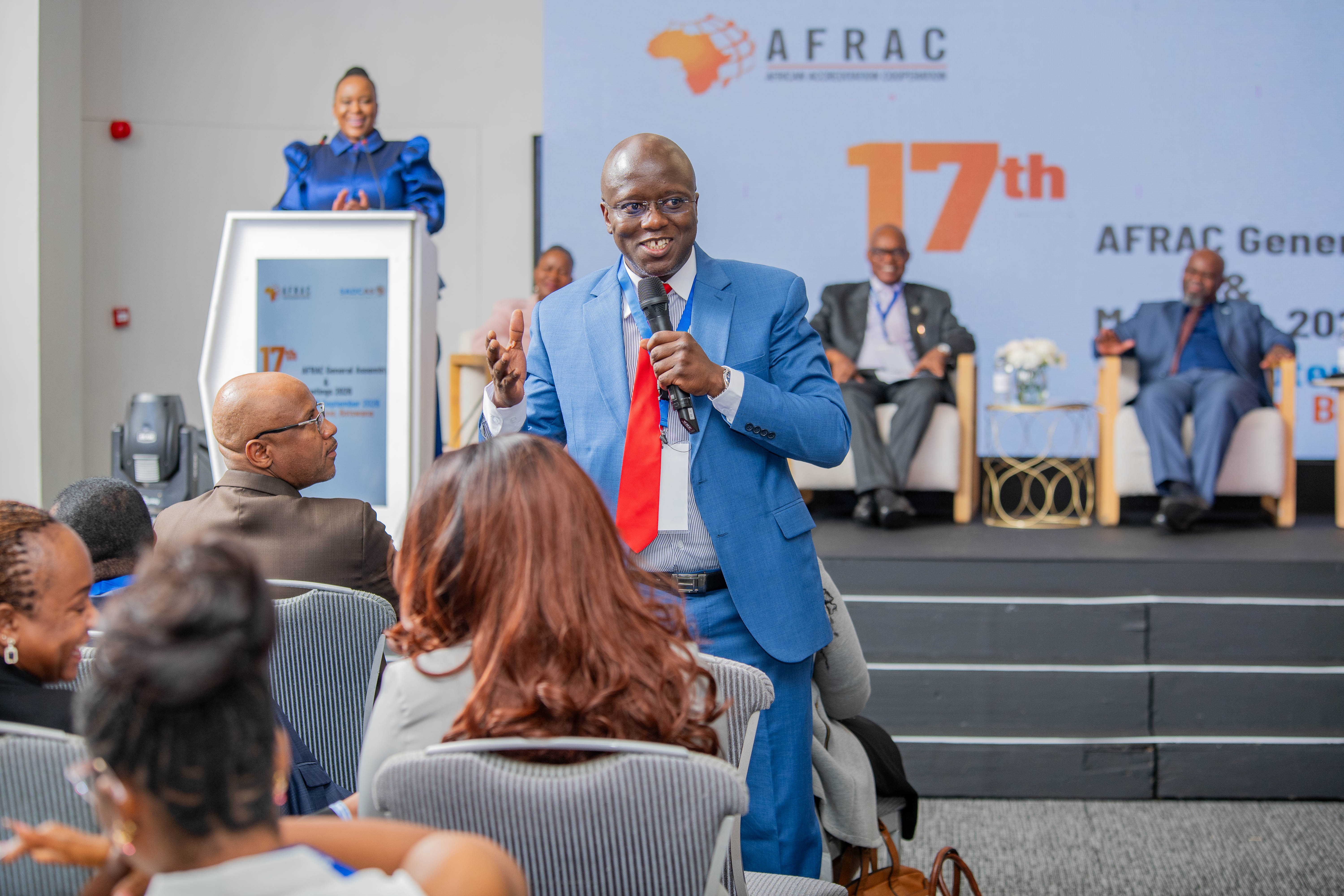
This was the clear message from the Kenya Accreditation Service (KENAS) following significant achievements at the African Accreditation Cooperation (AFRAC) General Assembly and Meetings held recently in Gaborone, Botswana.
The high‑level gathering brought together accreditation bodies, policymakers and quality infrastructure stakeholders from across Africa to advance accreditation in support of trade, industrialisation, consumer protection and economic integration.
KENAS recorded notable progress in capacity development, with two senior officers graduating from the AFRAC Development Programme. Lucy Namu, Director of Accreditation, and Julie Ochola, Assistant Director of Accreditation (Medical Laboratories), completed the year‑long programme supported by AFRAC, PTB and continental partners.
Dr. Walter Ongeti, Chief Executive Officer of KENAS, hailed the achievement as a boost to Kenya’s technical expertise. “These graduations demonstrate the calibre of professionals we are building to strengthen accreditation in Kenya and across Africa,” he said. “Competent people are the backbone of quality infrastructure.”
Kenya also secured key technical leadership positions within AFRAC, Michael Talam, Deputy Director for Compliance, Enforcement and Quality Assurance, was elected Chairperson of the AFRAC Certification Sub‑Committee, while Abraham Wekesa, Deputy Director for Certification and Inspection, was elected Chairperson of the AFRAC Technical Committee.
Dr. Ongeti noted that, “By securing leadership positions in AFRAC, Kenya is not just participating in continental accreditation, we are shaping it. Our experts are now at the table where technical cooperation and accreditation practice across Africa are defined.”
The KENAS delegation was led by Dr. Ongeti and joined by Joshua Mbithi Mwalyo (MP, Masinga) and Amos Maina Mwago (MP, Starehe), members of the National Assembly’s Departmental Committee on Trade, Industry and Cooperatives. Their participation underscored the growing link between accreditation, legislation and public policy.
Dr. Ongeti stressed, “Accreditation is no longer a technical matter alone. It supports regulation, consumer protection, industrial development and trade. That is why engagement between technical institutions and policymakers is critical in strengthening Africa’s quality infrastructure.”
The achievements come as Kenya advances the Bottom‑Up Economic Transformation Agenda (BETA), with manufacturing, value addition, exports and industrial development central to economic growth.
Through accreditation of laboratories, inspection bodies and certification agencies, KENAS supports the quality infrastructure needed to enhance confidence in Kenyan products and services and facilitate market access.
“As we pursue industrialisation and greater participation in continental and global trade, accreditation provides confidence that our products and services meet recognised requirements,” Dr. Ongeti said.
At the continental level, accreditation is vital for the African Continental Free Trade Area (AfCFTA). Beyond tariff removal, intra‑African trade requires confidence in the quality and safety of goods and services crossing borders.
Trusted accreditation and mutually recognised conformity assessment results reduce duplication of testing and certification, addressing technical barriers to trade.
Dr. Ongeti observed, “Accreditation is the invisible infrastructure of trade. It ensures that when goods move across borders, they carry trust with them. Without it, integration under AfCFTA cannot succeed.”
The Gaborone meetings also coincided with AFRAC’s preparations for its Strategic Plan 2027–2031, which will guide priorities over the next five years as accreditation responds to Africa’s evolving trade and industrialisation needs.
For Kenya, the graduation of two senior professionals, election of two officers to continental leadership positions, and engagement with legislators demonstrate the synergy of competent people, strong institutions and enabling policy frameworks required to strengthen accreditation and support Africa’s development.
Dr. Ongeti concluded, “These achievements show Kenya’s growing contribution to Africa’s accreditation system. Accreditation is about more than compliance, it is about confidence, competitiveness and prosperity. It is the foundation on which Africa’s industrialisation and trade will stand.”