
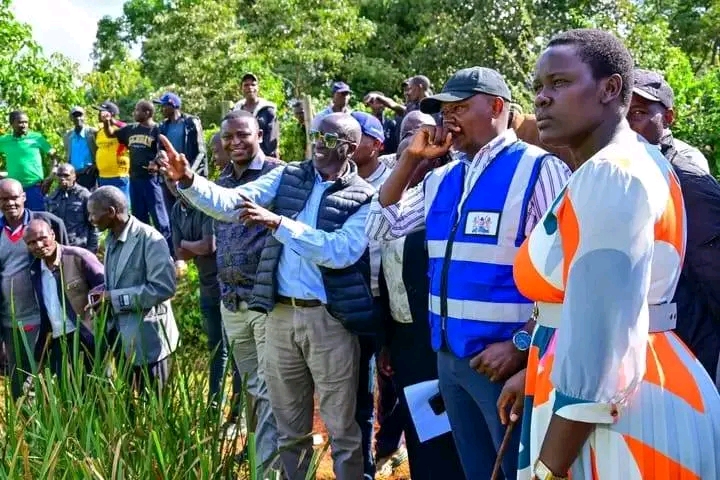
Sh270 million irrigation projects set to boost food production in Nandi County
By Sammy Mwibanda (KNA)
Residents of Nandi County will benefit from Sh270 million worth of irrigation and water infrastructure projects aimed at boosting agricultural productivity, enhancing food security and strengthening resilience to climate change.
The projects, being implemented by the State Department for Irrigation, will cover Nandi Hills, Tinderet and Mosop Constituencies, improving water availability for farming and supporting community livelihoods.
The investments include the Sh100 million Bombo-Chemelil Irrigation Project in Tinderet, Sh80 million for Kapnyamis Dam in Nandi Hills, Sh50 million for the Siwo Irrigation Project in Nandi Hills and Sh40 million for the Kipchutoiwo Dam project in Mosop.
Secretary for Land Reclamation and Climate Resilience at the State Department for Irrigation Joel Tanui, together with other government officials, recently toured the project sites to assess preparedness ahead of implementation, which is expected to commence this month.
Tanui said the Bombo-Chemelil Irrigation Project will enable farmers in Tinderet Sub-County to access reliable irrigation water, reducing dependence on rainfall and increasing agricultural output.
“The investment will help farming households reduce their dependence on rainfall, diversify crop production and improve the consistency of their harvests,” he said.
He added that interventions at Kapnyamis Dam and the Siwo Irrigation Project would enhance water availability for irrigation and support increased agricultural production in Nandi Hills.
The Kipchutoiwo Dam project in Mosop is also expected to improve water management and support farming activities in the area.
Nandi Woman Representative Cynthia Muge welcomed the investments, saying they would improve livelihoods, particularly among women and small-scale farmers who rely heavily on agriculture.
“Most women do the hard labour on farms but have no control over the income,” she said, adding that irrigation projects would help create better economic opportunities for vulnerable households.
Muge noted that reliable water supply would enable farmers to grow crops throughout the year, increase production and venture into higher-value agricultural enterprises such as vegetable farming.
John Chumo, a farmer from Songhor-Soba Ward, said dependable irrigation water would allow farmers to plan their planting seasons more effectively.