
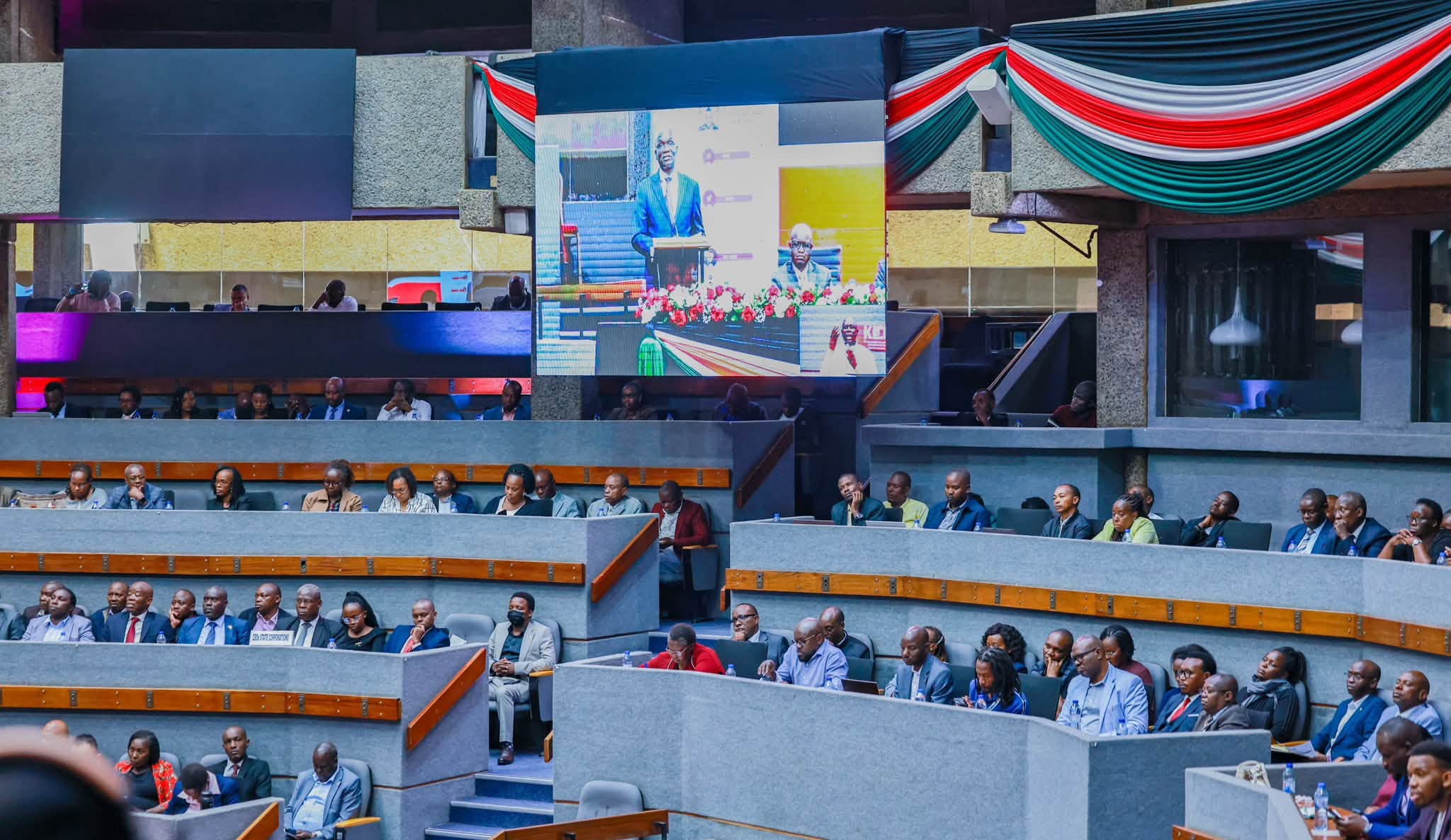
Treasury fast-tracks 2027/28 budget cycle ahead of the 2027 General Election
By Wasidia Freshwin and Phaeline Motari (KNA)
The National Treasury has accelerated the budget preparation process for the 2027/28 Financial Year to allow Parliament to review and approve expenditure estimates by March 31, 2027, ahead of the August 2027 General Election.
Treasury Cabinet Secretary John Mbadi said the revised budget calendar is intended to provide economic certainty and ensure uninterrupted delivery of public services during the election period.
In remarks delivered on his behalf by National Treasury Principal Secretary Dr Chris Kiptoo during the opening of the Public Sector Hearings on the 2027/28 Budget and Medium-Term Expenditure Framework, Mbadi said public participation remains a constitutional requirement under Article 201(a) of the Constitution.
“As we prepare the 2027/28 Budget Estimates, our fiscal policy will advance the Government’s priorities under the Bottom-Up Economic Transformation Agenda (BETA) and the Fourth Medium-Term Plan (MTP IV). Our approach is clear: pursue growth while restoring fiscal discipline,” Mbadi said.
The CS said Kenya’s economy had demonstrated resilience, recording an average growth rate of five per cent between 2022 and 2025, with real Gross Domestic Product (GDP) growth reaching 5.3 per cent in the first quarter of 2026.
He noted that the government remains committed to fiscal consolidation, with the budget deficit projected to decline from 6.8 per cent of GDP in the 2025/26 financial year to 5.9 per cent in 2027/28 and further to 4.9 per cent by 2030/31.
According to Mbadi, the fiscal framework is anchored on sustained economic growth of at least 5.3 per cent, inflation within the target range, a stable exchange rate, increased revenue mobilisation and prudent expenditure management.
To strengthen domestic revenue collection, the Treasury is implementing the National Tax Policy and Medium-Term Revenue Strategy, which seeks to broaden the tax base, streamline incentives and modernise tax administration through digital systems.
Mbadi directed accounting officers to comply with Treasury Circular No.10 of 2026 and submit sector budget proposals ahead of the presentation of the Draft Budget Policy Statement to Parliament on November 16, 2026.
State Department for Economic Planning Principal Secretary Dr Boniface Makokha said all sector proposals had been aligned with national development priorities and long-term economic objectives.
He revealed that implementation of Kenya Vision 2030 currently stands at 66.1 per cent, led by strong performance in the political pillar at 88.2 per cent.
“The overall progress comprises 88.2 per cent for the political pillar, 61.6 per cent for foundations and enablers, 59.5 per cent for the social pillar and 55.5 per cent for the economic pillar,” Makokha said.
The PS added that the government has trained 11,200 national government administrative officers across 36 counties to strengthen grassroots data collection and is conducting Gumzo La Uchumi Mashinani forums to gather public views on Kenya’s post-2030 development agenda.
National Treasury Principal Secretary Dr Chris Kiptoo highlighted ongoing public finance management reforms designed to improve efficiency and manage fiscal pressures.
These include the introduction of zero-based budgeting, full integration of e-procurement systems and implementation of the Single Treasury Account (STA).