
Mathioya Junior Secondary Schools adopt portable science laboratories
BERNARD MUNYAO-KNA
Public Junior Secondary Schools (JSS) in Mathioya Constituency have received a major boost in science education through the introduction of mobile laboratory units designed to support practical lessons under the Competency-Based Education (CBE) curriculum.
Since the rollout of CBE, many JSS centers—most of which are housed within primary schools—have struggled to deliver quality science instruction due to the lack of fully equipped laboratories.
As a result, learners have often had to walk to neighboring secondary schools for practical lessons, disrupting schedules and limiting hands-on experience.
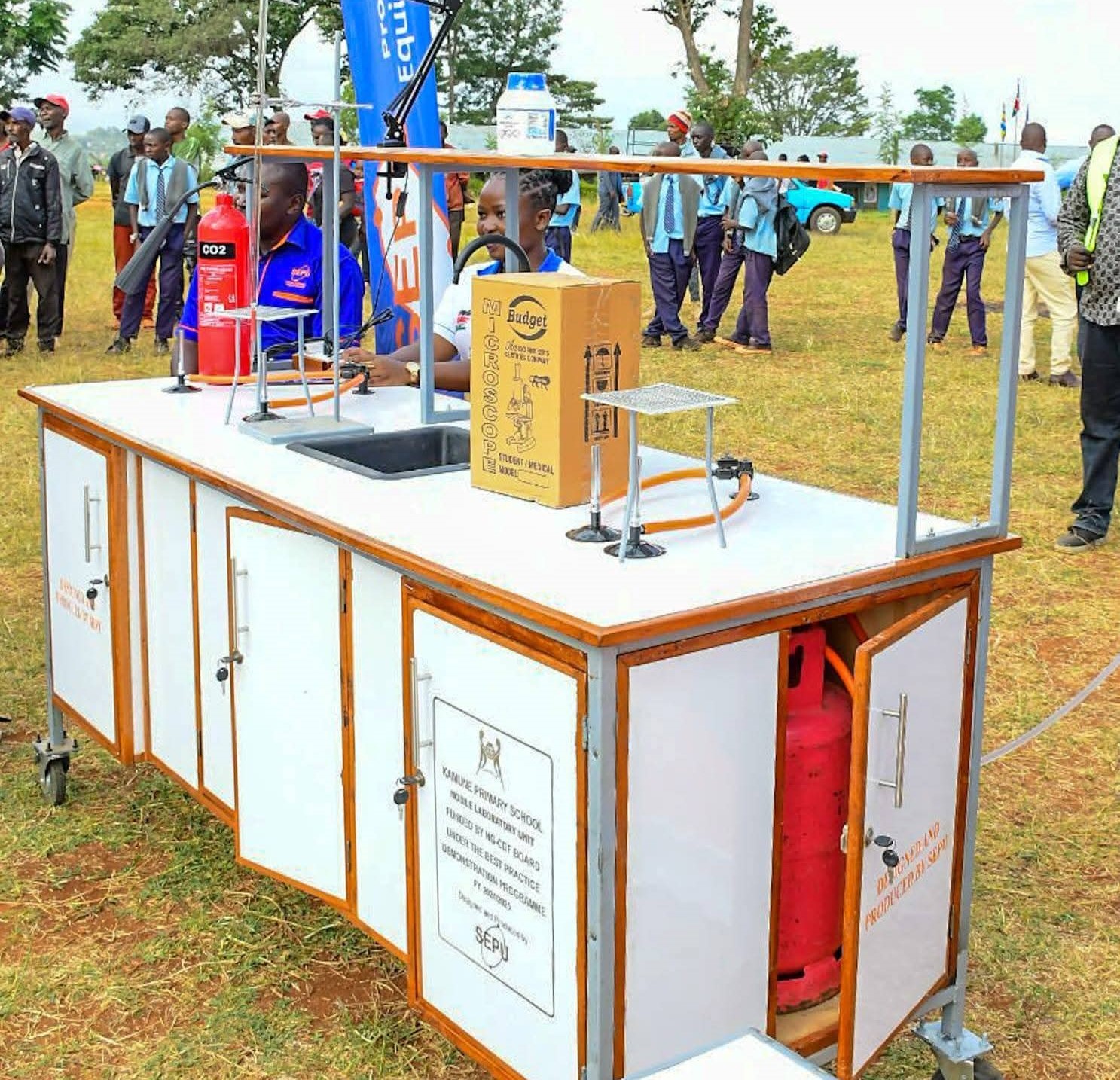
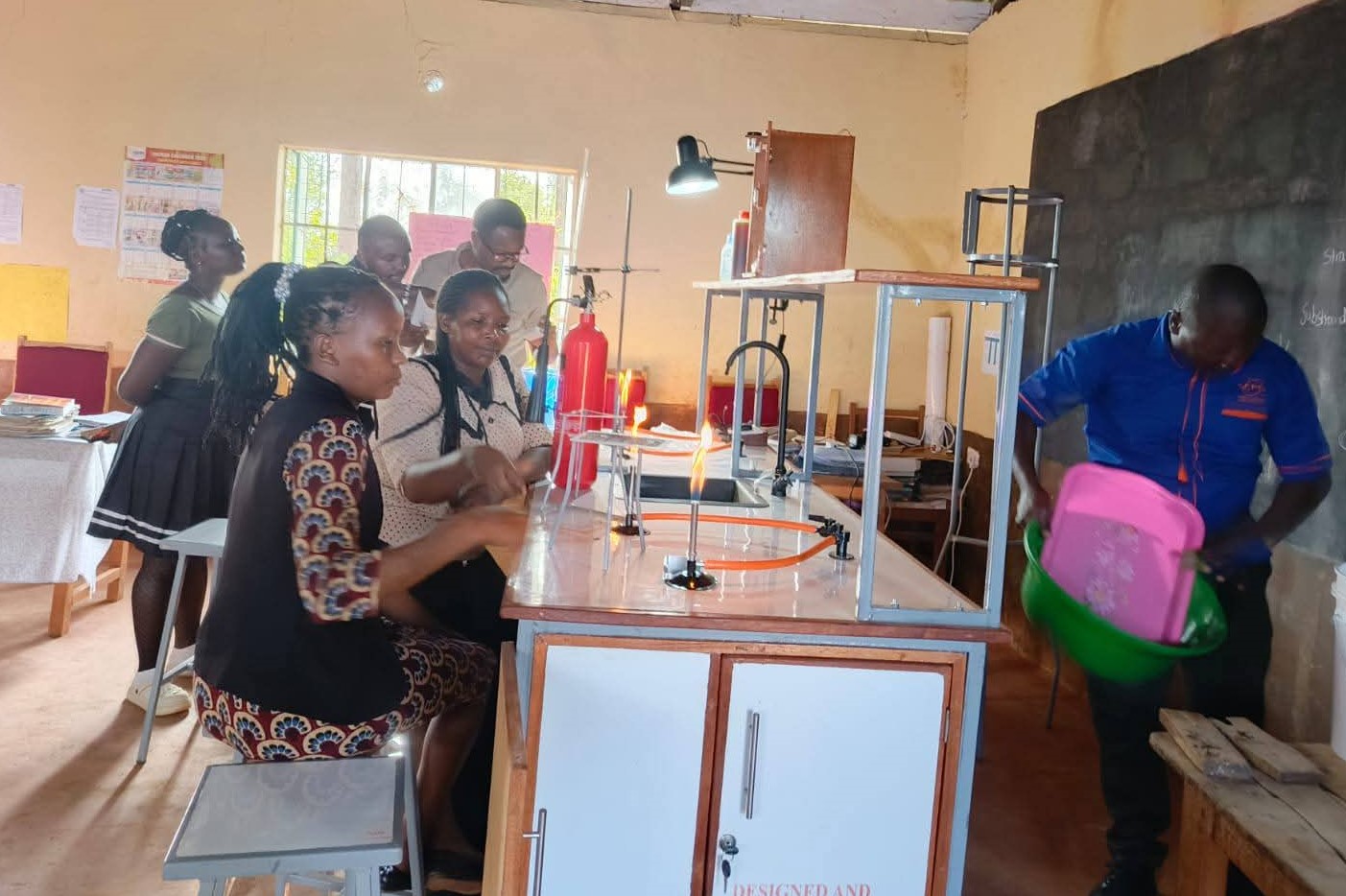
The newly introduced mobile laboratory units provide a practical and immediate solution. Unlike conventional laboratories that require permanent buildings, these units are portable, fully equipped science workstations that can be easily moved from one classroom to another within a school.
Each unit contains all the essential apparatus needed for CBEaligned practical lessons. Speaking during the rollout on Tuesday, Elijah Poshenei, chairperson of the School Equipment Production Unit, noted that a single mobile laboratory unit is sufficient to serve an entire school.
He explained that CBE places strong emphasis on practical learning, making such innovations critical for schools that have yet to establish permanent laboratories.
“This unit can be used by one class in the morning, moved to another mid-morning, and still serve a different group later in the day,” Poshenei said, adding, “It is fully equipped, and teachers require minimal preparation to conduct practical lessons.”
He emphasized that the initiative is part of broader efforts within the education sector to ensure that lack of infrastructure does not compromise the quality of learning.
The project has been championed by Mathioya MP Edwin Mugo Gichuki, who explained that the decision to adopt mobile laboratory units was driven by both cost considerations and urgency.
According to the MP, setting up conventional laboratories would cost millions of shillings and take years to complete.
“Each unit costs about Sh250,000, which is far more affordable than constructing a full laboratory,” he said.
Mugo continued “Using the National Government– Constituency Development Fund, we have ensured that 20 selected primary schools in Mathioya each receive their own complete lab unit.”
Mugo described the move as a smart, cost-effective intervention that allows schools to conduct science practicals immediately without waiting for long-term infrastructure projects.
The initiative has also received support from Yusuf Ndumo, chairperson of the NG-CDF Board, who noted that many schools across the country still lack adequate learning facilities.
He said that since the fund’s establishment 20 years ago, more than 3,000 new schools have been set up, many of which require support to become fully functional.
“Even older schools still have gaps in infrastructure. NG-CDF has played a key role in constructing classrooms, dormitories and laboratories and innovations like these mobile units help bridge remaining gaps,” Ndumo remarked.