
Government, telcos partner to improve ICT service quality across the 47 counties
SHARON NJERU AND PASKAL OSONGA
The Government has reaffirmed its commitment to working with mobile network operators to improve the quality of ICT services, saying reliable connectivity is essential for economic growth and access to public services.
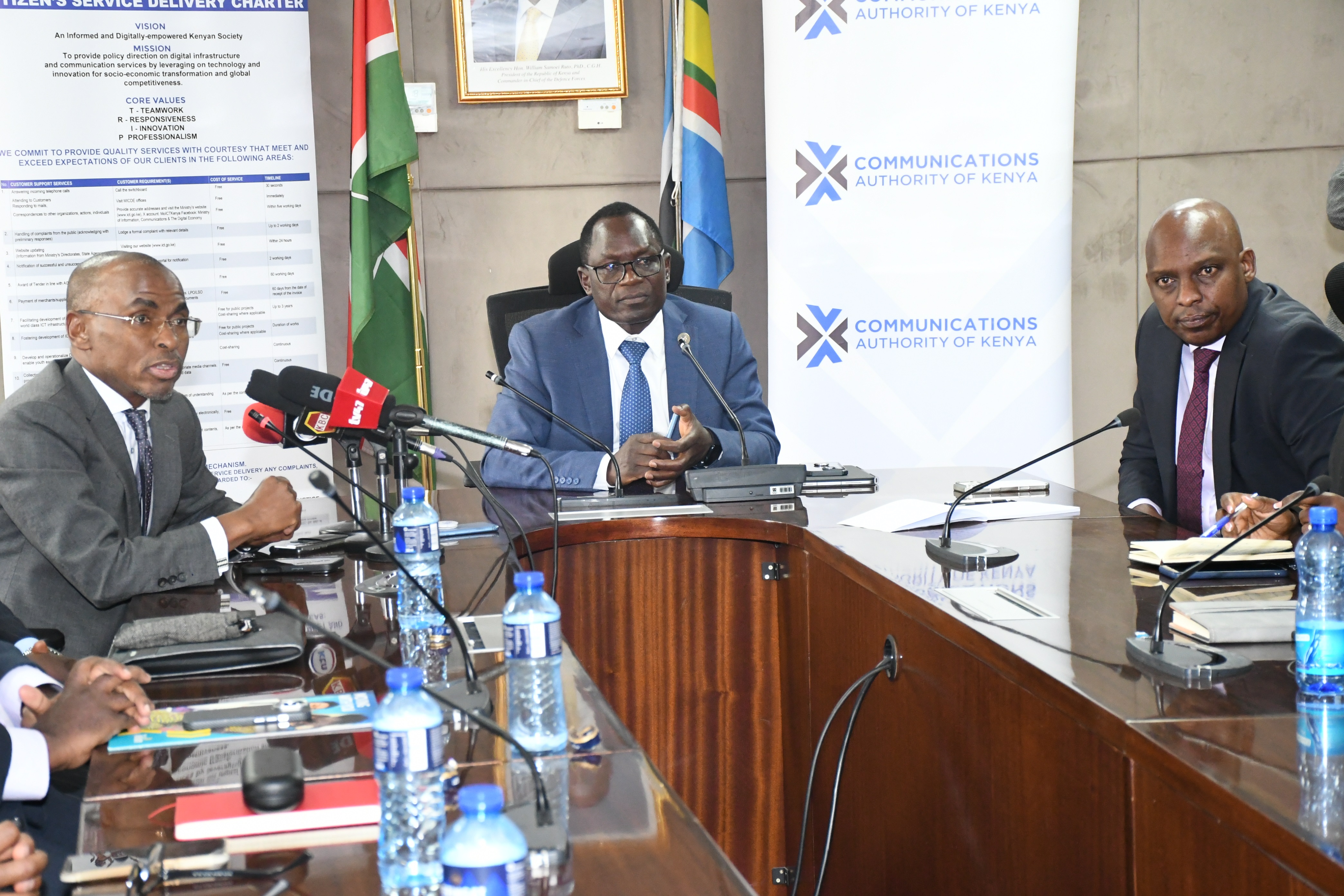
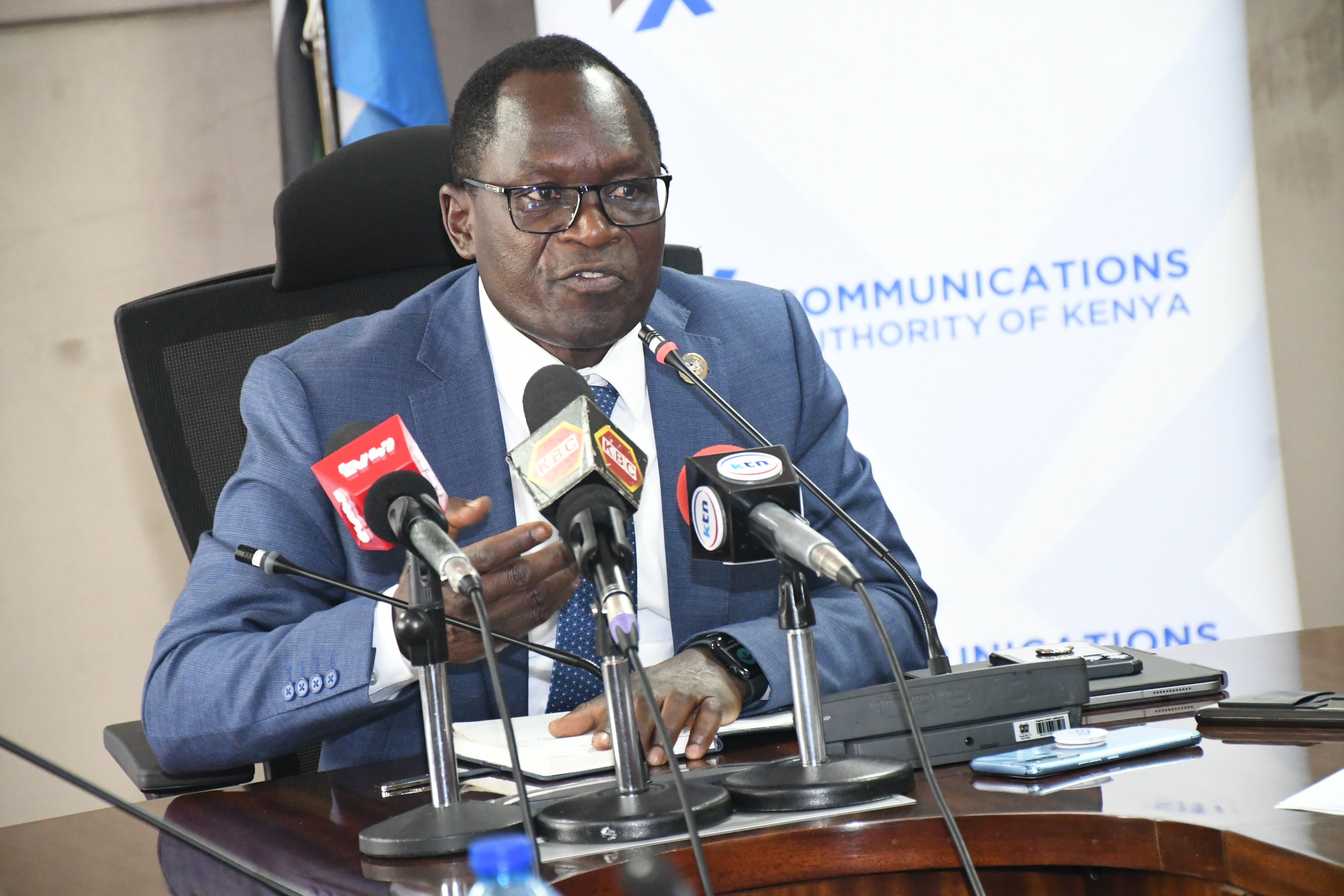
Speaking during a stakeholders’ meeting convened by the Communications Authority of Kenya (CA), Principal Secretary for Broadcasting and Telecommunications Stephen Isaboke said the government and telecommunications companies had held a consultative session to review the quality of service across the country and address emerging challenges as demand for digital services continues to grow.
He said the discussions focused on network readiness for the era of Artificial Intelligence (AI) and 5G technology, expanding coverage to underserved areas, and ensuring robust connectivity ahead of the 2027 Africa Cup of Nations (AFCON), which Kenya will co-host.
“We will do everything possible to ensure that Kenyans receive the services they deserve. Where there are gaps, especially as technology evolves, we will work together to address them,” said Isaboke.
The PS noted that quality communication services are critical for citizens accessing government services, voter registration, and future elections, adding that every Kenyan should have reliable network coverage regardless of where they live.
He added that the State Department would work closely with the Ministry of Sports and other stakeholders to ensure reliable connectivity at stadiums, airports, hotels, and other facilities that will support the successful hosting of AFCON.
Safaricom Chief Executive Officer Peter Ndegwa said mobile operators remain committed to providing quality services, not only to comply with licensing requirements but also to meet customer expectations.
“We discussed the issues the industry is facing, including rapid urbanisation, expansion of high-rise buildings among others,” said Ndegwa.
He added that reliable electricity remains critical for uninterrupted communication services and that operators continue investing in backup power systems while encouraging customers to migrate from 2G to 4G-enabled devices.
Ndegwa acknowledged that some localised service challenges persist due to changing urban landscapes and difficult terrain but said operators respond to customer feedback and are working closely with the Communications Authority through initiatives such as the Universal Service Fund (USF) to improve connectivity in underserved areas.