
Government’s commitment to food security
PENINAH KIHIKA - PCO
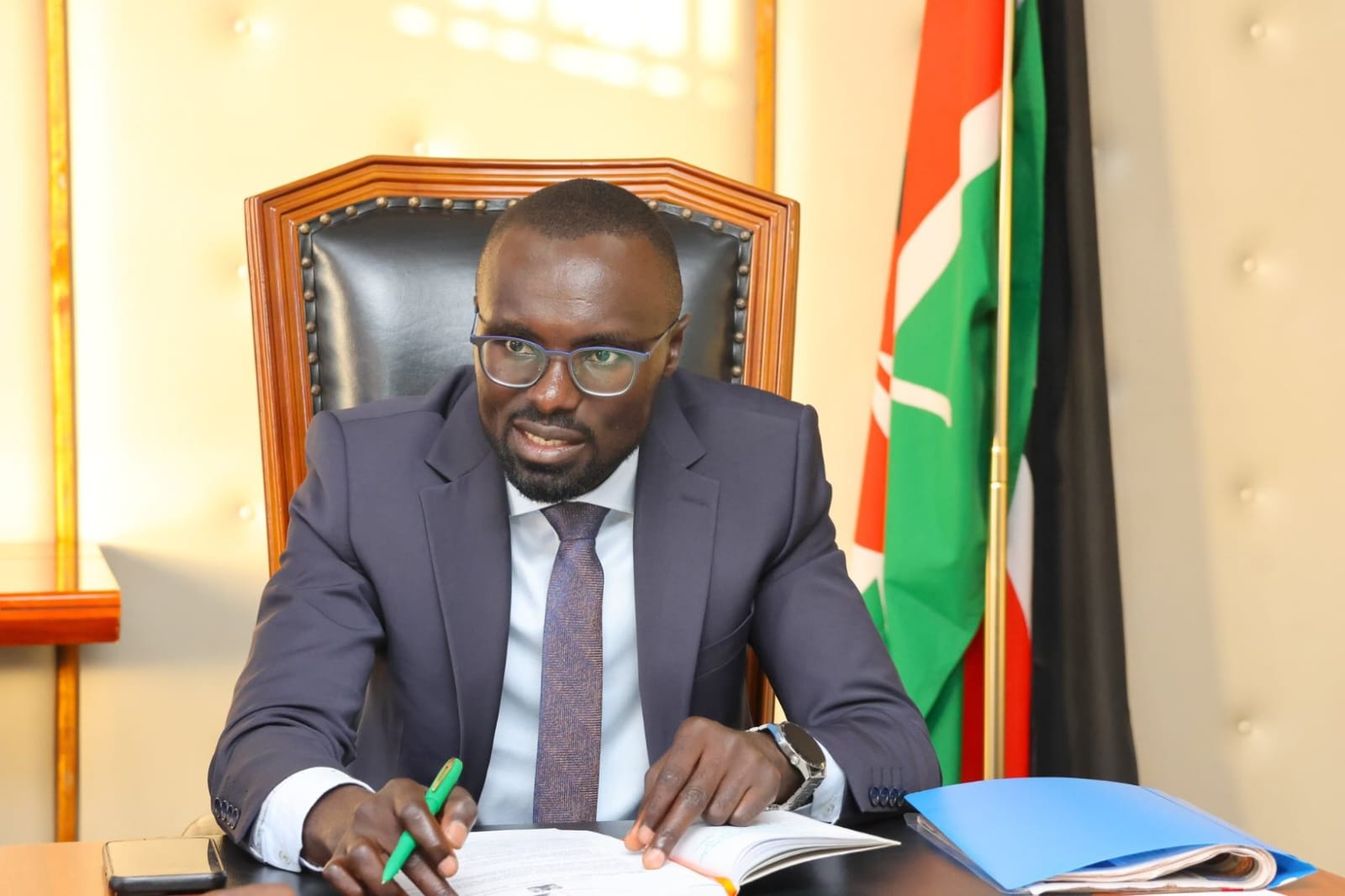
Kenya’s push for food security cannot succeed without sustained investment in water infrastructure and irrigation systems, Water Cabinet Secretary Eng. Eric Mugaa has said.
Speaking during the opening of the two-day conference dubbed Getting Wise: Measuring Human Experiences with Water to Support the African Union’s Water Vision 2063 at the United Nations Headquarters in Gigiri, Nairobi, Eng. Mugaa underscored the central role of water access in transforming livelihoods and driving economic growth.
He said the Government is prioritizing water security as a cornerstone of its food production agenda.
The Cabinet Secretary noted that access to water goes beyond being a constitutional right, describing it as a key driver of dignity, economic empowerment and national development.
“It is a way to feed the nation because without water, there can’t be irrigation, especially for Kenya, without water storage. Food security is key to this administration’s agenda,” he said.
Eng. Mugaa emphasized the need for the country to move beyond discussions on water availability and focus on actual infrastructure development, financing mechanisms and strategic partnerships that guarantee reliable access to water for all Kenyans.
He revealed that the government is developing the Kenya Resilient Irrigation and Sustainable Economies (K-RISE) programme aimed at strengthening water security and supporting sustainable livelihoods.
“We are in the process of developing what we are calling K-RISE, the Kenya Resilient Irrigation and Sustainable Economies, which is first of all to ensure there is water security,” the CS said, adding that the government is also working towards establishing a centralized water data system.
The Cabinet Secretary, who described himself as both a practitioner and consumer in the water and sanitation sector, called for a shift in how the country measures water access, arguing that connectivity statistics alone do not reflect the real experiences of citizens.
“Percentage connectivity in the country is around 74 per cent. Does this tell the true story? That young woman in Turkana, Kondele in Kisumu or in Kajiado might tell a very different story from all of you attending this conference,” he said.
“Our major concern is about percentage connectivity, the number of beneficiaries and connections. Does anybody care to follow up on how stable that connection is? We need a paradigm shift and a genuine conversation on how we measure efficiency and access to water,” he added.
Eng. Mugaa further disclosed that the Ministry has entered into a cooperation agreement with Northwestern University to develop new approaches for measuring human experiences with water, saying the focus should not only be on infrastructure but also on how communities access and use water in their daily lives.
The CS added that the Ministry is exploring partnerships with development agencies, county governments, the private sector and other stakeholders to promote innovation, integrated water resource management and sustainable systems, particularly targeting opportunities for young people.
“We live in a global village where progress can be accelerated through partnerships instead of reinventing the wheel,” he said.
Laikipia Governor Joshua Irungu, who chairs the Council of Governors’ Committee on Water and Natural Resources, said many communities across the country still face severe water challenges, with women in some counties walking more than 15 kilometres in search of water.
“In some places, people compete with elephants and donkeys for water, and the animals drink first,” Governor Irungu said.
He noted that in many rural areas, the main concern remains water availability rather than quality, and called for inclusive water management approaches that involve all stakeholders, including communities living both upstream and downstream.