
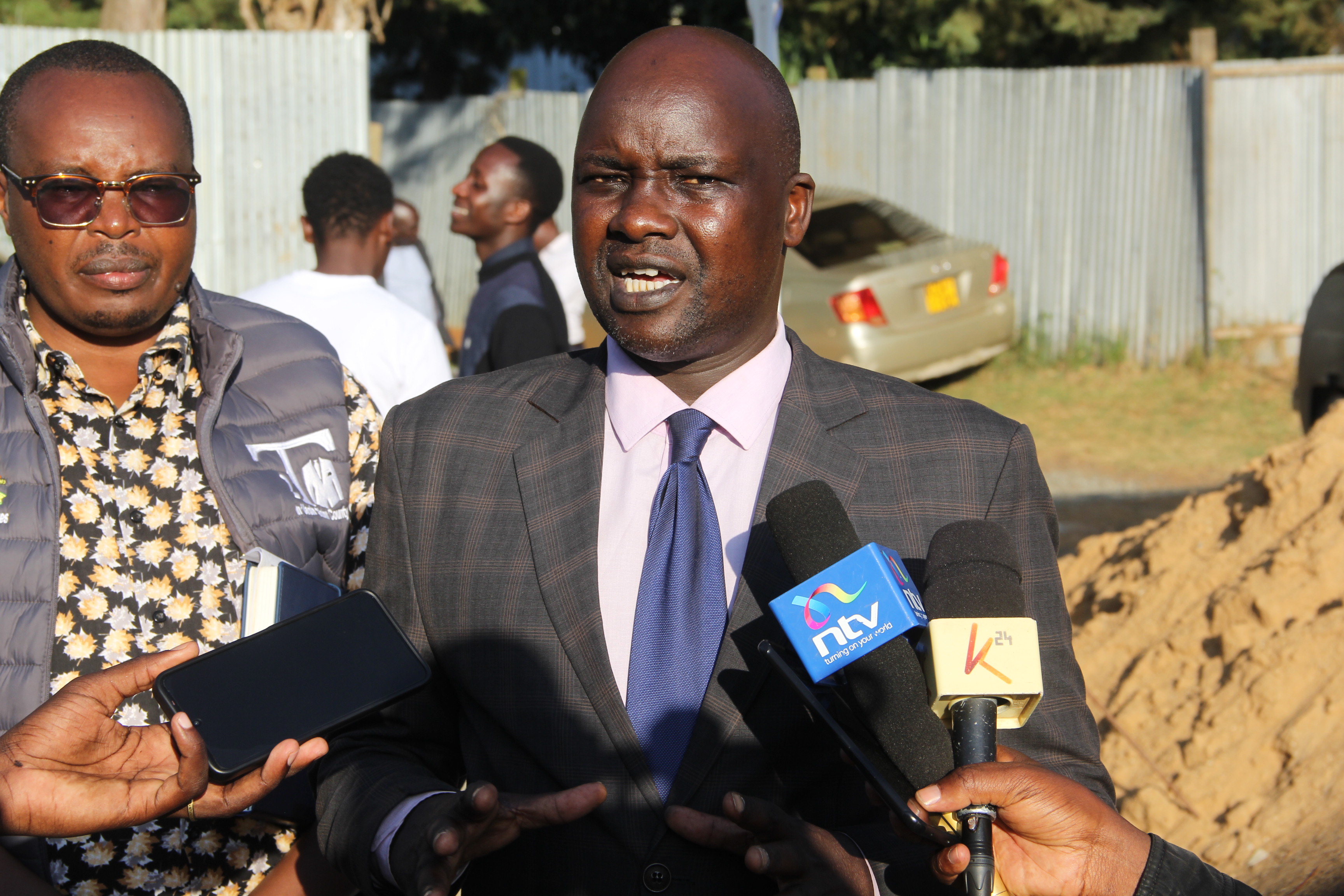
Government unveils coffee revival drive in North Rift
EKUWAM SYLVESTER-KNA
The Government has intensified efforts to revive Kenya’s coffee sector with the launch of the Coffee Revitalisation Programme in the North Rift region, targeting increased production and expansion into new coffee-growing areas.
Speaking during the regional launch for West Pokot, Nandi, Uasin Gishu and Elgeyo-Marakwet counties at the Rift Valley Technical Training Institute (RVTTI) in Eldoret, Cabinet Secretary for Cooperatives and MSME Development Wycliffe Oparanya said the initiative follows the national launch by President William Ruto two weeks ago and marks the start of a nationwide county rollout.
Oparanya said the Government aims to increase Kenya’s annual coffee production from the current 50,000 metric tonnes to 150,000 metric tonnes by 2029/2030, describing the target as critical to restoring the country’s position among the world’s leading coffee producers.
He noted that Kenya was once Africa’s second-largest coffee producer after Ethiopia but has since dropped to fifth place due to poor management of coffee cooperatives and inadequate government support, which led many farmers to abandon the crop.
The CS said the government is addressing the challenges through comprehensive reforms, including amendments to the Cooperative Act currently under discussion in Parliament.
He expressed optimism that the revised law would be enacted by September, providing stronger governance for cooperatives across the country.
To support the revival programme, Oparanya said the government allocated Sh500 million to the coffee sector last year and has increased the allocation to Sh1 billion this financial year to finance sector reforms and farmer support.
He said the Coffee Revitalization Programme adopts a whole-of-government approach, bringing together county commissioners, county governments, Kenya Planters Cooperative Union (KPCU), the Coffee Research Institute, the Nairobi Coffee Exchange and other stakeholders to coordinate implementation at the county level.
County steering committees have been tasked with profiling coffee farmers, mapping acreage under coffee, identifying suitable varieties, monitoring production and regularly submitting progress reports to the national government.
“The information from the counties will enable us to know where seedlings, machinery and other interventions are required so that support reaches farmers in good time,” said Oparanya.
The CS highlighted key reforms already implemented in the coffee sector, including reducing payment periods from more than a month to five days after coffee sales.
He added that once the new law takes effect, farmers will receive 80 per cent of their earnings directly through the Direct Settlement System (DSS), while 20 per cent will go to their cooperatives.
Oparanya also announced that the government has already released Sh4 billion to facilitate the waiver of historic coffee cooperative debts and is seeking an additional Sh2.8 billion through a supplementary budget to complete the exercise.
He said the government intends to prevent future indebtedness by strengthening access to affordable financing under the Coffee Cherry Advance Revolving Fund (CCARF).
To reduce production costs, the CS said the government, through KPCU, will establish strategic coffee milling plants instead of requiring cooperatives to purchase expensive milling equipment.
Eldoret is among the towns earmarked to host a government-supported coffee mill alongside Kakamega and several centres in the Mt Kenya region.
The ministry is also negotiating with manufacturers to enable farmers to acquire coffee pulping machines at subsidized prices.
Oparanya commended Uasin Gishu Governor Jonathan Bii for embracing coffee farming, saying the county has demonstrated strong commitment to expanding the crop compared to many other regions.
He urged political leaders to lead by example by investing in coffee farming, noting that the crop has enormous potential to create jobs, increase household incomes and stimulate economic growth.