
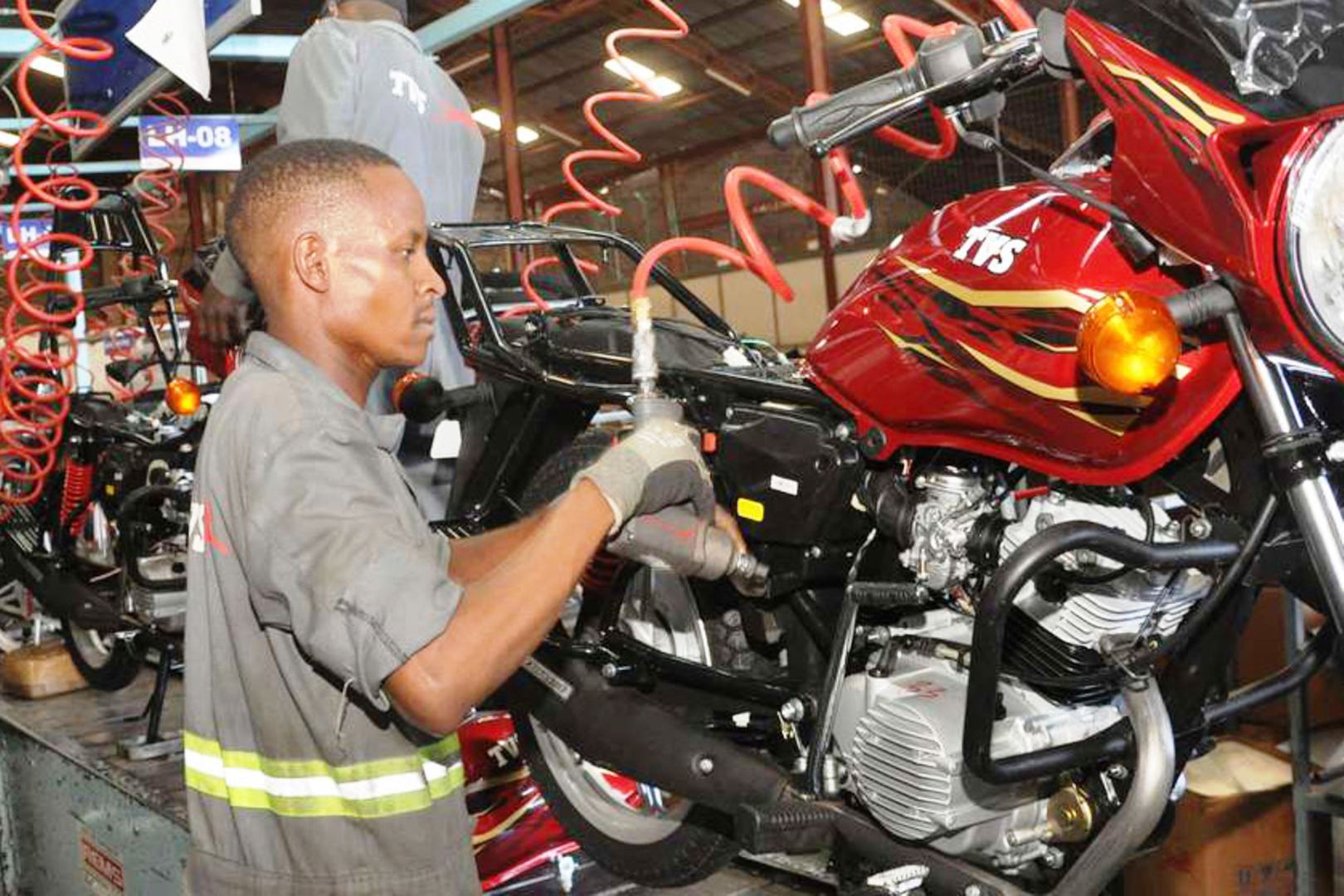
Government certification programme unlocks opportunities for skilled artisans
MABEL KEYA AND JOHN OCHIENG-KNA
Recognition of Prior Learning (RPL) was formally introduced in Kenya in 2024 following Cabinet approval of the national RPL policy and the subsequent launch of the RPL Policy Framework.
The RPL programme is a government initiative that assesses and accredits the practical skills, knowledge, and experience of Jua Kali artisans, mechanics, and other informal sector workers.
The system enables individuals to obtain nationally recognized certification for competencies acquired through work experience or informal training, without the need to undergo traditional classroom-based learning.
The programme was designed to support millions of workers in the informal sector by providing official recognition of their realworld skills and expertise.
For artisans in the Jua Kali industry and other skilled workers, this certification creates pathways to formal employment, career advancement, and further education and training opportunities.
Assessment and certification are conducted by institutions accredited by the Kenya National Qualifications Authority (KNQA) and relevant government agencies, including the National Industrial Training Authority (NITA).
Through RPL, individuals can obtain an official government-recognized certificate for skills they already possess, even if they have never attended a formal college or training institution.
This allows experienced workers to leverage their practical expertise to access better employment opportunities and improve their livelihoods.
To date, the Kenyan government has certified more than 60,000 skilled workers who previously lacked formal academic qualifications.
As a result, many are now better positioned to secure employment, compete for contracts, and participate in government procurement opportunities.
We now devolve into the story of three such young artisans to now qualify to be certified as people having mastered enough skills in the field of motorcycle mechanics.
The metallic sound of hammers striking steel echoes through the busy streets of Mamboleo estate in Kisumu County.
The smell of engine oil fills the air as mechanics move from one motorcycle to another, their hands blackened by grease but their faces bright with determination.
In one corner of Lake View Auto Garage, an old motorcycle that many would consider scrap slowly comes back to life.
For 31-year-old Brian Ouma, every damaged motorcycle tells a story. Where others see a machine destined for the scrapyard, he sees opportunity.
“I always believed that an old motorcycle still has value if someone has the skills and patience to rebuild it,” he says while tightening a bolt on a refurbished engine.
Brian started the garage in 2020 after spending nearly seven years working as an apprentice.
Growing up in Manyatta estate, he watched his parents struggle to provide for the family.
Unable to continue with college because of financial difficulties, he decided to learn motorcycle mechanics from a workshop in the neighborhood.
“It wasn’t easy in the beginning,” he recalls. “Sometimes I worked for an entire day and earned almost nothing. But I knew that if I became skilled, one day I would own my own garage.”
Today, Brian works alongside two fellow mechanics, Kevin Onyango and Peter Ochieng, restoring motorcycles that have been involved in accidents or abandoned because owners considered them too expensive to repair.
The team buys damaged motorcycles, repairs engines, replaces worn-out parts, repaints the frames and sells them at affordable prices. They also repair customers’ motorcycles, perform routine servicing and offer spare parts.
Their workshop receives an average of 10 to 15 customers each day, ranging from boda boda riders and delivery operators to private motorcycle owners.
On a good day, the garage generates between Sh15,000 and Sh25,000 in revenue. After paying for spare parts, rent, electricity and workers’ wages,
Brian says the business makes a daily profit of approximately Sh5,000 to Sh8,000. “The profit depends on the type of repairs,” he explains. “Some days are slow, but when we rebuild and sell a motorcycle, the returns are much better.”