
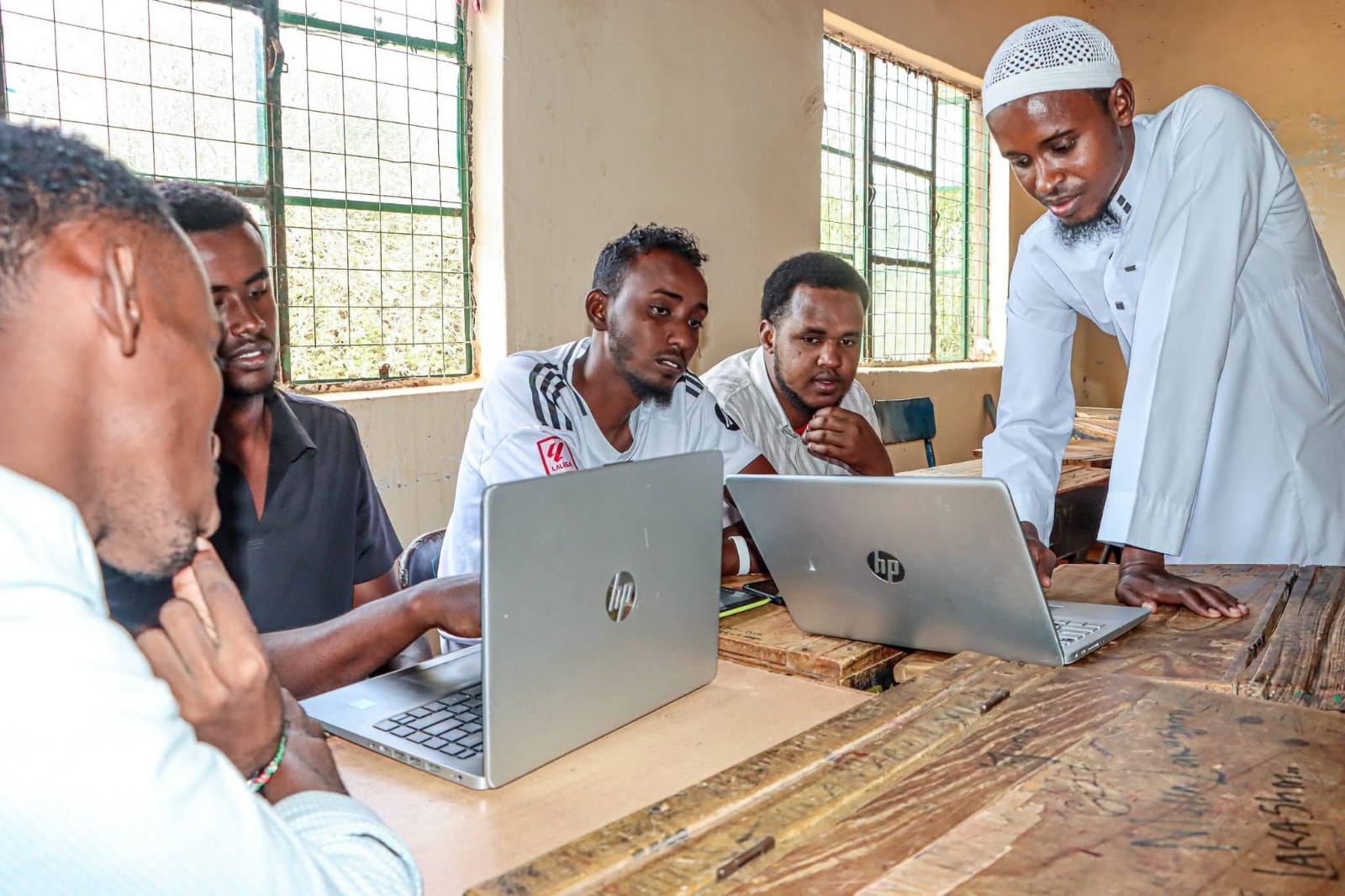
Digital literacy bootcamp empowers 800 learners and youth in Wajir
By Hamdi Buthuli (KNA)
More than 800 learners and out-of-school youth in Wajir County have acquired digital skills through a week-long bootcamp aimed at preparing them for opportunities in the digital economy.
The Digital Literacy Bootcamp, held at Wajir Girls Secondary School, was implemented by the Frontier Counties Development Council (FCDC) in partnership with the Ministry of Education, the Teachers Service Commission (TSC), UNICEF, the Raspberry Pi Foundation, Action Foundation and Kenya Connect under the Inclusive Quality Education and Digital Learning Programme.
The initiative trained 600 junior school learners during the first phase before concluding with 200 out-of-school youth, who received practical training on foundational digital skills, artificial intelligence (AI), digital marketing, online safety, entrepreneurship, employability and responsible use of technology.
Speaking during the closing ceremony, FCDC Education and Governance Sector Lead Abdullahi Hassan Maalim said the programme was designed to bridge the digital divide affecting learners and youth in Kenya's frontier counties by equipping them with skills required in the fast-growing digital economy.
Maalim said FCDC, a regional bloc comprising Tana River, Lamu, Garissa, Wajir, Mandera, Marsabit, Isiolo, Turkana, Samburu and West Pokot counties, continues to implement programmes addressing common development challenges, including historical marginalization, insecurity and climate change.
"We are living in a digital era where technology is transforming every sector. ICT has become one of the most important skills of the 21st century, and we must ensure our learners are equipped to compete globally," he said.
He observed that many children in marginalized communities encounter computers for the first time in school due to limited access to digital devices at home, making schools critical centres for digital learning.
"We cannot expect our learners to compete with their peers in other parts of Kenya and the world if they are not exposed to technology early. Digital integration is no longer optional; it is essential," he added.
Maalim said learners were introduced to foundational digital skills, online safety and Scratch coding aligned with the Competency-Based Curriculum (CBC), while youth participants received practical training on artificial intelligence, digital entrepreneurship and online employability.
He said FCDC, through UNICEF's Last Mile Connectivity of Schools (LMCS), had already trained 76 ICT champion teachers serving 76 schools in Wajir and Marsabit counties to strengthen classroom-based digital learning.
According to Maalim, the council has partnered with the Raspberry Pi Foundation since 2024 to expand digital learning across frontier counties.
He said the initiative initially reached about 48,000 learners in eight counties before expanding to more than 200 schools with a target of benefiting over 100,000 learners this year.
"In Wajir County alone, we are currently supporting 56 schools through the Raspberry Pi Foundation and UNICEF programmes. Our approach is to develop ICT champions who mentor fellow teachers and learners within their schools and neighbouring institutions," he said.
Maalim noted that one of the programme's greatest achievements had been empowering teachers to confidently use digital devices that had previously remained unused in schools.
"Many tablets supplied to schools years ago remained locked in cupboards because teachers lacked the confidence to use them. We launched a campaign dubbed 'Unlocking the Cupboards' by building teachers' capacity, and schools are requesting more digital devices because they have embraced technology," he said.
He, however, cited inadequate ICT infrastructure, unreliable electricity supply, limited internet connectivity and teacher shortages as major challenges affecting digital learning in remote areas.
Senior Director of Programmes at Kenya Connect Patrick Munguti said the organization was working with FCDC to ensure learners and youth in marginalized communities acquire digital skills aligned with global technological trends.
"Our objective is to ensure learners leave school with opportunities. We are introducing coding and technology skills while helping young people understand artificial intelligence and how it can be used responsibly for business, employment and innovation," he said.
Munguti noted that digital competencies would enable young people to access employment and business opportunities beyond their local communities.
"We want learners in marginalized counties to compete on equal footing with those in urban centres because digital skills enable people to work from anywhere in the world," he said.
ICT Champion and facilitator Abduli Mohammed described the bootcamp as transformative, noting that many participants interacted with computers for the first time.
"For three days we trained learners on basic computer skills, online safety and Scratch programming before introducing youth to artificial intelligence, digital marketing and online opportunities. The response has been overwhelmingly positive," he said.
Mohammed appealed for more digital literacy programmes to enable young people to acquire skills required in 's labour market.
Participants welcomed the initiative, saying it had broadened their understanding of emerging technologies and opportunities available through digital platforms.
Hassan Ali Abdi, a youth participant from Borwaqo, thanked the organizers for extending the programme to Wajir and appealed for similar initiatives to benefit more unemployed youth.
"We appreciate the opportunity to learn about digital technology and artificial intelligence. We encourage the organizers to continue bringing such programmes to Wajir because they have the potential to transform the lives of many young people," he said.
Organizers described the bootcamp as a significant milestone in advancing digital literacy in Wajir County, saying the skills acquired would help participants become confident digital citizens while enhancing their prospects in education, employment, entrepreneurship and innovation.
The week-long programme reached a total of 800 beneficiaries and forms part of ongoing efforts to strengthen ICT integration in schools, promote digital inclusion and prepare learners and young people in frontier counties to participate effectively in Kenya's digital economy.