
Coffee sector targets global investors as Kenya eyes tripling production
WANGARI NDIRANGU-KNA
The Government is stepping up efforts to attract private investment into Kenya’s coffee value chain as it seeks to triple national production from the current 50,000 metric tons to 150,000 metric tons by 2028.
The investment drive, spearheaded by the Ministry of Cooperatives and MSMEs Development in partnership with the Food and Agriculture Organization (FAO) and New Kenya Planters Cooperative Union (New KPCU) will culminate in an international investment forum in Rome, Italy, in October where Kenya will showcase investment opportunities to global financiers and agribusiness investors.
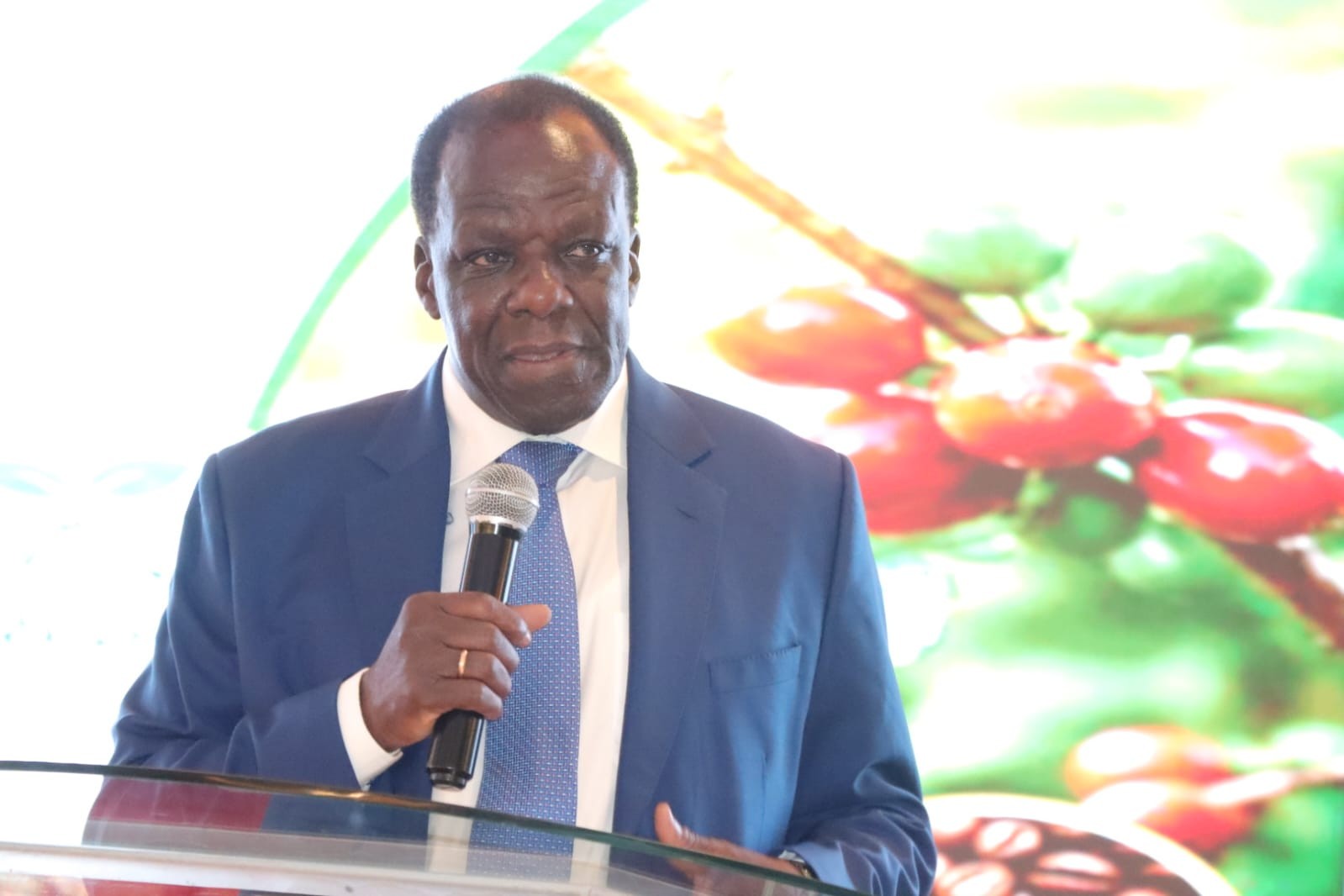
Speaking during the 2026 Hand-in-Hand Local Private Sector Investment Forum in Nairobi, the Cabinet Secretary for Cooperatives and MSMEs Development, Wycliffe Oparanya, said Kenya’s premium coffee enjoys strong global demand making increased production the country’s immediate priority rather than searching for new markets.
“Kenya’s coffee production is currently a drop in the ocean. As soon as we produce more quality coffee, the market is available,” he said, noting that growing demand in China, India, and the United States presents significant opportunities for Kenyan farmers.
Oparanya said the government has introduced wide-ranging reforms to revive the sector after production declined in the 1980s.
The measures include reducing the number of intermediaries to improve farmer earnings, expanding coffee cultivation into Nyanza, Western, and the Rift Valley and boosting productivity in traditional growing areas through extension services, agronomic support, and farm inputs.
He noted that average yields currently stand at about two kilograms per coffee bush, with the government targeting at least five kilograms per bush.
The CS highlighted financial reforms to strengthen coffee cooperatives, including settling long-standing debts and improving governance.
He said an audit established genuine cooperative debts at Sh6.8 billion down from an initial estimate of Sh11 billion with the government already clearing about Sh2 billion owed to state institutions.
A further Sh2 billion has been allocated in the current financial year to settle loans owed to commercial banks while the remaining balance is expected to be cleared through a supplementary budget.
To reduce dependence on expensive commercial loans, the government has also established an Sh8 billion advance revolving fund to enable farmers to access credit at three percent interest.