
Water hyacinth offers livelihoods to lake communities despite health risks
REGINA JOY AND DAVIS LANGAT-KNA
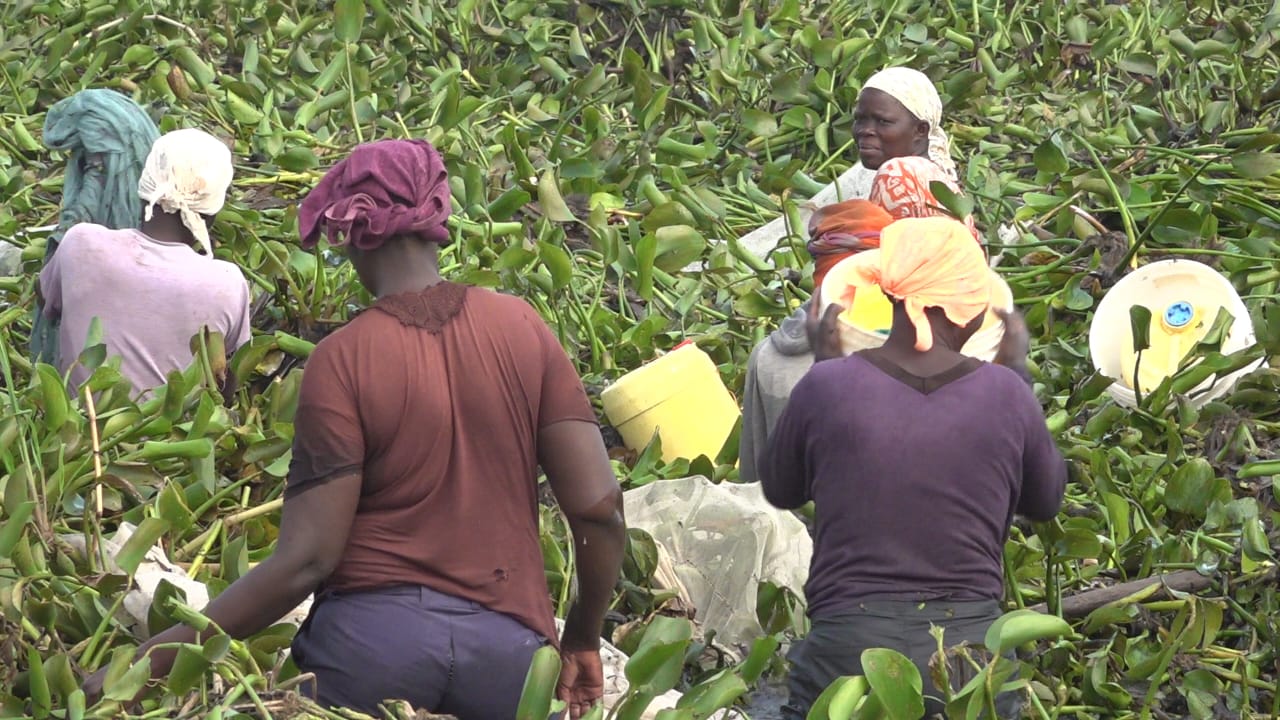
Along the shores of Lake Victoria in Kochia, Homa Bay County, the water appears calm, its surface blanketed by thick mats of water hyacinth.
To many outsiders, the invasive weed symbolizes environmental degradation.
But to the communities living along the lake, it represents something far more complex—a source of livelihood that is increasingly intertwined with growing health risks driven by climate change.
For generations, Lake Victoria has sustained thousands of families through fishing and related activities.
Today, however, changing weather patterns, flooding, and the rapid spread of water hyacinth are reshaping both livelihoods and public health.
“This lake helps us survive. Widows, orphans, and even schoolchildren depend on it for their livelihoods,” says Calvin Mingo, a resident of Kochia.
“But the benefits have come with challenges.” For many residents, water hyacinth is not simply an invasive plant. Beneath its dense cover thrives nyapus, a small fish species that has become an important source of income.
“When there is water hyacinth, people are not jobless,” says Peter Oyoma, who harvests nyapos from beneath the floating vegetation. “We sell it to fishermen and traders in Uganda, Busia, Usenge, and even Tanzania. It has a ready market.”
The small fish are mainly used as bait for larger commercial species such as Nile perch and tilapia. Their trade provides seasonal income that helps families pay school fees, buy food and meet household expenses.
“When the water hyacinth drifts away, many people suffer. This thing gives people money,” Oyoma adds.
Yet earning that income comes at a cost. Harvesters spend long hours wading through stagnant lake water, often barefoot and without gloves or protective clothing.
Health experts warn that prolonged exposure has increased the risk of waterborne and neglected tropical diseases, with climate change worsening the situation.
“Most of our patients are fisherfolk who stay in the water for long periods,” says Molly Ochar, a nurse and outreach coordinator working with beach communities.
“That prolonged contact is why we see many neglected tropical diseases.” According to Ochar, medical outreach programmes frequently diagnose bilharzia (schistosomiasis), intestinal worm infections, elephantiasis, river blindness and trachoma.
“These diseases thrive in contaminated or stagnant water,” she explains. “When sanitation is poor and flooding washes waste into the lake, the same water is used for drinking, cooking and washing.”
The health consequences are severe. Children suffer anaemia, malnutrition and delayed growth as parasitic worms deprive them of essential nutrients. Adults endure chronic pain, swollen limbs and declining physical strength, reducing their ability to earn a living.
“These conditions don’t kill immediately,” Ochar says. “But they slowly destroy productivity and dignity.” Beyond physical illness, the uncertainty created by climate change is taking a psychological toll on fishing communities. “The biggest challenge is not knowing what to do,” says Everline Akoth.
“You wake up worried about food, school fees and sickness.” Health workers say persistent illness, declining incomes and food insecurity are contributing to anxiety and depression, especially among fishermen who continue working despite deteriorating health. “When the body is affected, the mind is affected too,” Ochar says.
“We do counselling because many people feel ashamed or hopeless.” The World Health Organization has warned that climate change is increasing the spread of water-borne and vector-borne diseases while also undermining mental health, particularly in communities whose livelihoods depend directly on natural ecosystems.