
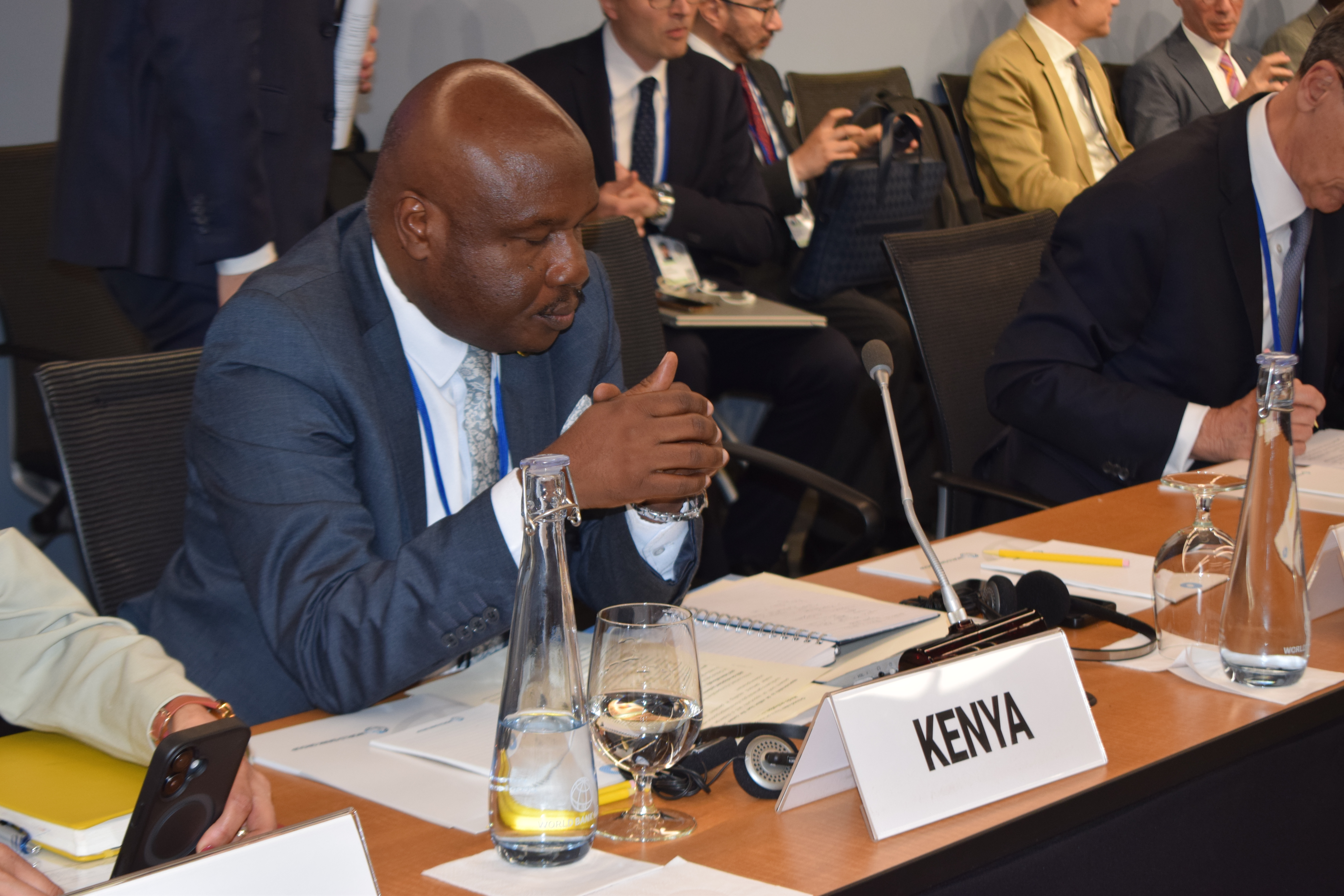
PS roots for global skills deals to boost employment opportunities
JULIUS NDEGWA-PCO
The Principal Secretary for Labour and Skills Development, Shadrack Mwadime, has reaffirmed Kenya’s commitment to advancing innovative, demand-driven approaches that link skills development to global labour market opportunities.
Speaking at the Ministerial Roundtable on Operationalizing Global Skills Partnerships for Skills Development and Labour Mobility in Washington, D.C., the PS described Global Skills Partnerships (GSPs) as “a practical and scalable solution to bridging skills gaps while unlocking employment pathways,” terming them a “quadruple win” for countries of origin, destination countries, workers, and employers.
He emphasized that the success of the model lies in co-designing and continuously refining training systems through collaboration between origin and destination countries.
Kenya, he noted, has partnered with institutions such as the World Bank and the Government of Canada to pilot this approach in key sectors, including healthcare, food processing, and aviation.
During the Spring Meeting organised by the International Monetary Fund and the World Bank Group , PS Mwadime outlined essential components of an effective GSP framework.
He highlighted the importance of demand-driven and interactive skills development. “Training programmes must be shaped by real-time labour market needs both locally and internationally,” he said, noting that Canadian delegations have reviewed Kenya’s curricula, identifying strengths and gaps while exploring areas for investment aligned with their labour market needs.
He underscored the value of strong institutional partnerships, noting that collaboration between governments, development partners, and the private sector is key to scaling skills development. He pointed to Canada’s planned support for strengthening aviation training capacity in Kenya as a clear example of targeted investment.
“The private sector plays a central role not only in defining skill requirements but also in co-delivering training and facilitating job placement,” he added.
The PS stressed the need for structured, fair, and mutually beneficial labour mobility frameworks.
“Kenya is advocating for expanded labour mobility opportunities not as an end in itself, but as a strategic pathway for skills acquisition, income generation, and knowledge transfer,” he said.
He added that Kenyan workers gain valuable international exposure and often return home with enhanced expertise that contributes to national development.
The PS, however, cautioned that the success of GSPs depends on addressing key challenges, and identified visa facilitation as a critical factor, calling for “predictable, transparent, and efficient visa processes” to enable mobility at scale.
He also raised concern over fraudulent recruitment practices, urging stronger regulation and oversight.
“We must work collectively to eliminate fraudulent recruitment agencies that exploit job seekers and undermine confidence in labour mobility programmes,” he stated, emphasizing the need for ethical recruitment standards.
PS Mwadime further noted that Kenya’s push for labour mobility is also strategic. “We are pursuing labour mobility so that our workforce can gain international experience and return with valuable know-how that supports our national development,” he explained.
He called for a shift in how countries approach skills development.
“Global Skills Partnerships challenge us to rethink skills development as part of an interconnected global system. By aligning training with international demand, fostering genuine partnerships, and ensuring equitable mobility pathways, we can create a model that delivers shared prosperity,” he said.
He reiterated that Kenya remains ready to lead and collaborate, adding that through GSPs, “skills can truly move with opportunity, and opportunity can benefit all.”