
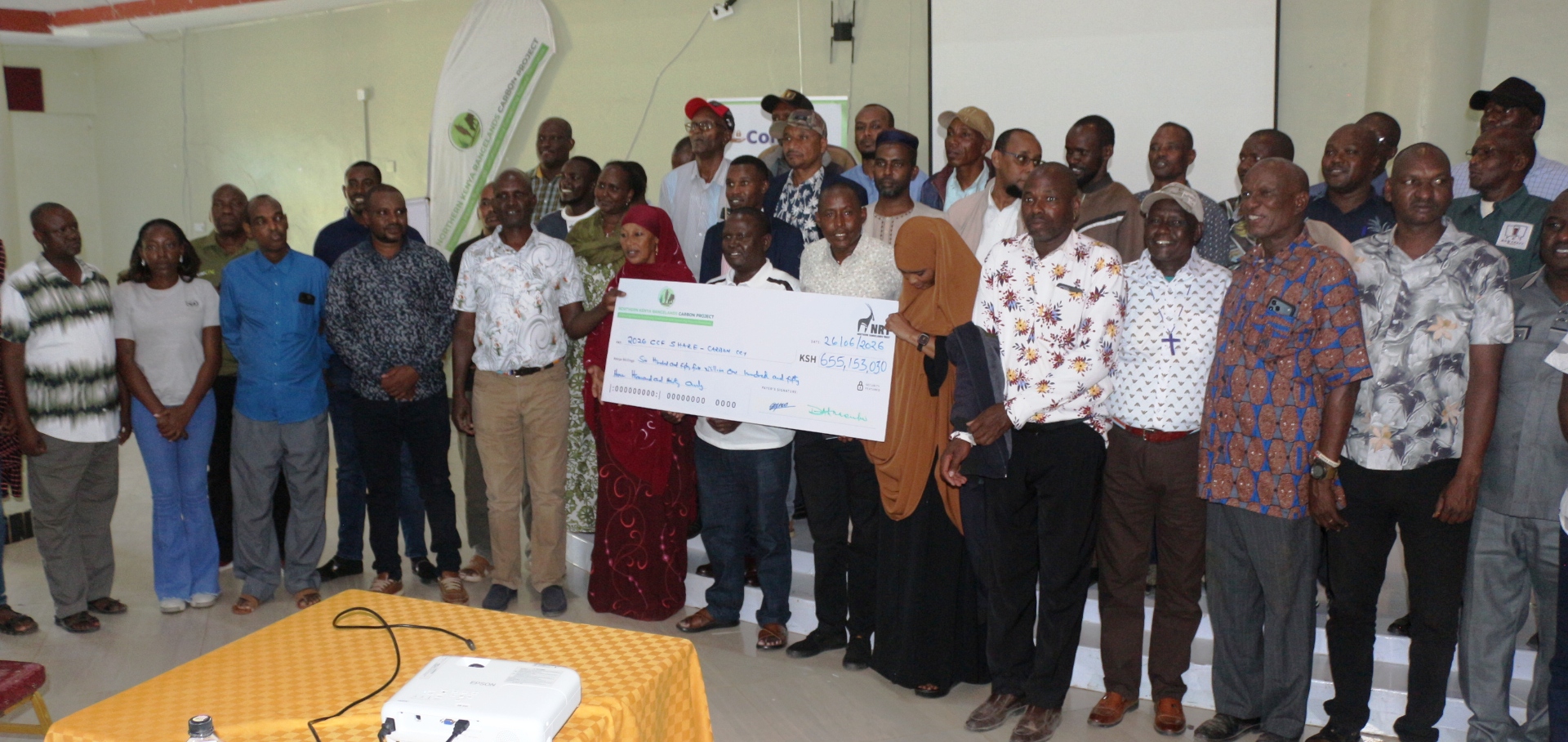
Pastoralist communities receive Sh655m in carbon credit earnings
DAVID NDURO-KNA
Pastoralist communities from four counties in northern Kenya have received Sh655 million in carbon credit earnings under a community-led rangeland conservation programme.
The beneficiaries are members of community wildlife conservancies in Isiolo, Marsabit, Samburu and Laikipia counties, working in partnership with the Northern Rangelands Trust (NRT).
The funds were disbursed through the Northern Kenya Rangelands Carbon Project (NKRCP), which allocates carbon credit revenues to participating conservancies.
Speaking during the cheque presentation ceremony in Isiolo, NRT Chief Operations Officer Osman Hussein, representing Chief Executive Officer Vimal Shah, said nearly 60 per cent of the funds would be paid directly to designated community groups within the conservancies.
He said the remaining 40 per cent would be shared equally between rangeland conservation and management activities and the conservancies’ operational costs.
Hussein noted that conservancies in the four counties have received more than Sh3 billion in carbon credit revenues since 2022.
NKRCP Board Chairman Andrew Dakhole said the cheques, received on behalf of the communities, represent earnings generated through the protection and restoration of grazing lands.
He added that the communities’ conservation efforts have made a significant contribution to reducing carbon emissions. Although the carbon credit programme began in 2013, participating communities only started receiving financial returns in 2022.
According to Dakhole, the programme experienced a setback last year after Verra, an organization that administers standards for climate action and sustainable developments suspended carbon credit issuance over concerns about governance, integrity and transparency in fund management.
“We were not able to sell our carbon credits from January last year because of the suspension. However, after thorough investigations and governance reforms, we have been readmitted to the market,” Dokhole said.
The conservancies are now undergoing a three-year transition to become fully autonomous in managing the carbon project, with NRT providing technical support and capacity building during the period.
Earlier this year, NRT began aligning the conservancies with Kenya’s carbon market laws by transferring governance of the carbon project to a community-owned Special Purpose Vehicle (SPV), a corporate structure that will manage the programme independently.
The transition follows amendments to the 2021 Project Implementation Agreement, giving conservancies full responsibility for managing carbon credit activities while ensuring compliance with the 2023 Climate Change (Amendment) Act and the 2024 Carbon Market Regulations.