
Kenya moves to adopt global road safety standards to reduce traffic deaths
By Ramadhan Nassib (KNA)
Kenya is stepping up efforts to reduce road accidents, injuries and fatalities through the adoption of international road traffic safety standards aimed at improving safety management, enforcement and accountability across the transport sector.
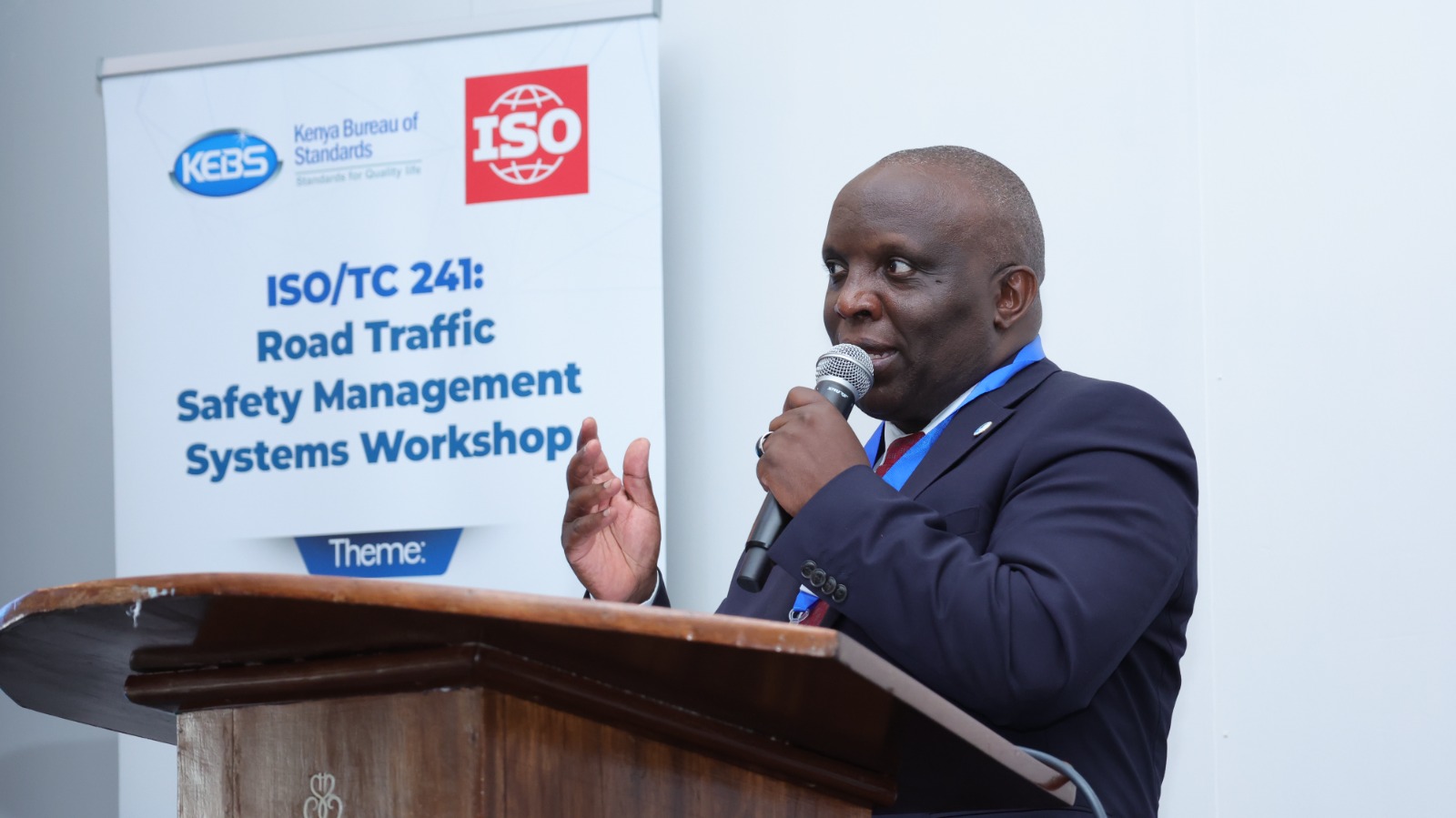
Industrialisation Secretary Prof. Erastus Gatebe announced the move during the opening of a week-long ISO/TC 241 Road Traffic Safety Management Systems workshop in Mombasa.
The forum, organised by the Kenya Bureau of Standards (KEBS), has brought together government agencies and international experts to develop a framework for strengthening road safety in the country.
Prof. Gatebe noted that road crashes continue to claim lives despite ongoing enforcement measures, with pedestrians, cyclists, motorcyclists and passengers remaining among the most vulnerable road users.
“Behind every number is a name,” he said, underscoring the human cost of road accidents.
He attributed the persistence of road crashes to low public awareness, poor compliance with traffic regulations and negative attitudes among road users.
According to the Industrialisation Secretary, the initiative seeks to foster a coordinated approach involving the National Transport and Safety Authority (NTSA), the National Police Service, the State Department for Transport and other key stakeholders.
“No single agency can carry this alone,” he said.
Prof. Gatebe emphasised that standards alone would not be sufficient unless supported by effective enforcement and evidence-based decision-making.
“Standards set the framework. Enforcement gives it force. Data tells us whether it is working,” he said.
He urged public institutions and transport operators to embrace road traffic safety management systems and translate the outcomes of the workshop into practical action.
“Let public agencies, fleet operators, transport providers and logistics companies adopt road traffic safety management systems, and let this be the workshop where that adoption begins,” he said.
KEBS Director General Esther Ngari said the adoption of ISO 39001 standards would help organisations improve their road safety performance, strengthen accountability and integrate safety considerations into mobility planning.
“I urge us to carry forward the insights from this workshop into standards that anticipate emerging challenges and make road safety an integral part of mobility development,” she said.
KEBS Deputy Director for Standards Development and Trade Maryann Kindiki said limited public awareness and inadequate understanding of existing standards remain major barriers to implementation.
She noted that KEBS is working closely with government regulators to raise awareness and build capacity on the identification and application of standards across various sectors.
“The development of standards is a collaborative and consensus-driven process,” Kindiki said.
Participants at the workshop are also exploring measures to improve road infrastructure, enhance institutional accountability and incorporate safety standards into the planning, development and management of transport systems.
The international road safety framework promotes the long-term goal of achieving zero road fatalities by encouraging countries to harmonise standards and adopt proactive measures that protect all road users.
ISO/TC 241 Chair Dr. Young-Jun Moon called for greater use of road accident and fatality data to identify risk factors and guide effective interventions.
He said emerging technologies, including artificial intelligence, could play a critical role in analysing road safety data and supporting evidence-based policymaking.
Dr. Moon also underscored the importance of developing safer infrastructure for pedestrians, cyclists, motorists and other road users as part of a comprehensive strategy to reduce crashes and save lives.
Ends