
Kenya unveils digital livestock tracking system to unlock global markets
ERICK KYALO-KNA
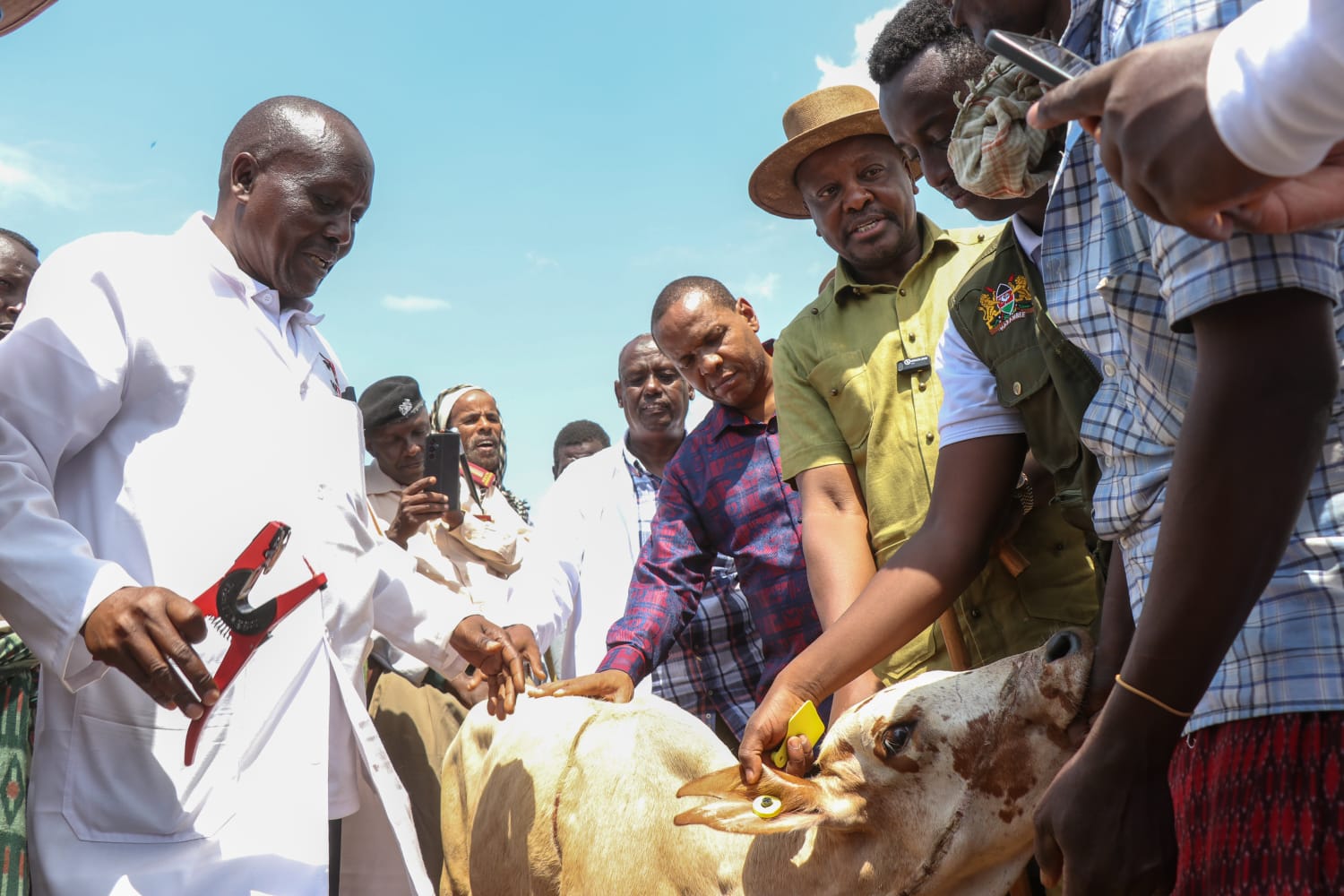
Kenya is seeking to position its livestock farmers to access lucrative global markets through the rollout of the Animal Identification and Traceability System (ANITRAC), a digital platform and mobile application developed by the government to register and track livestock using electronic RFID ear tags.
The system transforms livestock into easily verifiable and bankable assets, enabling farmers to access loans and other financial services.
It uses dual ear tags—a visual tag on the left ear and a microchip button tag on the right—allowing for real-time tracking, geolocation, and geo-mapping of animals.
Speaking during the official launch of the ANITRAC system in Karawa Village, Tarasaa SubCounty, Tana River County, Agriculture Cabinet Secretary Mutahi Kagwe said the initiative was not an end in itself but a tool to help farmers secure better prices for their livestock and gain access to international markets.
“The system will enable farmers to sell and export livestock and livestock products more easily by meeting global traceability requirements,” said Kagwe.
The Cabinet Secretary noted that international markets increasingly demand traceable animal products, including information on their origin, vaccination history, and disease treatment records, to guarantee safety and transparency throughout the supply chain.
Kagwe added that the system would also help curb livestock theft and banditry, challenges that have long affected pastoral communities, by making it easier to trace the location and ownership of every tagged animal.
The CS called on the farmers countrywide to embrace the technology the government was adopting because it was mainly for their advantage in terms of market opening and disease surveillance and control, which would maximise their profits.
“We want to help the farmer and make sure that the farmer is tuned to the global market and serves the global market for meat as well as live animals,” he said.
“We want to use technology to the advantage of the farmer. This is the first time we are introducing technology in a very big way in the livestock industry in our nation. We want to make sure that farmers understand it and embrace it and know that it is for their own benefit,” he added.
Tana River County Chief Officer for Livestock Development Kanchoru Golo, on his part, revealed that the county had millions of livestock and that their newly rolled-out system would help them in knowing the approximate number of livestock, which would help in planning for vaccinations, surveillance of diseases and knowing migration patterns within the county.