
Creative economy set for growth as Government pledges increased investment
ESTHER MWANGI-KNA
The Government is implementing policies and programs to support the creative and cultural industries, including strengthening copyright laws and ensuring artists receive fair compensation for their work.
Pledging increased in vestments in the sector, Principal Secretary (PS) of the State Department for Culture, Arts, and Heritage, Ms. Ummi Bashir, said the government is championing the passing of legislative policies that will benefit players in the arts industry.
She called for more support from private organizations to promote the growth of the creative economy.
Ms. Bashir emphasized that the government recognizes the immense value of the arts and is committed to overseeing the continued growth and development of the creative industry.
She added that the fifth pillar of the Bottom-Up Economic Transformation Agenda (BETA) emphasizes trans forming the creative sector into a sustainable industry that supports decent livelihoods.
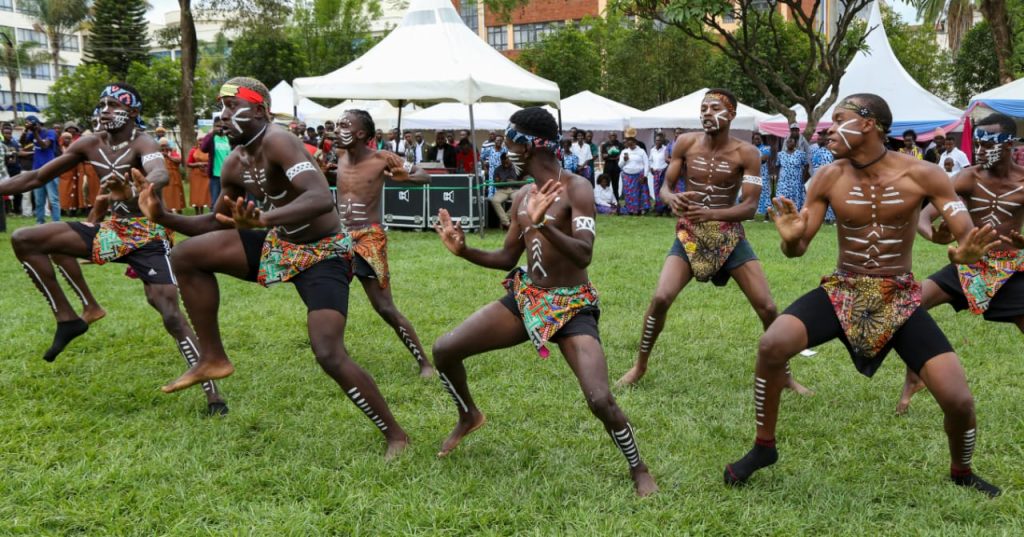
Speaking during the celebrations for this year’s World Arts Day at the Agricultural Society of Kenya Showground in Nakuru, the PS noted that through continued investment in talent development, the government is creating an enabling environment where artists across all disciplines can thrive.
“The government will continue to champion policies, infrastructure development, and strategic partnerships that up lift our creatives, celebrate cultural diversity, and position the arts at the heart of our nation’s progress,” Ms.
Bashir pointed out. She concluded by stating that the time has come for creatives to build meaningful livelihoods from their art, noting that the state has implemented strategies to open opportunities for all creatives and protect their intellectual property from exploitation.
The Economy Survey 2023 revealed that the arts, recreation and entertainment industry ac counts for five per cent of the Gross Domestic Product (GDP) and 0.25 per cent of total wage employment.
It was also identified as a contributor to a happier and healthier lifestyle. Kenya, with a burgeoning youthful population is targeting the creative and digital economy for job creation and employment.
Calling on Kenyans to reflect on the power of the arts to unite, inspire, and drive change, Ms Bashir called upon all stakeholders, government agencies, private sector partners, development organizations, and the wider community, to continue investing in and supporting the creative sector as this will create more plat forms, open additional opportunities, and amplify more voices.
Ms Bashir hailed the Kenya Cultural Centre for its dedication in promoting artistic excellence, adding that the organization has been instrumental in supporting the growth of the creative and cultural industry in Kenya, thereby helping to establish the country as a stronghold for artistic and cultural expression.
The PS noted that by supporting the creative industry the government is playing a key role in fostering creative thinking and addressing high unemployment rate.
She stated that by de centralizing national events such as the World Arts Day to counties, the State is expanding access to artistic opportunities and empowering communities across the country.
The PS pointed out that the government had identified the creative economy as one of the fastest growing sectors not only as a source of employment but also as an enabler of national cohesion and in novation.