
How farming transformed the lives of former chang’aa brewers in Elgeyo Marakwet County
ALICE WANJIRU AND JUNE JEBET-KNA
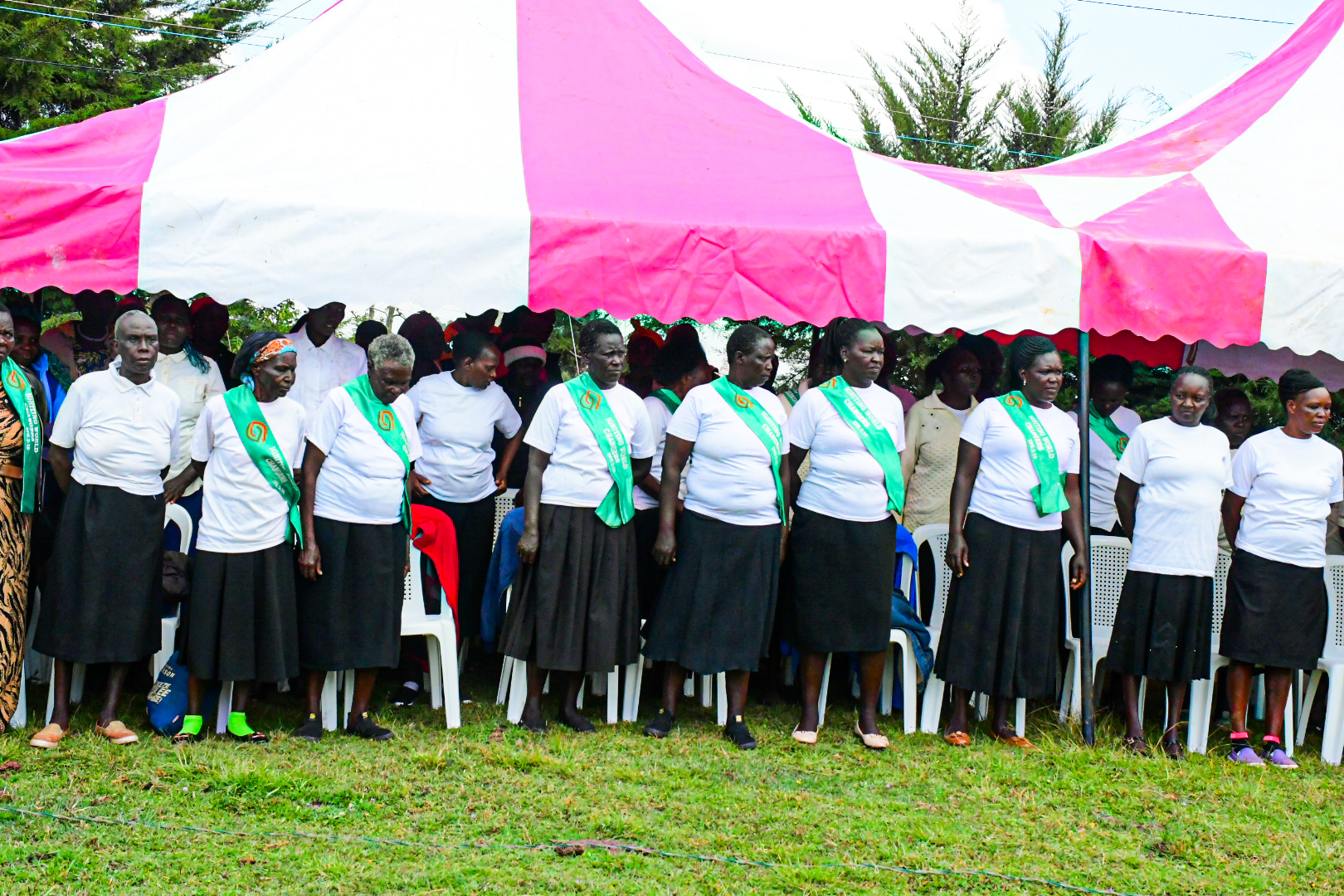
Dressed in their official uniform of white tops and black skirts, members of the Women for Change group exude order and discipline as they go about their new source of livelihood.
Watching them till the land with zeal and enthusiasm, it is difficult to imagine their troubled past, when their lives were repeatedly disrupted by police raids on illicit liquor dens—places marked by chaos, where intoxicated patrons staggered about in drunken stupors.
Today, these women have found a renewed sense of purpose and direction. Yet, for many years, they relied on brewing illicit alcohol, including chang’aa, as their only means of survival.
For decades, they remained trapped in the belief that brewing chang’aa was their only viable source of income.
Ironically, they later discovered that they had been sitting on a goldmine all along—fertile land capable of feeding their families and providing a sustainable livelihood through farming.
What they lacked was the knowledge, guidance, and mindset needed to unlock its potential.
The story of Ruth Chepkok reflects the experiences of many women in the group, whose members are spread across Elgeyo Marakwet County.
Soon after getting married, Mrs. Chepkok was introduced to the illicit brewing trade in her matrimonial home, where it served as the family’s sole source of income.
For 15 years, she spent her days boiling drums of toxic alcohol. Despite the constant risk of arrest and the grueling nature of the work, she had nothing to show for it.
The trade did more than impoverish her financially—it devastated her family. Both she and her husband not only sold the illicit brew but also consumed it.
In 2011, her husband died from alcohol-related health complications. “After his death, things spiralled completely out of control,” she recalls.
“The terrifying realization that I had to face life alone, with no one to lean on, pushed me deeper into depression. I drank even more, and my life went from bad to worse,” she said.
During those dark years of alcoholism, Mrs. Chepkok neglected even her most basic personal hygiene and rarely bathed.
Desperate to sustain her addiction, she began selling her household belongings one by one.
Eventually, she disposed of nearly everything she owned, including the family’s mattresses, forcing herself and her children to sleep on the cold, hard floor.
Her turning point came in 2015, following a strategic shift by the Elgeyo Marakwet County Government and Nacada.
Realizing that purely punitive law enforcement was not yielding long-term results, the county leadership decided to actively engage the brewers in a bid to change them from within for a greater, lasting impact.
This led to a formal partnership with Empowering Lives International (ELI), throwing Mrs. Chepkok a much-needed lifeline.
Today, her life has experienced a complete spiritual turnaround as she is currently studying to become a pastor, and though she is yet to be ordained, she is already actively using her painful testimony to deliver other women from the same shackles of addiction and illegal brewing.
Mrs. Peris Kiprop shares a similarly harrowing journey as her 10 years as an illicit brewer left her completely worn out by the trade with her life having deteriorated so drastically due to the toll of brewing and heavy consumption that area residents mockingly referred to her as a “scarecrow.”
Like Mrs. Chepkok, Mrs. Kiprop found redemption through the program and chose a dedicated spiritual path. She has already been fully ordained as a pastor and serves as the official chaplain of the group.
Together, Mrs. Chepkok and Mrs. Kiprop act as emotional and spiritual anchors leveraging their lived experiences to offer authentic counseling and hope to those still trapped in illegal distilleries.
Remarkably, their impact has crossed gender boundaries, realizing the immense success of the agricultural and table banking models, local men have also not been left behind and have joined them stepping away from illegal consumption and partnering with the women to transform their ancestral lands into profitable farms.
Among them is Justus Korir, who was lost to chronic alcoholism for 24 painful years whereby during the more than two decades of addiction, Korir frequently spent his nights collapsed in the freezing cold in a drunken stupor.