
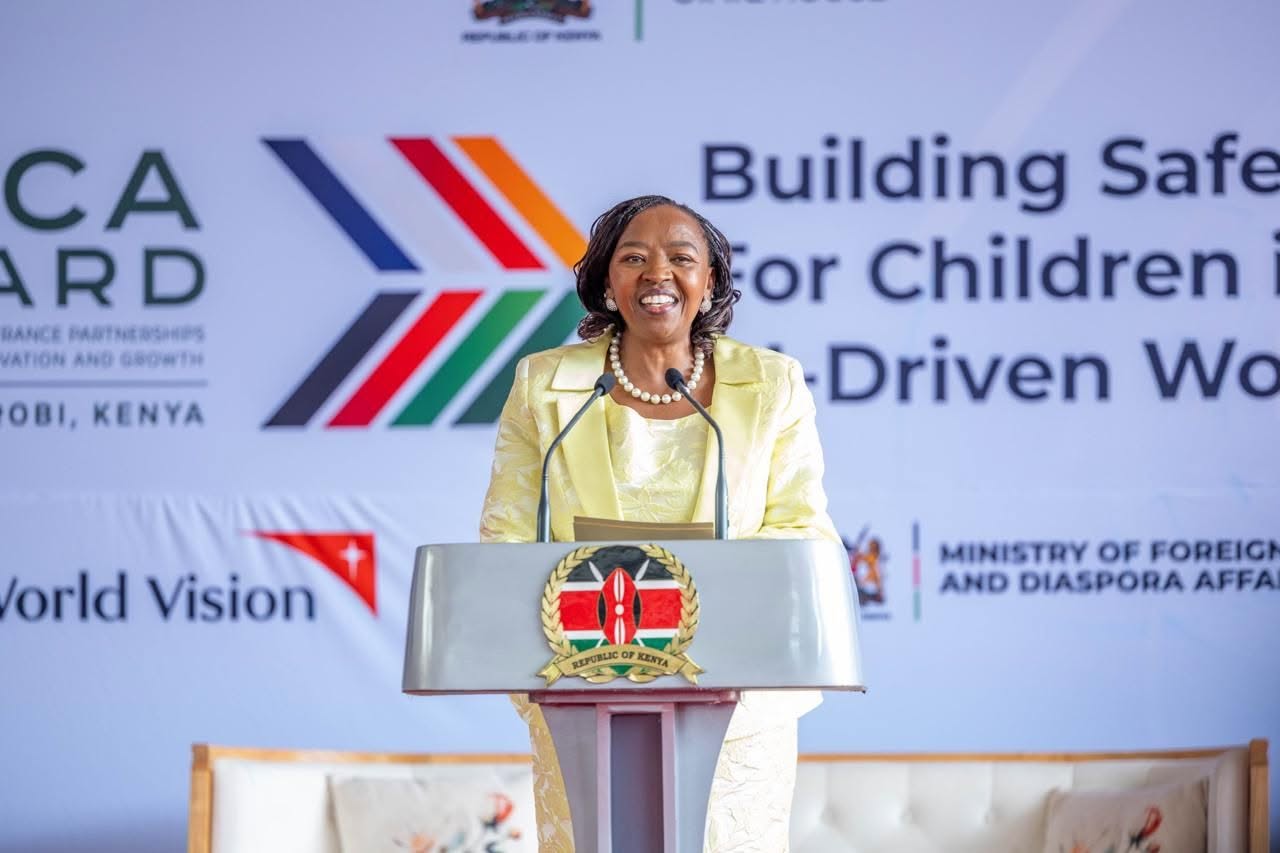
First Lady calls for urgent action to protect children from ‘Triple Threat’
By Sitna Omar (KNA)
First Lady Rachel Ruto has called for concerted action to protect children and adolescents from the “Triple Threat” of HIV infections, teenage pregnancies and sexual and gender-based violence (SGBV).
The First Lady warned that young people continue to bear the consequences of challenges they did not create.
Speaking during an advocacy and mentorship forum for adolescents and young people at Mawego Technical Training Institute in Karachuonyo Constituency, she urged adults to move beyond warnings and create supportive environments where young people can seek help and discuss difficult issues without fear.
She said protecting children requires adults to listen, guide and walk alongside them as they navigate challenges that expose them to exploitation, abuse, teenage pregnancy and HIV infection.
“Sometimes our children do not need another warning but someone to walk with them,” she said.
Rachel said the national campaign to end the Triple Threat by 2027 had expanded beyond Nairobi to Homa Bay, Samburu, West Pokot and Uasin Gishu Counties.
More than 220 health facilities have joined the initiative, while over 200 healthcare providers have been trained to offer adolescent-friendly services.
She urged parents and guardians to create homes where children can speak openly about their challenges and receive support.
“We cannot tell children to speak if we are not prepared to listen. We cannot tell them to seek help if the door they knock on is closed,” she said.
Homa Bay Governor Gladys Wanga said children were increasingly shouldering responsibilities meant for adults, particularly in households affected by HIV.
She said some children care for sick parents, while others become heads of households after losing their parents.
Wanga said Homa Bay had made progress in reducing teenage pregnancies, with annual cases falling from about 14,000 when her administration took office in 2022 to approximately 7,000 currently.
“We have cut it by half. It is still not what we want, but it means there is progress,” she said, attributing the decline to interventions by national and county governments, communities and development partners.
She highlighted mentorship programmes, including the Governor’s Mentorship Camp, which brings professionals and community leaders together to mentor girls and address challenges affecting them.
“A mentored girl is empowered. A mentored child is strong. They are focused. They know where they are going,” she said.
Dr Andrew Mulwa, Head of the National HIV and STI Control Programme (NASCOP), said Kenya had made significant progress in HIV testing and treatment but continued to face new infections among young people.
He said about 1.4 million people were living with HIV, with approximately 1.35 million receiving antiretroviral treatment. About 93 per cent know their HIV status, 91 per cent are on treatment and 87 per cent have achieved viral suppression.
National Syndemic Disease Control Council CEO Douglas Bosire said new HIV infections had declined from about 94,000 in 2005 to 13,936 in 2025.
However, young people remain disproportionately affected, with those aged 15–24 accounting for 41 per cent of new infections among people aged 15 and above.
He added that about 646 girls aged 10–19 attended antenatal care clinics daily in 2025, highlighting the need for stronger prevention and protection measures.
Principal Secretary for Medical Services Dr Ouma Oluga said the Ministry of Health would continue working with national and county governments to strengthen health services for women and children.
The leaders called for sustained community action, mentorship, adolescent-friendly health services and stronger protection systems to safeguard children and enable them to realise their potential.