
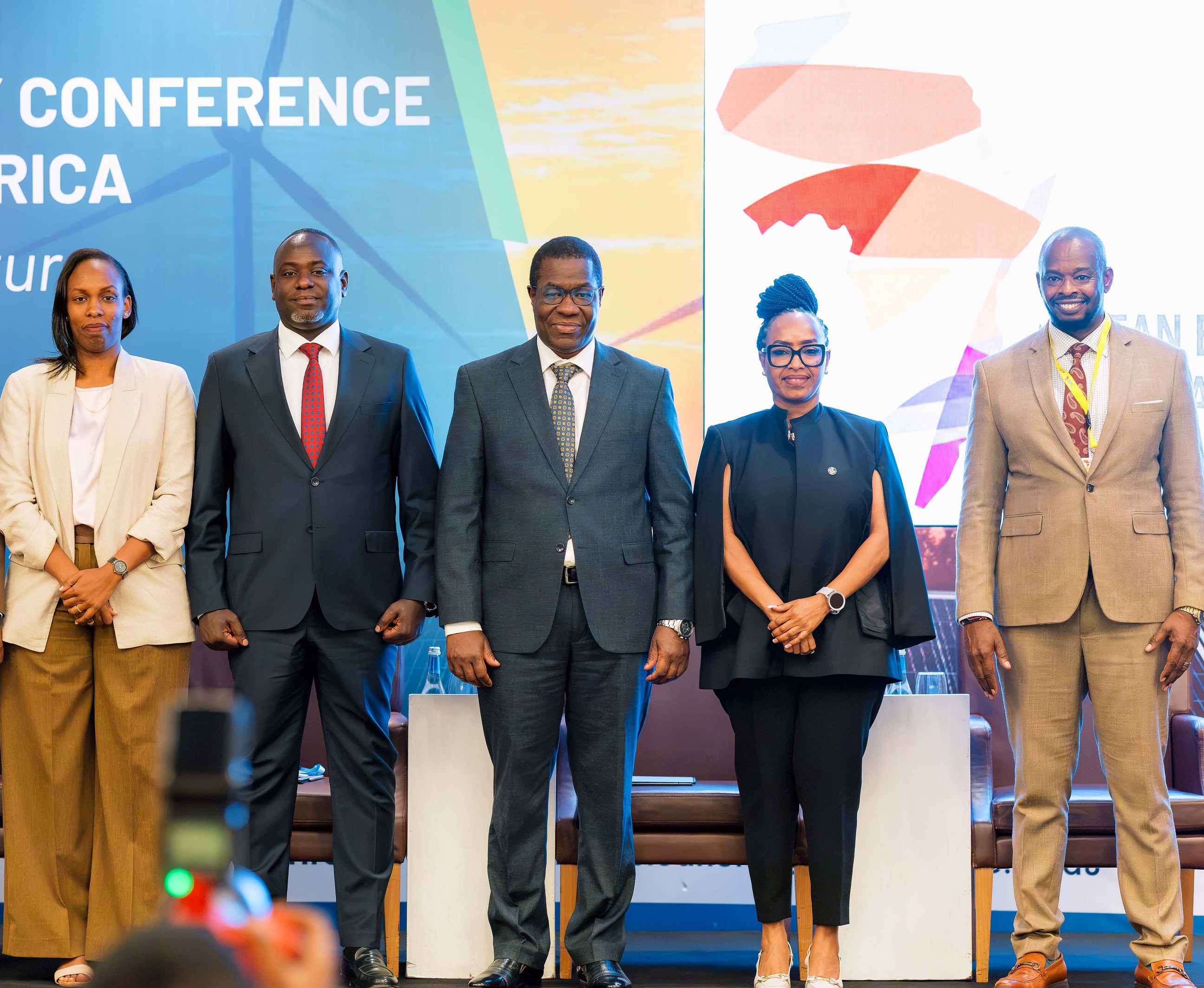
Africa must seize control of its clean energy future
By Fatuma Said (PCO)
Africa must take bold ownership of its energy destiny, moving beyond the role of raw material supplier to become a central player in global clean energy value chains.This was the rallying call from the Cabinet Secretary for Energy and Petroleum, Opiyo Wandayi, during the Clean Energy Conference Australia–Africa 2026 in Kigali, Rwanda. Delivering the keynote address under the theme “Advancing a Sustainable Future through Clean Energy, Climate Innovation and Critical Minerals for a Just, Inclusive Transition,” Wandayi urged African nations to position themselves at the heart of manufacturing, processing, and investment in clean energy.
Other keynote speakers included Rwanda’s State Minister for Infrastructure, Armand Zingiro, and Steve Kuria, Executive Chairman of the Australia–Kenya Chamber of Commerce.Wandayi noted that the global energy landscape has shifted dramatically, with energy security now a pillar of national security amid geopolitical realignments, supply chain disruptions, and rising demand for critical minerals. “Africa must define its own energy transition pathway—one that reflects our development priorities while remaining committed to global climate objectives.
The transition should expand energy access, accelerate industrialization, create jobs, and drive inclusive economic growth,” he said.Kenya’s leadership in renewable energy was highlighted, with 93 percent of its electricity generated from geothermal, hydropower, wind, and solar; making it one of Africa’s cleanest energy systems.
Wandayi underscored geothermal energy as Kenya’s most strategic asset, powering not only electricity but also green hydrogen, industrial parks, agriculture, data centers, and electric mobility.He emphasized Africa’s vast reserves of critical minerals as a springboard for regional value chains in battery manufacturing, renewable technologies, and electric mobility.He called for investment in mineral beneficence, technology transfer, skills development, and regional manufacturing under the African Continental Free Trade Area (AfCFTA).
Recognizing Africa’s vulnerability to climate change despite contributing less than four percent of global emissions, Wandayi urged development partners to expand access to affordable climate finance through blended models, concessional funding, private sector investment, and risk-sharing mechanisms. He also stressed regional energy integration through interconnected grids, harmonized regulations, and cross-border power trade, citing initiatives such as the Eastern Africa Power Pool and AfCFTA as foundations for an integrated energy marketplace.
Digital technologies such as AI, smart grids, battery storage, predictive maintenance, and digital infrastructure were identified as critical enablers of Africa’s next energy transformation.Kenya, he reaffirmed, remains open to investment across the clean energy value chain, from geothermal and green hydrogen to clean cooking, energy efficiency, and critical minerals.
The CS concluded by calling for stronger collaboration between Africa and international partners, particularly Australia, in research, innovation, technology transfer and skills development. His remarks were echoed by Steve Kuria, who warned that disruptions in the Strait of Hormuz through which a fifth of the world’s oil and LNG passes had exposed the fragility of distant supply routes.He argued that energy security is now a matter of resilience and sovereignty, not just economics.